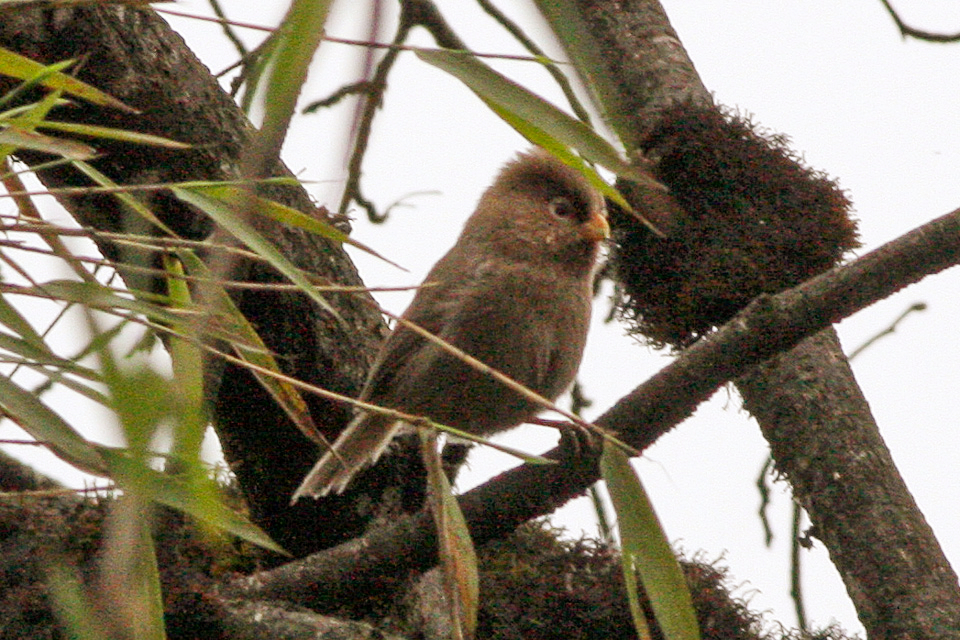
Layard's Warbler
Sylvia layardi
Order: Passeriformes / Family: Sylviidae

Wikimedia Commons
About the Layard's Warbler
The Layard's Warbler, scientifically known as Sylvia layardi, is a small passerine bird belonging to the family Sylviidae. This species is particularly notable for its presence in southern Africa, where it inhabits a variety of ecosystems ranging from semi-arid scrublands to coastal thickets. Layard's Warbler plays a significant role in these ecosystems as both a predator of insects and a prey species for larger birds and animals. The bird is an important indicator of ecological health, often reflecting the condition of the habitats it frequents.
Sylvia layardi is widely distributed across Namibia, Botswana, and South Africa, with some populations extending into Zimbabwe and Angola. This distribution highlights its adaptability to diverse environmental conditions. The warbler is especially prevalent in the fynbos regions of South Africa, where its presence is a common sight in the dense, shrubby vegetation.
During the breeding season, which typically occurs in the southern hemisphere's spring and early summer months, the Layard's Warbler becomes particularly active. Males engage in elaborate singing displays to establish territories and attract females. Outside the breeding season, these birds are more subdued, maintaining territories with less vocalization. The warbler's role in ecosystem dynamics is multifaceted; it controls insect populations and serves as a food source for raptors and other predators. Conservationists pay close attention to this species due to its sensitivity to habitat changes, making it a valuable subject for ecological studies.
The Layard's Warbler belongs to the family Sylviidae, within the order Passeriformes. These birds typically live typically 5-7 years with a maximum recorded of 10 years..
How to Identify a Layard's Warbler
Field identification of the Layard's Warbler involves several distinctive features. Adult birds exhibit a predominantly gray plumage with a paler underside. Their slim build, combined with relatively long tail feathers, gives them an elegant appearance. The bird's eye-ring is faintly white, adding subtle contrast to its otherwise muted coloration. Juveniles closely resemble adults but have a slightly browner hue, which fades as they mature.
There is no significant sexual dimorphism in Layard's Warblers; males and females appear similar, which sometimes complicates field identification. However, males may be more frequently observed singing from prominent perches during the breeding season. The warbler's song, a series of rich, melodious notes, is one of the most reliable cues for locating and identifying this species.
In flight, the Layard's Warbler maintains a characteristic silhouette, with a steady wingbeat and a slightly undulating trajectory. When perched, the bird often holds its tail upright, a posture that aids in identification. While there are few species with which it could be confused, the Layard's Warbler's distinctive song and behavior further aid in distinguishing it from similar species such as the African Desert Warbler.
Having trouble telling birds apart? Upload a photo to our bird identification tool for an instant species match.
Layard's Warbler Habitat and Range
Preferred Habitat
Layard's Warbler inhabits a range of ecosystems, with a preference for semi-arid and scrubby landscapes. It thrives in fynbos and coastal thickets, often at elevations ranging from sea level to 1,500 meters. This bird shows a marked preference for dense, tangled vegetation, where it can forage and nest with relative security.
While Layard's Warbler is primarily a resident of rural environments, it occasionally ventures into suburban areas with sufficient cover. Its adaptability to different plant communities allows it to persist in both pristine and disturbed habitats. Seasonal shifts in habitat use are minimal, as the species is largely sedentary, though some local movements may occur in response to food availability or climatic conditions.
Geographic Range
The breeding range of Layard's Warbler includes southern Namibia, Botswana, and extensive areas of South Africa. Within South Africa, the bird is particularly common in the Western Cape and Eastern Cape provinces, where fynbos habitats provide ideal living conditions. Populations also exist in Zimbabwe and parts of Angola, though they are less concentrated in these regions.
Layard's Warbler is a non-migratory species, with populations remaining largely sedentary throughout the year. However, some altitudinal movements may occur as birds descend to lower elevations during colder months. Despite its relatively limited range, the warbler can be locally abundant, particularly in regions with extensive shrublands.
Want to know which birds visit your area? Browse our backyard birds by location guides for region-specific species lists.
What Does the Layard's Warbler Eat?
The diet of Layard's Warbler primarily consists of insects and other small arthropods, making it an effective insectivore. During the breeding season, these birds intensify their foraging activities to meet the increased nutritional demands of rearing young. They exhibit a methodical foraging technique, gleaning insects from leaves and branches with their sharp, pointed bills.
Although insects form the bulk of their diet, Layard's Warblers may occasionally consume small fruits and seeds, especially when insect prey is scarce. This dietary flexibility supports their survival in fluctuating environmental conditions. Prey items typically include caterpillars, beetles, and spiders, which are captured during diurnal foraging sessions, primarily in the early morning and late afternoon.
Layard's Warbler Behavior and Social Structure
The Layard's Warbler is a solitary and territorial bird, with individuals or pairs maintaining defined territories throughout the year. During the breeding season, males become particularly vocal, delivering complex songs from exposed perches to establish territory boundaries and attract mates. These songs serve as both a deterrent to rival males and an invitation to potential mates.
Courtship involves a series of displays, including wing quivering and hopping, intended to reinforce pair bonds. Outside the breeding season, Layard's Warblers remain territorial but reduce the intensity of vocalizations. They exhibit a keen vigilance while foraging, scanning for predators such as hawks and snakes.
This species is primarily diurnal, with peak activity periods occurring in the early morning and late afternoon. During the hottest part of the day, the warblers often retreat to shaded areas to rest. In response to predators, Layard's Warblers employ a variety of alarm calls and evasive maneuvers, including rapid dives into dense cover.
Layard's Warbler Nesting and Reproduction
Layard's Warblers construct cup-shaped nests primarily from dry grasses and plant fibers. These nests are strategically placed in dense shrubs or low trees, providing concealment from predators. The typical clutch consists of three to four eggs, which are white with reddish-brown speckles.
Both parents participate in incubating the eggs over a period of approximately 12 to 14 days. After hatching, the chicks remain in the nest for another 11 to 13 days before fledging. Parental care extends beyond fledging, as adults continue to feed and protect their offspring until they become independent. Layard's Warblers generally produce one or two broods per year, depending on environmental conditions and food availability.
Layard's Warbler Sounds and Vocalizations
The primary song of Layard's Warbler is a series of rich, melodious notes that vary in rhythm and pitch. This song is often delivered from a high perch and can be heard over considerable distances. Calls include sharp 'chit' notes used for communication between mates and soft trills employed in alarm contexts.
Their dawn chorus is particularly impressive, with males singing vigorously to reinforce territorial claims. Compared to other warblers, the vocalizations of Layard's Warbler are more varied and complex, allowing experienced birders to distinguish them readily in the field.
Interesting Facts About the Layard's Warbler
- 1Layard's Warbler is named after Edgar Leopold Layard, a British ornithologist who described the species in the 19th century.
- 2The warbler's melodious song can be heard up to 100 meters away, making it one of the best singers in its habitat.
- 3Despite their small size, Layard's Warblers can have a territory spanning up to 2 hectares, vigorously defended from rivals.
- 4These birds have adapted to urban gardens in South Africa, provided there is enough dense shrubbery for cover and nesting.
- 5Layard's Warbler is one of the few Sylvia species found exclusively in Africa, highlighting its unique evolutionary path.
- 6The Layard's Warbler plays a crucial role in controlling insect populations, acting as a natural pest manager.
- 7Their nests are often parasitized by the Klaas's Cuckoo, which lays its eggs in the warbler's nest for the host to raise.
Layard's Warbler Conservation Status
The IUCN currently lists Layard's Warbler as a species of Least Concern, with stable population trends. However, habitat degradation poses a significant threat, particularly in regions where agricultural expansion encroaches on natural habitats. Conservation efforts focus on preserving fynbos and other key habitats. Historically, the bird's populations have fluctuated in response to environmental changes, but effective habitat management and protection remain crucial to its long-term survival.