
Lemon-bellied Crombec
Sylvietta denti
Order: Passeriformes / Family: Macrosphenidae

Wikimedia Commons
About the Lemon-bellied Crombec
The Lemon-bellied Crombec (Sylvietta denti) is a small passerine bird that belongs to the family Macrosphenidae. It is primarily found in the tropical forests of Central and West Africa, from Sierra Leone and Guinea to the Democratic Republic of the Congo. Its presence is often noted in the dense canopies of lowland rainforest where it plays a significant role in the ecosystem by controlling insect populations. This insectivorous bird is adept at gleaning insects from foliage, contributing to the regulation of forest pest populations.
The Lemon-bellied Crombec is an integral part of its habitat, often associated with mixed-species foraging flocks, which enhances its feeding efficiency and offers protection from predators. Its ecological role extends beyond mere insect control as it participates in seed dispersal, although less prominently than frugivorous species. The crombec's reliance on intact forest ecosystems makes it susceptible to habitat destruction, primarily due to logging and agricultural expansion.
Seasonally, the Lemon-bellied Crombec exhibits some local movement within its range, although it is largely non-migratory. During the breeding season, which varies regionally but often coincides with the onset of the rainy season, the crombec becomes more territorial. Males can be heard delivering their distinctive songs more frequently as they establish breeding territories. Outside the breeding season, these birds maintain a lower profile, blending seamlessly into the background of their lush forest home.
The Lemon-bellied Crombec belongs to the family Macrosphenidae, within the order Passeriformes. These birds typically live average 5 years, with a maximum recorded of 7 years..
How to Identify a Lemon-bellied Crombec
The Lemon-bellied Crombec is characterized by its diminutive size, measuring about 9 to 10 cm in length. Its defining feature is the vibrant lemon-yellow underparts, which contrast sharply with the olive-brown upperparts. The bird's head is often slightly grayer, providing subtle distinction from the back. The tail is noticeably short, a common trait among crombecs, which aids in identifying it in the field.
Juvenile Lemon-bellied Crombecs resemble adults but may exhibit slightly duller plumage. Males and females are similar in appearance, with no significant sexual dimorphism, making gender identification challenging in the field. Unlike some other species in its range, the crombec's short tail and bright yellow belly are unmistakable, minimizing confusion with other small songbirds.
In flight, the Lemon-bellied Crombec presents a compact silhouette, with rapid wingbeats and a tendency to move in short, flitting bursts rather than extended flights. When perching, it often adopts a slightly hunched posture, clinging to branches or foliage as it forages for insects.
Having trouble telling birds apart? Upload a photo to our bird identification tool for an instant species match.
Lemon-bellied Crombec Habitat and Range
Preferred Habitat
The Lemon-bellied Crombec inhabits dense tropical and subtropical forests, favoring areas with thick undergrowth and closed canopies. It is most commonly found at elevations ranging from sea level to 1,500 meters. This bird prefers primary forests but can also adapt to secondary growth areas, provided the forest structure remains complex enough to support its insectivorous diet.
While primarily a forest resident, the Lemon-bellied Crombec can occasionally be found in forest edge habitats and clearings, particularly during the non-breeding season when it joins mixed-species flocks. Unlike many other bird species, it shows little affinity for urban areas, rarely venturing into gardens or human-modified landscapes. Its reliance on rich forest ecosystems underscores its vulnerability to habitat loss.
Geographic Range
The Lemon-bellied Crombec boasts a broad range across Central and West Africa. Its distribution stretches from Sierra Leone and Liberia in the west, through the Ivory Coast, Ghana, and Nigeria, extending eastward into Cameroon, the Central African Republic, and the Democratic Republic of the Congo. Within this range, the crombec is generally a resident species, with minimal migratory movement.
Despite its wide distribution, its population density is uneven, with hotspots in pristine forest areas where insect prey is abundant. The species is less common in heavily deforested regions, highlighting the impact of habitat destruction on its population dynamics. While not a migratory bird, some altitudinal movement may occur in response to seasonal changes in food availability.
Want to know which birds visit your area? Browse our backyard birds by location guides for region-specific species lists.
What Does the Lemon-bellied Crombec Eat?
The Lemon-bellied Crombec primarily feeds on insects and other small arthropods, making it an effective insectivore within its forest habitat. Its diet includes beetles, caterpillars, spiders, and occasionally small fruits. During the wet season, when insect abundance peaks, the crombec can often be seen actively foraging among the foliage, snapping up prey with precision.
Foraging techniques include leaf-gleaning and hovering to pick insects from under leaves, displaying agility and keen eyesight. The bird's small size limits its prey to insects generally no larger than a centimeter, ensuring a steady supply without overexertion. Feeding occurs throughout the day, with peaks in activity during the cooler morning and late afternoon hours.
Lemon-bellied Crombec Behavior and Social Structure
Lemon-bellied Crombecs are generally solitary or found in pairs, especially during the breeding season when they become territorial. Their territory defense involves frequent vocalizations and displays of presence designed to deter rivals. Courtship displays are subtle, often involving mutual feeding and synchronized movements to strengthen pair bonds.
Outside of the breeding season, these crombecs often join mixed-species flocks, benefiting from the protection and increased foraging efficiency these groups provide. Their response to predators includes a range of alarm calls and evasive maneuvers, such as darting into dense cover. Daily activity patterns typically begin with a dawn chorus followed by periods of intense foraging, interspersed with rest during the hottest parts of the day.
Lemon-bellied Crombec Nesting and Reproduction
The nesting habits of the Lemon-bellied Crombec involve the construction of a small, cup-shaped nest, often placed in low shrubs or small trees. Nests are primarily built from grass, leaves, and spider silk, providing a secure and well-camouflaged environment for the eggs. Clutch size ranges from 2 to 4 eggs, with both parents sharing incubation duties over a period of approximately two weeks.
Once hatched, chicks are altricial, requiring constant care and feeding from both parents. Fledging occurs about 14 to 16 days after hatching, with young birds remaining dependent on parental support for several weeks thereafter. Typically, the Lemon-bellied Crombec raises one brood per year, although favorable conditions may allow for a second.
Lemon-bellied Crombec Sounds and Vocalizations
The vocalizations of the Lemon-bellied Crombec are distinctive and an important aspect of its identification in dense forest habitats. Its primary song consists of a series of high-pitched, musical notes delivered in a rapid sequence, often lasting several seconds. This song is a key element in territorial defense and mate attraction.
The bird also produces a variety of call notes, including a sharp 'chip' used in communication between mates or as an alarm signal. During the dawn chorus, the crombec is particularly vocal, contributing to the vibrant soundscape of the forest. Its calls are generally clear and melodious, lacking the harsher tones found in some other forest birds.
Interesting Facts About the Lemon-bellied Crombec
- 1The Lemon-bellied Crombec is named for its bright yellow belly, a striking feature that stands out against the otherwise green and brown hues of its habitat.
- 2Despite its small size, the Lemon-bellied Crombec plays a vital role in insect control within its forest ecosystem, consuming large quantities of insects daily.
- 3This species belongs to the Macrosphenidae family, a group known for their unique short-tailed appearance, which aids in maneuverability through dense foliage.
- 4Lemon-bellied Crombecs are often found in mixed-species flocks, allowing them to exploit food resources more efficiently and avoid predators.
- 5Unlike many birds, the Lemon-bellied Crombec exhibits little sexual dimorphism, making it difficult to distinguish males from females without behavioral observation.
- 6Their nests are ingeniously crafted using spider silk, which provides added strength and flexibility, allowing the nest to withstand various environmental challenges.
- 7The song of the Lemon-bellied Crombec, a series of rapid high-pitched notes, is easily recognizable and serves as a primary tool for territory establishment.
Lemon-bellied Crombec Conservation Status
The Lemon-bellied Crombec is currently listed as a species of Least Concern by the IUCN, with a stable population trend. However, its dependence on intact forest habitats makes it vulnerable to deforestation, which remains the primary threat to its survival. Logging and agricultural expansion continue to reduce suitable habitats, particularly in West Africa, where forest clearance is most pronounced. Conservation efforts focus on habitat protection and the establishment of protected areas that preserve large tracts of forest. Monitoring population trends and habitat conditions is crucial for ensuring the long-term survival of this species. Historically, the crombec has maintained stable numbers due to its adaptability, but ongoing habitat loss could pose significant challenges.
Other Macrosphenidae Species
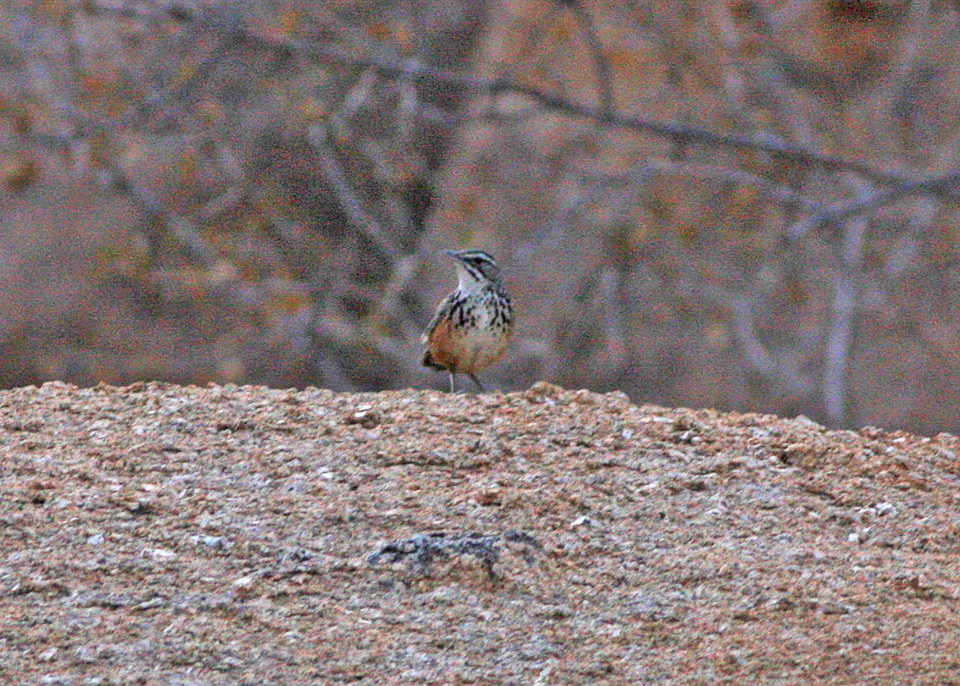


Birds Similar to the Lemon-bellied Crombec
These species are often confused with the Lemon-bellied Crombec due to similar appearance or overlapping range.

