
White-browed Crombec
Sylvietta leucophrys
Order: Passeriformes / Family: Macrosphenidae

Wikimedia Commons
About the White-browed Crombec
The White-browed Crombec (Sylvietta leucophrys) is a small passerine bird that belongs to the Macrosphenidae family. Known for its distinct lack of a noticeable tail, this bird presents a unique silhouette in the African avian world. Its native range primarily includes the highland regions of East Africa, where it inhabits countries such as Kenya, Tanzania, and Uganda. The White-browed Crombec thrives in savanna woodlands and montane forests, where its subtle plumage provides excellent camouflage among branches and leaves. This species plays a crucial ecological role by controlling insect populations in these environments, making it an important participant in the balance of these ecosystems. Seasonal behaviors of the White-browed Crombec are influenced by rainfall patterns typical of its geographic range. During the wet season, these birds become more vocal and active, participating in breeding activities, while in the dry season, they may exhibit reduced activity levels, conserving energy and resources. The White-browed Crombec's significance extends beyond its ecological contributions; it is a key species for birdwatchers and researchers interested in understanding avian adaptations to highland and savanna habitats. Its presence is an indicator of healthy ecosystems in its native range, and it serves as a valuable subject for studies on avian behavior and adaptation. Observing this bird requires patience and a keen eye, given its small size and cryptic nature. Field studies highlight the importance of the White-browed Crombec as a member of its avian community, contributing to seed dispersal and the control of insect populations. Its interactions with other bird species and its responses to environmental changes offer insights into the complexities of highland and woodland ecosystems. The White-browed Crombec's adaptation to a diverse range of habitats underscores its resilience, yet it remains sensitive to habitat degradation and fragmentation. Conservation efforts are essential to maintaining the health of the ecosystems it calls home, ensuring that this unique bird continues to thrive in East Africa's rich avian tapestry.
The White-browed Crombec belongs to the family Macrosphenidae, within the order Passeriformes. These birds typically live average lifespan is approximately 5 years, with some living up to 7 years..
How to Identify a White-browed Crombec
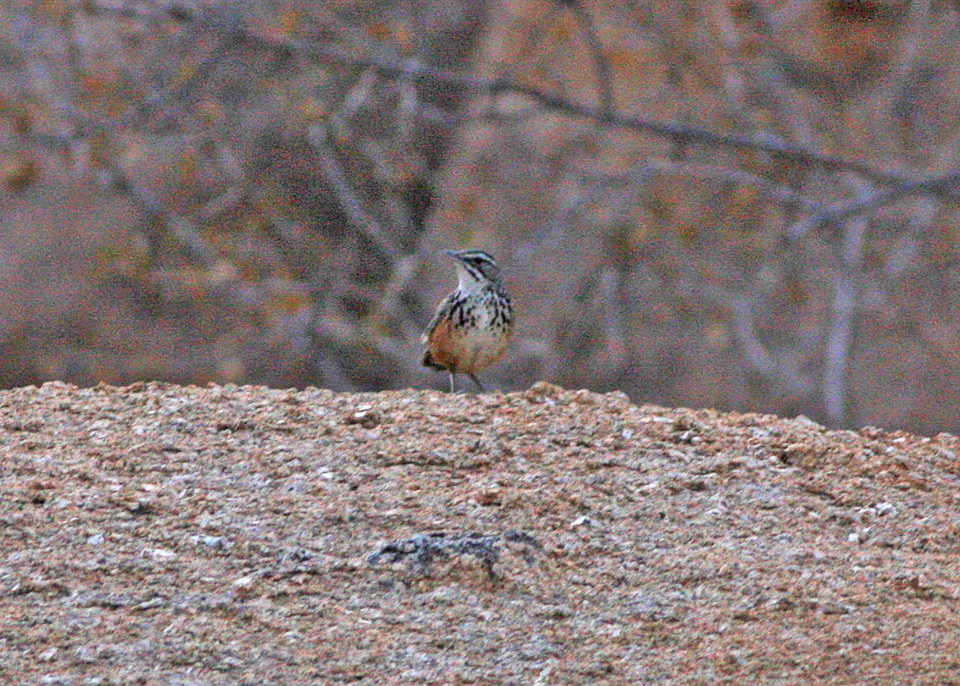
The White-browed Crombec is easily identified by its small size, measuring about 10 cm in length, and its distinctive lack of a tail, which is quite unusual among birds. The adult plumage is predominantly grey-brown on the back, with a paler underbelly that can appear almost white. One of the bird's most striking features is the prominent white supercilium or eyebrow, which contrasts sharply with its darker eye stripe. This feature gives the bird a characteristic 'eyebrowed' look that is key to its identification. Juvenile White-browed Crombecs resemble adults but tend to have a slightly duller plumage, lacking the crispness of the adult's white eyebrow. There is little sexual dimorphism in this species, meaning males and females look alike, a feature that can sometimes make field identification challenging. In terms of flight, the White-browed Crombec flies with rapid wingbeats interspersed with glides. Its flight silhouette is distinctive due to the lack of a tail, giving it a somewhat stubby appearance compared to other small passerines. When perched, the bird often appears hunched as it clings to branches, its short wings and tailless body contributing to its compact form. The White-browed Crombec can be confused with other crombec species, but its range, combined with its distinctive white supercilium, helps distinguish it from similar birds.
Having trouble telling birds apart? Upload a photo to our bird identification tool for an instant species match.
White-browed Crombec Habitat and Range
Preferred Habitat
The White-browed Crombec predominantly inhabits highland regions, showing a preference for montane forests and savanna woodlands. It is commonly found in elevations ranging from 1,500 to 3,000 meters, where it frequents the edges of forests and areas with dense shrubbery. This bird thrives in areas with plenty of cover, as its foraging technique involves moving through thickets and underbrush in search of insects. While the White-browed Crombec is principally associated with rural and semi-arid habitats, it can also be found in wooded gardens and parks in urban areas, where suitable vegetation exists. Seasonal habitat shifts are minimal, as this species tends to be a year-round resident in its range, adapting to seasonal changes in resource availability. However, during breeding seasons, it may move to areas with more abundant insect prey to support its dietary needs.
Geographic Range
The White-browed Crombec is primarily found in East Africa, with a breeding range that includes countries such as Kenya, Tanzania, and Uganda. This bird favors the highland regions within these countries, with notable populations in areas like the Aberdare Mountains and Mount Kenya. It is a non-migratory species, generally residing year-round within its established range. However, local movements may occur in response to food availability and environmental conditions. Population density is variable, with some areas hosting more abundant populations due to favorable habitat conditions. In regions like the Ngorongoro Crater in Tanzania, the White-browed Crombec is relatively common, whereas in less suitable habitats, its presence might be sporadic. The species has a limited range and is not found in the lowland areas or coastal regions of East Africa.
Want to know which birds visit your area? Browse our backyard birds by location guides for region-specific species lists.
What Does the White-browed Crombec Eat?
The diet of the White-browed Crombec primarily consists of insects and other small invertebrates. It forages by gleaning insects from foliage, bark, and branches, using its slender bill to extract prey from crevices and leaves. Common prey items include beetles, caterpillars, and spiders, which provide essential nutrients for the bird. During the breeding season, the diet may shift slightly to include more protein-rich prey, supporting the increased energy demands of nesting and rearing young. Foraging typically occurs throughout the day, with peaks in activity during the cooler morning and late afternoon hours. The White-browed Crombec employs a methodical approach to foraging, moving quickly and efficiently through the vegetation to maximize its intake of available food resources. This efficient foraging technique is well-suited to the bird's high-energy lifestyle and its need to maintain a consistent food supply.
White-browed Crombec Behavior and Social Structure
The White-browed Crombec exhibits fascinating behavioral traits that reflect its adaptation to a specific ecological niche. This bird is typically solitary or found in pairs, particularly during the breeding season when it becomes highly territorial. Courtship displays are subtle, involving mutual preening and vocalizations that strengthen pair bonds. Although not commonly seen in flocks, the White-browed Crombec may occasionally join mixed-species foraging parties, benefiting from the increased vigilance and foraging success that such associations provide. When it comes to territorial behavior, this species is known for its vocal defense of territory boundaries, using a series of short, sharp calls to deter intruders. In the presence of predators, the White-browed Crombec exhibits a cautious approach, often freezing or retreating into dense foliage to avoid detection. Daily activity patterns show peaks in the morning and late afternoon, aligning with periods of cooler temperatures and increased insect activity. This bird's behavior reflects its adaptation to highland and woodland environments, where resources can be patchy, and competition for food is a constant challenge.
White-browed Crombec Nesting and Reproduction
The White-browed Crombec constructs its nest in a variety of locations, often choosing dense shrubbery or small trees for added protection. The nest itself is a compact, cup-shaped structure made from grasses, twigs, and spider silk, providing both strength and camouflage. Nest placement is typically low to the ground, hidden within foliage to protect against predators and environmental elements. The typical clutch size for the White-browed Crombec ranges from two to four eggs. Both parents take part in incubation, which lasts approximately 12 to 14 days. After hatching, the chicks are altricial, requiring constant care and feeding from both parents. Fledging occurs about 14 to 18 days after hatching, although the young may remain dependent on their parents for some time after leaving the nest. The species generally raises one to two broods per year, depending on environmental conditions and food availability.
White-browed Crombec Sounds and Vocalizations
The White-browed Crombec's primary song is a series of high-pitched, melodious notes delivered in rapid succession. This song serves various functions, from attracting mates to marking territorial boundaries. In addition to its song, this bird produces distinct call notes that include sharp 'chip' sounds, often used in communication between mates or as a contact call within mixed-species flocks. Alarm calls are more urgent and harsh, designed to alert conspecifics to potential threats. During the dawn chorus, the White-browed Crombec is notably vocal, contributing to the morning symphony with its distinctive melodies. The quality of its calls and song can be likened to the tinkling of a small bell, offering a pleasant auditory experience for those within its range.
Interesting Facts About the White-browed Crombec
- 1The White-browed Crombec is one of the few birds with a nearly tail-less appearance, an adaptation that aids in its agile foraging habits.
- 2Despite its small size, the White-browed Crombec has a surprisingly loud and complex song, often heard during dawn and dusk.
- 3The bird's distinctive white eyebrow is not just for show; it aids in species recognition and mate selection.
- 4Insect control is a significant ecological role of the White-browed Crombec, helping to balance ecosystems by managing pest populations.
- 5The White-browed Crombec's nest construction is a communal effort, with both male and female participating in building and maintenance.
- 6This species can be difficult to spot due to its preference for dense foliage, making patience a key asset for birdwatchers.
- 7Their presence in urban parks highlights their adaptability to modified environments, provided there is sufficient cover and food.
White-browed Crombec Conservation Status
According to the IUCN Red List, the White-browed Crombec is currently listed as Least Concern, with a stable population trend. However, the species faces threats from habitat loss due to deforestation, agricultural expansion, and urban development. Conservation efforts focus on protecting key habitats and maintaining the ecological integrity of the highland and woodland regions where this bird thrives. Historical population changes have been influenced by varying degrees of habitat degradation, but ongoing efforts aim to mitigate these impacts through conservation initiatives and habitat restoration projects. Public awareness and education are crucial in promoting the protection of these ecosystems, ensuring the long-term survival of the White-browed Crombec and other native species.
Other Macrosphenidae Species


Birds Similar to the White-browed Crombec
These species are often confused with the White-browed Crombec due to similar appearance or overlapping range.

