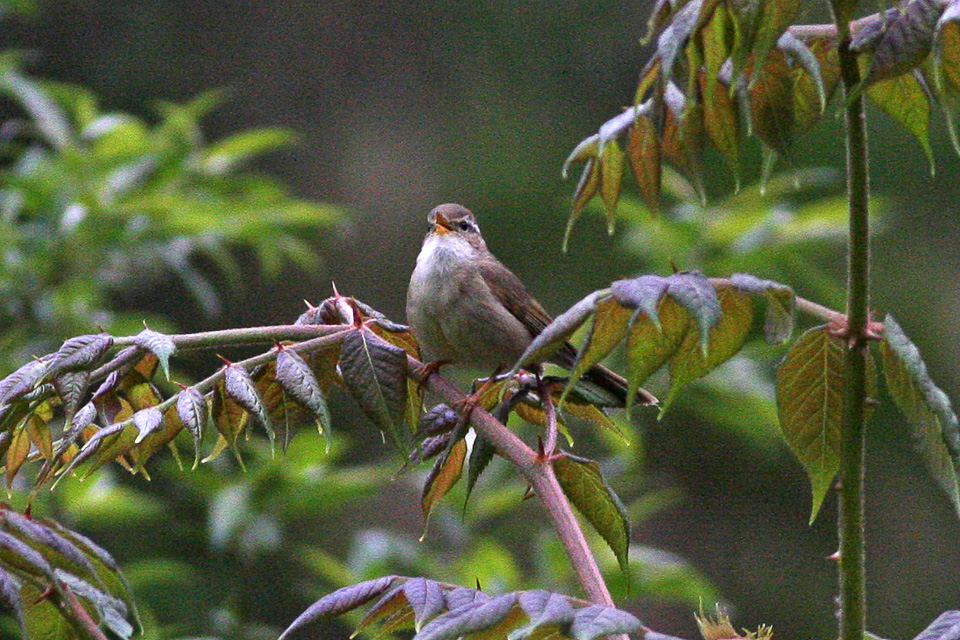
Lemon-throated Leaf Warbler
Phylloscopus cebuensis
Order: Passeriformes / Family: Phylloscopidae

Wikimedia Commons
About the Lemon-throated Leaf Warbler
The Lemon-throated Leaf Warbler, known scientifically as Phylloscopus cebuensis, is a small passerine bird endemic to the Philippines, particularly thriving in the forests of Cebu. This species plays a crucial role in the ecosystem as an insect predator, helping to control populations of small arthropods. The Lemon-throated Leaf Warbler is an integral part of the forest ecology, often seen flitting through the canopy as it searches for food. Its presence is a key indicator of forest health, as it requires dense foliage and a rich supply of insects to thrive.
The significance of this warbler extends beyond its ecological role. The bird is a symbol of the unique biodiversity found in the Philippine archipelago, a region noted for its high levels of endemism and biodiversity. Conservation efforts for the Lemon-throated Leaf Warbler are crucial, as it depends on the preservation of its natural habitat. The warbler's vibrant plumage and animated foraging behavior make it a favorite among birdwatchers and naturalists visiting its native forests.
Ecologically, the Lemon-throated Leaf Warbler is a vital component of the intricate web of life in its habitat. It exhibits seasonal behaviors, such as increased activity during the breeding season when males establish territories through song and display. As the seasons change, so does its role in the ecosystem, with its foraging helping to disperse seeds and pollinate certain plants. The Lemon-throated Leaf Warbler is not just a bird to be admired for its beauty but also a critical player in the ecological dynamics of its forest home.
The Lemon-throated Leaf Warbler belongs to the family Phylloscopidae, within the order Passeriformes. These birds typically live average 4-6 years, with a maximum recorded of 8 years..
How to Identify a Lemon-throated Leaf Warbler
The Lemon-throated Leaf Warbler can be easily recognized by its striking lemon-yellow throat, which stands out against its olive-green upperparts. Adult plumage is marked by a pale supercilium above the eye, providing a distinctive facial feature that birders should look for. The underparts are predominantly whitish, with a hint of yellow on the flanks, creating a subtle contrast with the vivid throat.
Juveniles exhibit a less pronounced yellow throat and a more muted overall coloration, making them slightly more challenging to identify. However, the same olive-green upperparts and facial markings remain consistent, aiding in identification. Male and female Lemon-throated Leaf Warblers do not show significant sexual dimorphism, meaning both sexes appear similar in the field.
In flight, the Lemon-throated Leaf Warbler displays a rapid, fluttering movement typical of Phylloscopus warblers. Its perching posture often involves an active, upright stance as it scans for insects. When comparing with similar species, note the lemon-yellow throat, which differentiates it from other leaf warblers that may inhabit the same region but lack such vivid coloration.
Having trouble telling birds apart? Upload a photo to our bird identification tool for an instant species match.
Lemon-throated Leaf Warbler Habitat and Range
Preferred Habitat
The Lemon-throated Leaf Warbler inhabits subtropical and tropical moist lowland forests, favoring dense, mature woodlands with a rich understory. It is most commonly found at elevations ranging from sea level to about 1,200 meters, although its presence is most pronounced in primary forests where human disturbance is minimal.
During the breeding season, the warbler may be more frequently observed in forest edges or secondary growth areas, which provide ample foraging opportunities. Seasonal shifts in habitat preference can occur, with individuals moving to slightly different areas within their range to exploit food resources effectively.
The Lemon-throated Leaf Warbler is not typically found in urban environments, as it relies on the structural complexity and food abundance of forested areas. Its preference for forested habitats underscores the importance of preserving these environments to ensure the species' survival.
Geographic Range
The Lemon-throated Leaf Warbler is endemic to the Philippines, with its range primarily concentrated on the island of Cebu. It is a non-migratory species, residing year-round in its native range without significant long-distance movements.
While Cebu is the primary stronghold for the species, small populations may also exist on neighboring islands where suitable forest habitats persist. The bird's range is limited by its habitat requirements, which confines it to areas where dense forest cover remains.
Population density hotspots for the Lemon-throated Leaf Warbler are closely tied to the availability of intact forest ecosystems. As such, deforestation and habitat degradation pose significant threats to its continued existence. Conservation areas and protected reserves where the species occurs serve as vital refuges for maintaining population stability.
Want to know which birds visit your area? Browse our backyard birds by location guides for region-specific species lists.
What Does the Lemon-throated Leaf Warbler Eat?
The Lemon-throated Leaf Warbler primarily subsists on a diet of small insects and arthropods, which it actively gleans from the foliage in a highly energetic manner. This warbler employs a methodical foraging technique, moving through the canopy and undergrowth in search of prey.
Its diet includes a variety of insect species such as caterpillars, beetles, and spiders, which provide essential protein and nutrients. During the breeding season, the warbler's dietary needs increase, leading to more intensive foraging efforts to support the energy demands of rearing young.
Seasonal variations in prey availability may prompt slight shifts in diet, with the warbler exploiting whatever arthropods are most plentiful at the time. This adaptability in foraging ensures the Lemon-throated Leaf Warbler remains a resilient predator within its ecosystem. Its feeding schedule is diurnal, with peak activity occurring during the early morning and late afternoon when insect activity is highest.
Lemon-throated Leaf Warbler Behavior and Social Structure
The Lemon-throated Leaf Warbler exhibits a solitary or paired social structure, particularly during the breeding season when territorial behavior is most pronounced. Males establish and defend territories through song, using vocalizations to deter rivals and attract mates.
Courtship displays include a combination of song and aerial maneuvers, with males showcasing their agility and the brilliance of their plumage to prospective females. Once paired, both sexes participate in nest-building and rearing of the young, demonstrating a cooperative approach to parenting.
Flocking behavior is less common outside the breeding season, although small groups may occasionally be seen foraging together in areas with abundant food resources. In response to predators, the Lemon-throated Leaf Warbler employs alarm calls and erratic flight patterns to evade capture.
Daily activity patterns are largely diurnal, with peak foraging occurring during the cooler parts of the day. The warbler's energetic behavior and continual movement through its habitat highlight its role as a dynamic and active participant in the forest ecosystem.
Lemon-throated Leaf Warbler Nesting and Reproduction
The nesting habits of the Lemon-throated Leaf Warbler involve constructing a cup-shaped nest made from grass, leaves, and moss, often lined with softer materials such as feathers. These nests are typically situated low in the undergrowth or in shrubs, providing concealment from predators.
Preferred nest locations include dense foliage near the forest floor, where the microclimate offers humidity and stability. Clutch sizes generally range from 3 to 5 eggs, which are incubated by both parents over a period of approximately 12 to 14 days.
After hatching, the altricial chicks require constant care and feeding, with both parents sharing the responsibility of provisioning food. The fledging period lasts about 10 to 14 days, after which the young leave the nest but remain under parental guidance until they gain independence.
The Lemon-throated Leaf Warbler typically raises one to two broods per year, depending on environmental conditions and food availability. The cooperative breeding strategy and investment in offspring help ensure successful rearing of young in the challenging forest environment.
Lemon-throated Leaf Warbler Sounds and Vocalizations
The primary song of the Lemon-throated Leaf Warbler is a series of melodious, high-pitched notes delivered in rapid succession. The rhythm is fast-paced, with a sweet, clear quality that carries through the dense forest canopy.
Call notes are sharper and more abrupt, used primarily for communication between mates or as alarm signals to warn of approaching predators. The warbler's alarm calls are distinct and can serve as an early warning system for other birds in the vicinity.
During the dawn chorus, male Lemon-throated Leaf Warblers are particularly vocal, establishing their presence and territory through persistent singing. The song can be likened to the tinkling of small bells, a sound that birders often learn to recognize and appreciate when exploring the bird's native habitats.
Interesting Facts About the Lemon-throated Leaf Warbler
- 1The Lemon-throated Leaf Warbler is one of the few bird species that is entirely endemic to the island of Cebu in the Philippines.
- 2Despite its small size, the Lemon-throated Leaf Warbler has a surprisingly loud and melodious song that can be heard over long distances.
- 3This warbler's diet consists mostly of insects, making it a crucial natural pest controller in its forest habitat.
- 4The vibrant lemon-yellow throat of the Lemon-throated Leaf Warbler is a key identification feature that sets it apart from similar species.
- 5On average, the Lemon-throated Leaf Warbler weighs around 6 to 8 grams, showcasing its diminutive stature yet energetic presence.
- 6The species exhibits strong site fidelity, often returning to the same nesting and foraging areas year after year.
- 7Lemon-throated Leaf Warblers are known for their rapid, acrobatic flight, which aids in efficient foraging and predator avoidance.
Lemon-throated Leaf Warbler Conservation Status
Currently, the Lemon-throated Leaf Warbler is classified as Near Threatened on the IUCN Red List, with populations showing a decreasing trend due to ongoing habitat loss and fragmentation. Primary threats include deforestation for agriculture, logging, and urban development, which continue to erode the warbler's natural habitat. Efforts to conserve the species involve protecting existing forest reserves and promoting reforestation initiatives to restore critical areas. Historical population changes indicate a steady decline in numbers, correlating with increased human activity in the region. Conservationists emphasize the importance of habitat preservation and legal protection to stabilize and potentially increase population numbers. Community involvement and awareness campaigns aim to engage local populations in conservation efforts, highlighting the ecological and cultural significance of the Lemon-throated Leaf Warbler.