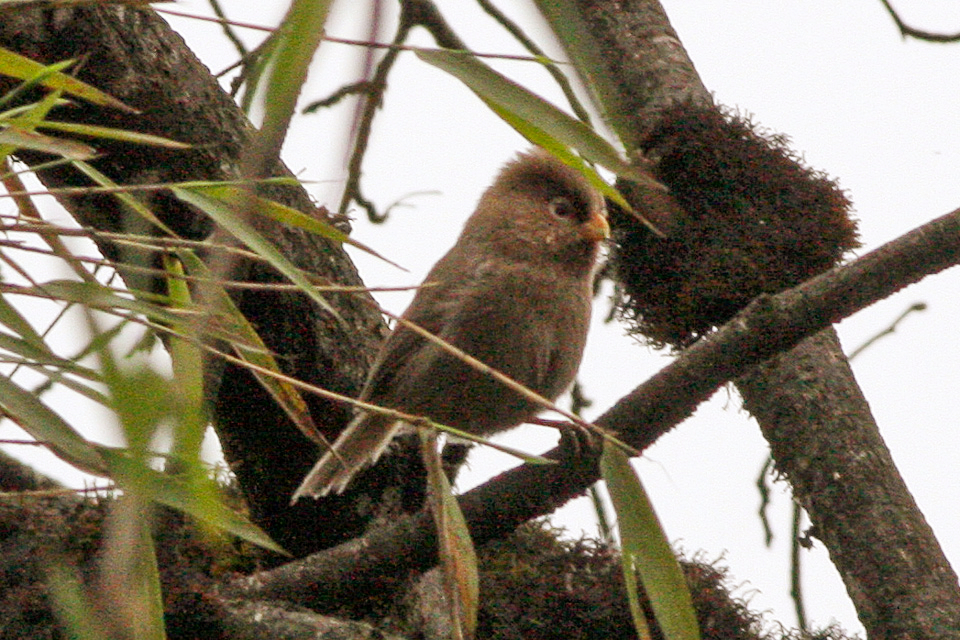
Lesser Whitethroat
Sylvia curruca
Order: Passeriformes / Family: Sylviidae

Wikimedia Commons
About the Lesser Whitethroat
The Lesser Whitethroat (Sylvia curruca) is a small passerine bird, part of the diverse and widespread Sylviidae family, known for its understated elegance and adaptability across various habitats. This species measures approximately 13 cm in length, making it a modest presence in the avian world. Its plumage is fairly muted, with a grayish-brown back and head, and a whitish underbelly, features that lend it an unassuming appearance. The Lesser Whitethroat is a bird of open woodlands, scrublands, and hedgerows, primarily found across Europe and Asia. During the breeding season, it inhabits regions from the United Kingdom across to western Russia, favoring locations with dense foliage that provide both cover and an abundance of insects, its primary food source. These birds are migratory, traveling to Africa and the Indian subcontinent during the winter months, showcasing a remarkable adaptability to diverse climates and environments. They play a vital ecological role as insectivores, helping to control pest populations. The Lesser Whitethroat's presence often indicates a healthy ecosystem, as it requires a thriving insect population and adequate vegetation for nesting and foraging. In terms of seasonal behavior, the Lesser Whitethroat is known for its distinctive song, which is most often heard during the breeding season. This song, a quick and repetitive trill, serves both as a territorial marker and a mating call. As autumn approaches, the species prepares for migration, gathering in small flocks that make the arduous journey southward. The Lesser Whitethroat's ability to traverse vast distances underscores its resilience and adaptability, traits that have allowed it to maintain a stable population despite changing environmental conditions.
The Lesser Whitethroat belongs to the family Sylviidae, within the order Passeriformes. These birds typically live typically 2-5 years, with some living up to 8 years..
How to Identify a Lesser Whitethroat
In identifying the Lesser Whitethroat, observers should note its small size, with an average length of 13 cm and a wingspan of approximately 18-20 cm. The bird's upperparts are a soft grayish-brown, while its underparts are pale, almost white, providing a subtle contrast that is more pronounced in males than in females. The head features a characteristic dark mask through the eye, which is more prominent in adult males. Juveniles exhibit a duller overall plumage, lacking the defined contrast seen in adults, which can make identification challenging. Both sexes share a similar appearance, although males may have slightly brighter and more distinct markings. In flight, the Lesser Whitethroat appears swift and direct, with rapid wingbeats. When perched, it often holds a slightly horizontal posture, blending seamlessly into the foliage. Its song, a rapid, short trill, is a key identifier, especially in spring and early summer. While similar in appearance to the Common Whitethroat, the Lesser Whitethroat is generally more secretive and has a less conspicuous white throat patch. Observers should also be aware of potential confusion with other Sylvia species, although the Lesser Whitethroat's unique song and subtle plumage distinctions aid accurate identification.
Having trouble telling birds apart? Upload a photo to our bird identification tool for an instant species match.
Lesser Whitethroat Habitat and Range
Preferred Habitat
The Lesser Whitethroat inhabits a range of environments, primarily favoring open woodlands, dense hedgerows, and scrubby areas. It thrives in regions that provide ample cover and a rich supply of insects. In Europe, it is commonly found in mixed deciduous forests and rural areas with extensive hedgerows. During the breeding season, they prefer locations with dense underbrush, which offers protection from predators and a plentiful food source. They are adaptable birds, also found at the edges of urban areas where suitable vegetation exists. In winter, the Lesser Whitethroat migrates to sub-Saharan Africa and the Indian subcontinent, where it occupies similar habitats, including wooded savannas and edge areas of forests. The species is rarely found at high elevations, typically residing at altitudes below 1,500 meters, where the climate and vegetation are more suitable for its needs.
Geographic Range
The Lesser Whitethroat breeds across a wide range, extending from the United Kingdom and Scandinavia, east through central Europe and Asia to the western parts of Siberia. Its breeding range is extensive but becomes more limited in northern regions where suitable habitats are less frequent. During winter, the Lesser Whitethroat migrates to warmer climates, primarily to regions in Africa south of the Sahara and across the Indian subcontinent. Migration routes often follow established corridors, with birds passing through countries such as Spain, Italy, and Greece. Population density varies, with higher concentrations in areas that provide both abundant food and suitable nesting sites, such as the woodlands of Central Europe. The Lesser Whitethroat is considered a common bird within its range, although local populations may fluctuate based on habitat availability and environmental conditions.
Want to know which birds visit your area? Browse our backyard birds by location guides for region-specific species lists.
What Does the Lesser Whitethroat Eat?
The Lesser Whitethroat primarily feeds on a diet of insects, which it captures through agile and acrobatic foraging techniques. During the breeding season, its diet consists predominantly of caterpillars, beetles, and other small invertebrates, which provide essential nutrients for both adults and their chicks. As the seasons change and autumn approaches, the bird's diet becomes more varied, incorporating berries and other fruits. This shift in diet supports the energy requirements necessary for its long migration. The Lesser Whitethroat often forages within dense foliage, gleaning insects from leaves and branches with precision. Its feeding schedule is diurnal, with peak activity occurring in the early morning and late afternoon when insect activity is highest. The bird's ability to adapt its diet based on seasonal availability highlights its ecological versatility.
Lesser Whitethroat Behavior and Social Structure
The Lesser Whitethroat exhibits a range of behaviors that reflect its solitary and territorial nature during the breeding season. Males establish territories through vocal displays, using their distinctive trills to ward off rivals and attract mates. These territories are typically maintained through active defense and persistent singing. In terms of social structure, the Lesser Whitethroat is primarily solitary outside the breeding season, although it may join small mixed-species flocks during migration. Courtship displays are subtle, often involving song flights and mutual preening. In response to predators, the Lesser Whitethroat employs cryptic behavior, remaining motionless or quickly retreating into dense cover. Its daily activity patterns include periods of active foraging interspersed with rest and preening. The Lesser Whitethroat's interactions with its environment reflect a balance of adaptability and caution, enabling it to thrive across diverse habitats.
Lesser Whitethroat Nesting and Reproduction
The Lesser Whitethroat constructs a delicate, cup-shaped nest using a variety of materials such as grass, leaves, and spider webs, often lined with softer materials like feathers. These nests are typically located in dense shrubs or low trees, providing concealment from predators. The clutch size ranges from 3 to 6 eggs, which are incubated primarily by the female for about 11 to 13 days. During this period, the male plays a crucial role in defending the territory and occasionally assisting in feeding the female. Once hatched, the chicks fledge approximately 10 to 12 days after hatching, although they remain dependent on parental care for a few weeks thereafter. The Lesser Whitethroat usually raises one brood per year, although in favorable conditions, a second brood may occur.
Lesser Whitethroat Sounds and Vocalizations
The primary song of the Lesser Whitethroat is a rapid, rattling trill, often described as mechanical in quality. This song serves as a territorial marker and is most frequently heard during the breeding season. Call notes are shorter and less distinct, typically used for communication between mates or signaling alarm. Alarm calls are sharp and abrupt, designed to alert other birds to potential threats. The species participates in the dawn chorus, with males singing vigorously at first light. Comparatively, its song is less melodic than that of the Common Whitethroat, but its distinctive rhythm and cadence are key identifiers for birders.
Interesting Facts About the Lesser Whitethroat
- 1The Lesser Whitethroat can travel over 5,000 kilometers during its migration from Europe to Africa.
- 2Despite its name, the Lesser Whitethroat often has a more prominent dark eye mask than the Common Whitethroat.
- 3Lesser Whitethroats are known to hybridize with closely related species, complicating identification.
- 4The species was first described by Linnaeus in 1758, reflecting its longstanding presence in Europe.
- 5Lesser Whitethroats are monogamous, forming pair bonds that last throughout the breeding season.
Lesser Whitethroat Conservation Status
The Lesser Whitethroat is currently classified as Least Concern by the IUCN, with stable population trends across much of its range. However, localized threats such as habitat loss due to agricultural expansion and urban development pose potential risks. Conservation efforts focus on preserving key habitats, particularly in breeding areas where traditional hedgerows and woodlands are increasingly fragmented. Historical population trends have remained relatively stable, although ongoing monitoring is necessary to ensure the species remains resilient against environmental changes.