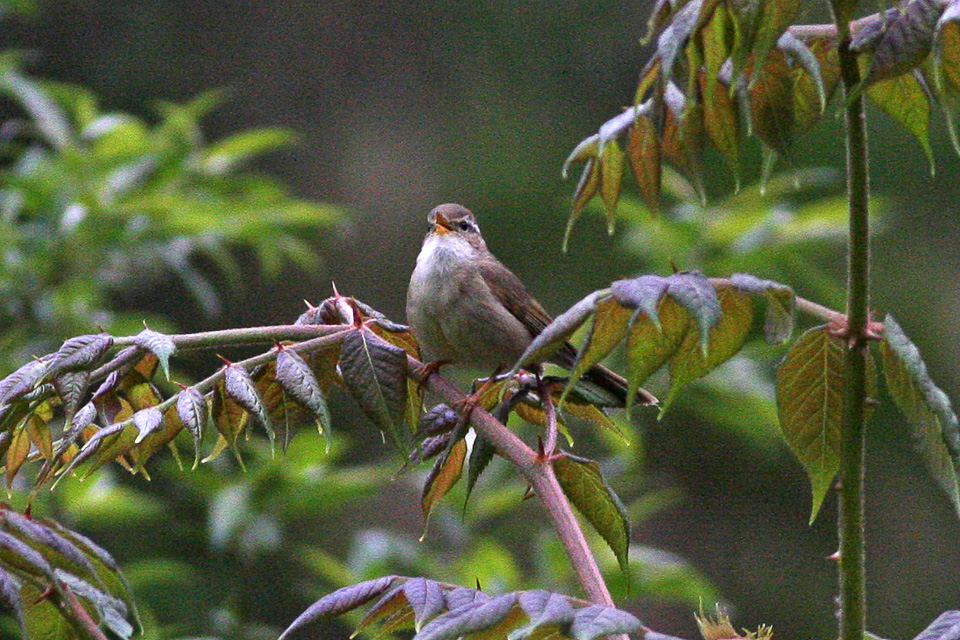
Makira Leaf Warbler
Phylloscopus makirensis
Order: Passeriformes / Family: Phylloscopidae

Wikimedia Commons
About the Makira Leaf Warbler
The Makira Leaf Warbler, scientifically classified as Phylloscopus makirensis, is a captivating species endemic to the Solomon Islands, specifically the island of Makira. This small passerine bird is an integral part of the island's avifauna, thriving within the dense montane and lowland forests that cover much of the region. Its presence is a testament to the rich biodiversity of these islands and reflects the unique evolutionary paths that isolation can foster. Unlike many other leaf warblers, the Makira Leaf Warbler exhibits adaptations that enable it to exploit the dense forest canopy, where it contributes to the ecological balance by controlling insect populations. Seasonal behaviors of the Makira Leaf Warbler are closely tied to the island's climate. The bird remains within the forested areas throughout the year, demonstrating a sedentary lifestyle typical of island endemics. However, shifts in its activity and feeding habits may occur in response to seasonal changes in insect abundance, particularly during the wetter months, when the forest canopy teems with life. Despite its limited distribution, the ecological role of the Makira Leaf Warbler remains significant. By preying on a variety of insects, it helps regulate pest populations, thus maintaining the health of the forest ecosystem. Furthermore, its presence as a constant year-round resident makes it a reliable subject for ornithological studies focused on island biogeography and the effects of habitat fragmentation on avian species.
The Makira Leaf Warbler belongs to the family Phylloscopidae, within the order Passeriformes. These birds typically live average 3-5 years, with limited data on maximum age.
How to Identify a Makira Leaf Warbler
The Makira Leaf Warbler can be identified by its vivid green upperparts, which provide effective camouflage against the foliage of its forest habitat. The bird's underparts are a contrasting pale yellow, a feature more pronounced in adults. Juvenile Makira Leaf Warblers, however, tend to have a slightly muted coloration, with their plumage appearing more washed-out in comparison. Sexual dimorphism is minimal, with males and females exhibiting similar plumage patterns, though males might appear slightly brighter during the breeding season. In terms of size, this warbler is small, typically measuring about 11 cm in length. Its flight silhouette is characterized by rapid, fluttering wingbeats and a relatively short tail, common traits among the Phylloscopidae family. When perching, the Makira Leaf Warbler often adopts an upright posture, frequently flicking its tail and wings, a behavior that can aid in its identification. While confusion with other Phylloscopus species is possible, the Makira Leaf Warbler's range restricts such overlap, reducing potential misidentifications.
Having trouble telling birds apart? Upload a photo to our bird identification tool for an instant species match.
Makira Leaf Warbler Habitat and Range
Preferred Habitat
The Makira Leaf Warbler inhabits the primary and secondary forests of Makira Island. Its preferred habitat includes dense montane and lowland forests, where it can be found at elevations ranging from sea level to around 1,000 meters. These forests provide ample cover and an abundant food supply, essential for the bird's survival and reproduction. Unlike some warblers that adapt to urban environments, the Makira Leaf Warbler remains strictly forest-bound, seldom venturing into open or degraded landscapes. Seasonal habitat shifts are minimal, but slight altitudinal movements may occur as the bird responds to climatic changes and food availability within the forest.
Geographic Range
The range of the Makira Leaf Warbler is restricted to Makira Island in the Solomon Islands, where it is a year-round resident. Unlike migratory warblers, Phylloscopus makirensis does not undertake long-distance movements, confining its activities to this singular island. Despite its limited range, the bird is relatively common within suitable forest habitats on Makira. Population densities tend to be higher in undisturbed forest regions, where the bird can thrive without the pressures of habitat degradation and competition. While the Makira Leaf Warbler does not migrate, its localized presence makes it a species of interest for studies on island endemism and conservation.
Want to know which birds visit your area? Browse our backyard birds by location guides for region-specific species lists.
What Does the Makira Leaf Warbler Eat?
The Makira Leaf Warbler primarily feeds on a diet of insects and other small arthropods, which it gleans from the foliage of forest trees. Its foraging technique involves actively searching through leaves and branches, often employing rapid, darting movements to capture prey. Seasonal diet variations occur, with the warbler consuming a higher quantity of caterpillars and soft-bodied insects during times of abundance, particularly in the rainy season. The bird's prey typically includes flies, beetles, and spiders, with prey size generally small to medium to accommodate its petite stature. Feeding occurs throughout the day, with peaks in activity during the early morning and late afternoon.
Makira Leaf Warbler Behavior and Social Structure
The behavior of the Makira Leaf Warbler is characterized by its solitary or pair-forming tendencies, especially during the breeding season. It exhibits territorial behavior, particularly males, who may engage in song displays to assert their dominance over a given area. Courtship displays are subtle, involving mutual preening and soft calls between mates. Outside the breeding season, the Makira Leaf Warbler may join mixed-species foraging flocks, a common strategy among forest-dwelling birds to increase foraging efficiency and protection from predators. Daily activity patterns involve periods of intense foraging interspersed with rest and preening. When faced with predators, the warbler typically relies on its agility and cryptic plumage to evade detection, rather than engaging in direct confrontation.
Makira Leaf Warbler Nesting and Reproduction
The nesting habits of the Makira Leaf Warbler are adapted to its forest environment. Nests are typically constructed in dense foliage, often within a bush or low tree, providing concealment from predators. The nest itself is cup-shaped, made from a combination of grass, leaves, and fine twigs, sometimes lined with softer materials such as feathers or moss. The typical clutch size ranges from two to three eggs, with an incubation period of approximately 12 to 14 days. Both parents participate in feeding the chicks, which fledge after about two weeks. The Makira Leaf Warbler generally raises one or two broods per year, depending on food availability and climatic conditions.
Makira Leaf Warbler Sounds and Vocalizations
The Makira Leaf Warbler's primary song consists of a series of high-pitched, melodious notes delivered in a rapid sequence. The rhythm is fast-paced, resembling the trills of other Phylloscopus warblers but with a distinctive tonal quality unique to this species. In addition to its song, the warbler emits call notes that are sharp and repetitive, often used in communication between mates or to signal alarm. During the dawn chorus, its voice stands out due to its clarity and persistence, contributing to the vibrant acoustic environment of the forest. The warbler's alarm calls are more abrupt and harsh, serving as a warning to nearby birds.
Interesting Facts About the Makira Leaf Warbler
- 1The Makira Leaf Warbler is named after the island of Makira, where it is exclusively found, making it a true island endemic.
- 2Unlike many other warblers, the Makira Leaf Warbler does not migrate, spending its entire life within the confines of Makira Island.
- 3This warbler's diet consists largely of insects, but during the rainy season, they increase their intake of caterpillars, exploiting seasonal abundance.
- 4Makira Leaf Warblers are known for their rapid, fluttering flight, which aids in their agile maneuvers through dense forest canopies.
- 5Despite their small size, Makira Leaf Warblers play a crucial role in pest control within their forest habitat, maintaining ecological balance.
Makira Leaf Warbler Conservation Status
The IUCN currently lists the Makira Leaf Warbler as a species of Least Concern, though its restricted range makes it vulnerable to habitat loss. Population trends remain stable, but deforestation and logging pose significant threats to its forest habitat. Conservation efforts focus on preserving the natural forest environment of Makira Island, with initiatives aimed at curbing illegal logging and promoting sustainable land use. Historical population data indicate that the warbler's numbers have remained relatively constant, thanks largely to the island's remoteness and the absence of introduced predators that plague other island birds.