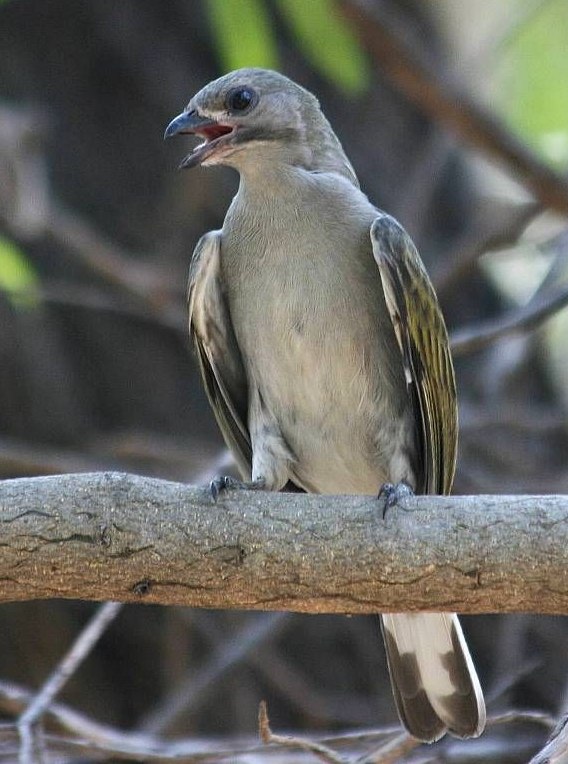
Ashy Bee-eater
Merops cinereus
Order: Coraciiformes / Family: Meropidae
About the Ashy Bee-eater
The Ashy Bee-eater (Merops cinereus) is a striking member of the Meropidae family, known for its distinctive ashen grey plumage. This medium-sized bird thrives in the lush tropical forests and open woodlands of Southeast Asia. It plays a vital role in controlling insect populations, particularly in areas like the Philippines and the islands of Indonesia. The species is particularly noted in regions such as Sulawesi, the Maluku Islands, and parts of Papua New Guinea, where its presence is a common sight. Its ecological significance cannot be overstated as it helps maintain the balance of ecosystems by preying on a variety of insects, including bees and dragonflies.
Their presence in these regions contributes to the biodiversity and health of local ecosystems. The Ashy Bee-eater's constant hunting of flying insects not only aids in pest control but also supports the ecological integrity of its habitat. Its adaptability to different environmental conditions allows it to thrive in both dense forests and more open areas, such as mangrove swamps and coastal regions. This adaptability is crucial for its survival during seasonal changes when insect populations fluctuate.
During breeding season, which generally peaks in the dry months of these tropical regions, the Ashy Bee-eater engages in intricate courtship displays, showcasing its aerial prowess. The bird's ability to adapt to seasonal variations in insect availability ensures its survival and reproductive success. As a result, it is a keystone species in its habitat, influencing both the structure and function of the local ecosystem. Its role extends beyond insect control, as it also provides an important prey source for higher predators, creating a complex web of interactions that underscores the interconnected nature of tropical ecosystems.
The Ashy Bee-eater belongs to the family Meropidae, within the order Coraciiformes. These birds typically live average 5-7 years, with a maximum recorded of 9 years..
How to Identify a Ashy Bee-eater
The Ashy Bee-eater can be identified by its unique grey plumage, which sets it apart from other members of the Meropidae family. Adults exhibit a uniform slate-grey coloration on their back, wings, and tail, which subtly transitions to a lighter grey on the underparts. This distinctive color pattern is complemented by a black mask extending across the eyes and a slightly hooked black bill, ideal for snatching insects mid-flight. Juveniles appear similar to adults but can be distinguished by their slightly duller plumage and less pronounced mask.
Males and females are largely similar in appearance, making visual differentiation challenging without close observation. However, males may sometimes appear slightly more vibrant during the breeding season due to hormonal changes affecting plumage sheen. In flight, the Ashy Bee-eater demonstrates a graceful, undulating flight pattern characterized by quick, shallow wingbeats interspersed with glides. This flight silhouette, along with its agile maneuvers, helps distinguish it from similar species like the Blue-throated Bee-eater, which sports more vibrant colors.
When perched, this bird often adopts an upright posture, allowing for an unobstructed view of its surroundings, essential for spotting prey. Its subtle coloration provides effective camouflage against the bark of trees and the shadows of the forest, making it a challenging bird to spot despite its relatively common status in suitable habitats.
Having trouble telling birds apart? Upload a photo to our bird identification tool for an instant species match.
Ashy Bee-eater Habitat and Range
Preferred Habitat
The Ashy Bee-eater predominantly inhabits tropical and subtropical forests, thriving in both primary and secondary growth areas. It is commonly found at elevations ranging from sea level up to about 1500 meters, though it prefers lower altitudes where insect prey is more abundant. In addition to dense forests, it can also be spotted in mangrove swamps, along riverbanks, and in open woodlands, exploiting the ample opportunities to hunt flying insects. During the dry season, it may shift towards coastal areas where water sources are more reliable, while in the wetter months, it is often seen penetrating deeper into forest interiors.
This bird demonstrates some degree of adaptability to human-altered landscapes, occasionally venturing into agricultural lands and gardens in search of insects. However, it remains more prevalent in natural settings, where its ecological role as an insect controller can be fully exercised. Despite its adaptability, urban presence is relatively limited, as these areas typically offer fewer suitable foraging sites compared to rural and forested environments.
Geographic Range
The Ashy Bee-eater is primarily found in Southeast Asia, with a range that includes the Philippines, the Indonesian islands of Sulawesi, the Maluku Islands, and extends into parts of Papua New Guinea. It is a year-round resident in these regions, with no significant migratory patterns observed. However, some local movements may occur in response to seasonal changes in food availability or habitat conditions.
In the Philippines, it is widespread across many islands, from Luzon to Mindanao, favoring lowland forests and coastal areas. Sulawesi hosts significant populations, particularly in its northern and central regions, where the bird is a common sight in various forest types and open areas. The Maluku Islands, known for their rich biodiversity, also provide suitable habitats for the Ashy Bee-eater, contributing to its stable population in the region.
While the bird is not known to migrate long distances, it may undertake short-range dispersal within its range, especially during breeding season, to exploit optimal nesting sites and abundant food resources. Population density tends to be higher in areas with well-preserved natural habitats, highlighting the importance of conservation in these regions.
Want to know which birds visit your area? Browse our backyard birds by location guides for region-specific species lists.
What Does the Ashy Bee-eater Eat?
The diet of the Ashy Bee-eater primarily consists of flying insects, with a marked preference for bees, wasps, and dragonflies. This bird employs a sit-and-wait hunting strategy, perching quietly until it spots potential prey. Once an insect is in sight, the Ashy Bee-eater launches into an agile, aerial pursuit, capturing its prey with expert precision. Its slender, slightly curved bill is perfectly adapted for snatching insects mid-flight, ensuring a high success rate in its hunts.
Seasonal changes influence its diet composition, with different insect populations peaking at various times of the year. During the wet season, when insect abundance increases, the Ashy Bee-eater expands its diet to include butterflies and beetles. In drier months, when larger insects become scarcer, it may shift to smaller prey items such as ants and termites.
This bird typically feeds throughout the day, with peaks in activity during the cooler morning and late afternoon hours. Its feeding schedule aligns with the activity patterns of its prey, ensuring optimal foraging efficiency. The Ashy Bee-eater's role as a predator of insects makes it an invaluable natural pest control agent, particularly in forested and agricultural regions where insect populations can impact ecosystem health.
Ashy Bee-eater Behavior and Social Structure
The Ashy Bee-eater is a highly social bird, often observed in small flocks that facilitate cooperative foraging and provide protection against predators. These flocks, usually composed of family groups, exhibit complex social structures, with individuals communicating through vocalizations and body language to coordinate activities.
Territorial behavior is most pronounced during the breeding season, when pairs establish and defend nesting sites from intruders. Males engage in elaborate courtship displays, showcasing their flight skills to attract females. These displays often involve synchronized aerial maneuvers and vocalizations, underscoring the importance of visual and auditory signals in their social interactions.
During non-breeding months, the Ashy Bee-eater exhibits more relaxed territoriality, allowing for greater flexibility in habitat use and social interactions. Flocking behavior provides numerous benefits, including enhanced vigilance against predators such as raptors and snakes. When faced with threats, these birds employ a combination of alarm calls and evasive flight patterns to avoid capture.
Daily activity patterns are largely diurnal, with peak activity occurring during the early morning and late afternoon when insect prey is most abundant and temperatures are more favorable for sustained activity. This bird's adaptability to different environmental conditions and its cooperative social behavior contribute to its success across its range.
Ashy Bee-eater Nesting and Reproduction
The Ashy Bee-eater constructs its nests in burrows, typically excavated in sandy banks, riverbanks, or eroded slopes. These burrows can be quite deep, often extending up to two meters in length to provide protection from predators and environmental extremes. The birds use their strong, sharp bills to dig into the substrate, creating a horizontal tunnel that culminates in a nesting chamber.
A typical clutch consists of three to five eggs, which are white and glossy. Both parents share incubation duties, which last about 20 to 23 days. Once hatched, the chicks are altricial, requiring extensive care and feeding from both parents. The fledging period is approximately 30 days, during which the chicks remain in the nest, growing rapidly and developing the necessary skills for independent life.
Parental roles are well-defined, with both male and female participating in feeding and protecting the young. This cooperative breeding strategy is crucial for ensuring high survival rates among offspring, particularly in environments where food availability can be unpredictable. The Ashy Bee-eater typically raises one brood per year, although favorable conditions may occasionally permit a second attempt.
Ashy Bee-eater Sounds and Vocalizations
The Ashy Bee-eater's vocalizations are characterized by a series of high-pitched, melodious calls that serve various functions within its social structure. The primary song consists of a rhythmic sequence of 'chirp-chirp' notes that convey information about territory and individual identity. This song is often delivered from a prominent perch, allowing sound to carry over long distances.
In addition to its song, the Ashy Bee-eater produces a variety of call notes, including softer 'twit' and 'tsip' sounds used during close-range interactions. Alarm calls, employed in response to potential threats, are sharp and piercing, designed to alert other members of the flock to danger. These calls are particularly important during nesting season when vulnerability to predators is heightened.
During the early morning hours, the Ashy Bee-eater participates in a dawn chorus, a communal vocal display that strengthens social bonds and reinforces territorial claims. The bird's vocal repertoire is both diverse and adaptable, reflecting its complex social dynamics and the varied acoustic environments it inhabits.
Interesting Facts About the Ashy Bee-eater
- 1The Ashy Bee-eater can dig burrows up to two meters long, providing secure nesting sites away from predators.
- 2Unlike many bee-eaters, the Ashy Bee-eater exhibits a unique grey plumage, which offers excellent camouflage against tree bark and shadows.
- 3Despite their name, Ashy Bee-eaters consume a variety of insects, including wasps and dragonflies, showcasing their diverse diet.
- 4These birds are highly social and often form small flocks that enhance foraging efficiency and predator avoidance.
- 5The Ashy Bee-eater's flight pattern is characterized by shallow wingbeats and glides, allowing for agile aerial maneuvers.
- 6Parental care in Ashy Bee-eaters involves both parents equally, with shared duties in incubation and feeding of the chicks.
- 7Their presence is a good indicator of healthy insect populations and ecosystem balance in Southeast Asian forests.
Ashy Bee-eater Conservation Status
The Ashy Bee-eater is currently listed as Least Concern on the IUCN Red List, with stable population trends observed across its range. While habitat destruction, primarily due to deforestation and land conversion for agriculture, poses potential threats, this species has demonstrated resilience and adaptability. Conservation efforts in regions such as the Philippines and Indonesia focus on preserving critical habitats and supporting sustainable land management practices. Protected areas and national parks play a significant role in safeguarding the natural environments essential for the Ashy Bee-eater's survival. Historically, the species has maintained stable populations, benefiting from its adaptability to different habitats and its important ecological role as an insect predator. Continued monitoring and habitat protection are vital to ensuring its future viability, especially in light of ongoing environmental changes.