Red-throated Bee-eater
Merops rufus
Order: Coraciiformes / Family: Meropidae

Wikimedia Commons
About the Red-throated Bee-eater
The Red-throated Bee-eater (Merops rufus) is a captivating member of the family Meropidae, known for its vivid plumage and agile flight. This species inhabits the savannas and open woodlands of West and Central Africa, extending from Senegal and Gambia in the west to Uganda and Kenya in the east. These birds play a critical ecological role, primarily by controlling insect populations, notably bees and wasps, which they expertly capture in mid-air. Their presence is often a reliable indicator of healthy insect biodiversity in their habitat. During the breeding season, which usually correlates with the onset of the rainy season, the Red-throated Bee-eater becomes even more conspicuous as it engages in elaborate courtship displays. Known for its social nature, it often nests in colonies, sometimes numbering in the hundreds, along riverbanks or sandy cliffs where they excavate tunnel nests. These colonies are bustling with activity, contributing to the dynamic and interconnected ecosystem of the African savanna. The Red-throated Bee-eater's migratory patterns are less pronounced than those of some related species, typically exhibiting local movements in response to rainfall and food availability. While they are not considered migratory in the traditional sense, these bee-eaters may move regionally to exploit different habitats throughout the year. Such movements ensure their presence across a broad geographical area, allowing them to maintain relatively stable populations despite environmental changes. Their adaptability to various habitats, from woodland edges to agricultural lands, underscores their resilience and importance within their ecological niche. As climate patterns shift, understanding the Red-throated Bee-eater's responses to these changes can offer insights into broader ecological dynamics and the health of the ecosystems they inhabit.
The Red-throated Bee-eater belongs to the family Meropidae, within the order Coraciiformes. These birds typically live average 5-7 years, with a maximum recorded of 10 years..
How to Identify a Red-throated Bee-eater
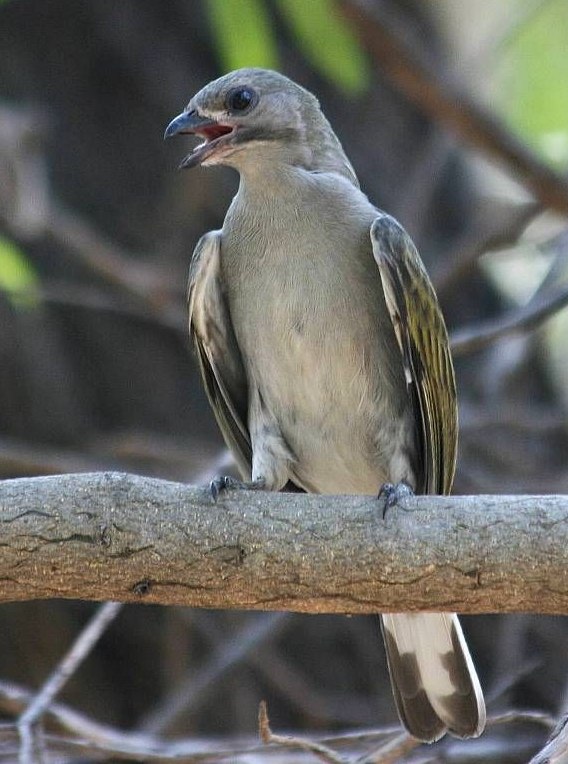
The Red-throated Bee-eater is a medium-sized bird, measuring about 20-24 cm in length, with a wingspan ranging from 30 to 34 cm. Adult plumage is unmistakable, characterized by its bright green upperparts, contrasting vividly with a rufous crown and a distinct red throat. The bird's underparts are mostly green, with a paler belly and faint streaking. Males and females appear similar, making sex differentiation challenging without close observation. Juveniles resemble adults but lack the fully developed red throat, instead displaying a duller coloration that gradually brightens as they mature. In flight, the Red-throated Bee-eater exhibits a slender silhouette with long, pointed wings and a slightly forked tail, which aids in its agile and acrobatic hunting style. When perched, often on exposed branches or utility wires, it maintains an upright posture, allowing for easy observation of its striking coloration. Confusion with other bee-eaters is possible, particularly with the Northern Carmine Bee-eater, but this species is distinguished by its smaller size and the absence of the carmine's predominantly red body.
Having trouble telling birds apart? Upload a photo to our bird identification tool for an instant species match.
Red-throated Bee-eater Habitat and Range
Preferred Habitat
The Red-throated Bee-eater thrives in a variety of open and semi-open habitats, favoring wooded savannas, riverbanks, and forest edges. It is commonly found at elevations below 1500 meters, although it can occasionally be spotted up to 2000 meters in certain regions. These bee-eaters adapt well to agricultural landscapes, often foraging over farmlands where insect prey is abundant. During the dry season, they may concentrate around water sources, where insects are more plentiful. While generally more common in rural areas, they can sometimes be found in peri-urban environments, provided there is suitable habitat and enough prey.
Geographic Range
The Red-throated Bee-eater's range spans across tropical Africa, primarily within the Sub-Saharan belt. Its breeding range includes countries such as Senegal, Gambia, Mali, Burkina Faso, Nigeria, and Cameroon, extending eastward to Uganda and Kenya. Within these regions, it occupies a variety of habitats, from riverine woodlands to savannas. Populations are most dense in areas where suitable nesting sites, like sandy banks, are abundant. While not typically migratory, the species may exhibit local movements, shifting to different areas seasonally in search of food or new nesting sites. Despite these movements, it remains relatively localized compared to some of its migratory relatives.
Want to know which birds visit your area? Browse our backyard birds by location guides for region-specific species lists.
What Does the Red-throated Bee-eater Eat?
True to its name, the Red-throated Bee-eater predominantly feeds on bees, wasps, and other flying insects. Its diet is supplemented by a variety of other insects, including beetles and dragonflies, particularly during periods when bee populations are lower. The bird employs a distinctive foraging technique, sallying from a perch to catch insects in flight with remarkable precision. Typically, it feeds during the cooler parts of the day, such as early morning and late afternoon, when insect activity peaks. The Red-throated Bee-eater demonstrates an impressive aerial hunting skill, capable of catching and consuming prey items ranging from small bees to larger dragonflies. Seasonal variations in diet often reflect the availability of different insect populations, ensuring the bird's adaptability across its range.
Red-throated Bee-eater Behavior and Social Structure
The Red-throated Bee-eater is a social bird, often observed in small groups or larger colonies, especially during the breeding season. These colonies can consist of up to several hundred individuals, offering a vibrant spectacle of interactions and vocalizations. Territorial behavior is evident around nesting sites, with pairs engaging in displays to ward off intruders. Courtship involves elaborate aerial displays, where males showcase their agility and vibrant plumage to attract mates. Flocking patterns are flexible, with groups often forming loosely structured foraging parties that move through the landscape in search of food. In response to predators, these bee-eaters exhibit mobbing behavior, gathering in numbers to deter potential threats. Daily activity patterns align closely with insect availability, with peak foraging occurring during early and late daylight hours.
Red-throated Bee-eater Nesting and Reproduction
Red-throated Bee-eaters construct their nests in colonies, often on sandy riverbanks or eroded cliffs. These nests consist of burrows excavated into the soil, typically measuring around 1 to 2 meters in length. Each burrow terminates in a nesting chamber where the female lays a clutch of 3 to 5 white eggs. Incubation lasts approximately 21 to 23 days, with both parents sharing responsibilities. Once hatched, the chicks remain in the nest for about 25 to 30 days before fledging. Parental care extends beyond fledging, as adults continue to feed the young until they are fully independent. In a favorable season, the Red-throated Bee-eater may produce two broods per year, contributing to its stable population dynamics.
Red-throated Bee-eater Sounds and Vocalizations
The Red-throated Bee-eater's vocalizations are a melodious series of trills and whistles, often delivered in rapid succession. Its primary song consists of a high-pitched, rhythmic 'prrrit-prrrit' sequence, which resonates across their open habitats. This song is most commonly heard during the breeding season, serving both as a territorial call and a courtship display. Additionally, the species emits a sharp 'krrr' as an alarm call, alerting conspecifics to potential threats. During dawn and dusk, these bee-eaters participate in a lively chorus, creating a distinctive soundscape that is both captivating and indicative of a vibrant ecosystem.
Interesting Facts About the Red-throated Bee-eater
- 1Red-throated Bee-eaters can consume up to 250 bees per day, showcasing their role in insect population control.
- 2Despite their name, Red-throated Bee-eaters possess vibrant green plumage, making them visually distinctive among bee-eaters.
- 3These bee-eaters remove stingers from their prey by repeatedly striking them against a perch before consumption.
- 4Their colonies, often located on sandy cliffs, can consist of up to 300 pairs, creating bustling breeding sites.
- 5The Red-throated Bee-eater demonstrates incredible aerial agility, capable of catching insects mid-flight with precision.
- 6These birds are known to follow large mammals, such as elephants, which flush out insects as they move through the savanna.
- 7Their nesting burrows can reach depths of up to 2 meters, providing protection from predators and environmental extremes.
Red-throated Bee-eater Conservation Status
Currently, the Red-throated Bee-eater holds a status of Least Concern on the IUCN Red List, with stable population trends across its range. Primary threats include habitat destruction due to agricultural expansion and changes in land use. Despite these challenges, the species' adaptability to modified habitats has mitigated severe declines. Conservation efforts focus on preserving key habitats and promoting sustainable agricultural practices. Historically, the Red-throated Bee-eater has maintained stable populations, benefiting from its wide distribution and adaptability. Continued monitoring is essential to ensure long-term conservation, particularly in regions experiencing rapid environmental changes.