
Mindanao Lorikeet
Saudareos johnstoniae
Order: Psittaciformes / Family: Psittaculidae

Wikimedia Commons
About the Mindanao Lorikeet
The Mindanao Lorikeet (Saudareos johnstoniae) is a captivating bird endemic to the island of Mindanao in the Philippines. It belongs to the family Psittaculidae and is a vibrant and essential component of the island's montane forest ecosystem. Its presence is primarily restricted to the high-altitude regions of Mindanao, where it plays a crucial role in seed dispersal and pollination. The lorikeet's ecological significance extends to its interactions with the native flora, as it feeds on nectar, pollen, and fruits, thus facilitating the reproduction of several plant species. The Mindanao Lorikeet has adapted well to the unique environmental conditions of its habitat, thriving in areas with dense forest canopy and abundant food sources. Seasonal behaviors of the Mindanao Lorikeet reflect its adaptation to the tropical climate. During the wet season, the bird's diet becomes more diverse due to the increased availability of fruits and flowers. The lorikeet's breeding season coincides with this period of abundance, ensuring ample resources for rearing young. Its social structure and flocking behavior also become more pronounced during these months, as birds congregate around food-rich areas. The dry season, while offering fewer resources, sees the Mindanao Lorikeet adapting by expanding its foraging range. Historically, the Mindanao Lorikeet has been a symbol of the island's rich biodiversity. Its vibrant plumage and lively behavior have made it a subject of interest for ornithologists and birdwatchers alike. The bird's continuous presence highlights the relatively intact nature of its montane forest habitat, though ongoing conservation efforts are crucial to mitigating habitat loss and ensuring the lorikeet's survival. The Mindanao Lorikeet's role in the ecosystem underscores the interconnectedness of species within the montane forests of Mindanao. By participating in seed dispersal and pollination, the lorikeet supports the regeneration of forest areas and maintains the ecological balance. Its interactions with other species, both plant and animal, reflect the complexity and richness of the island's biodiversity.
The Mindanao Lorikeet belongs to the family Psittaculidae, within the order Psittaciformes. These birds typically live average 10-15 years, with some living up to 20 years in captivity..
How to Identify a Mindanao Lorikeet
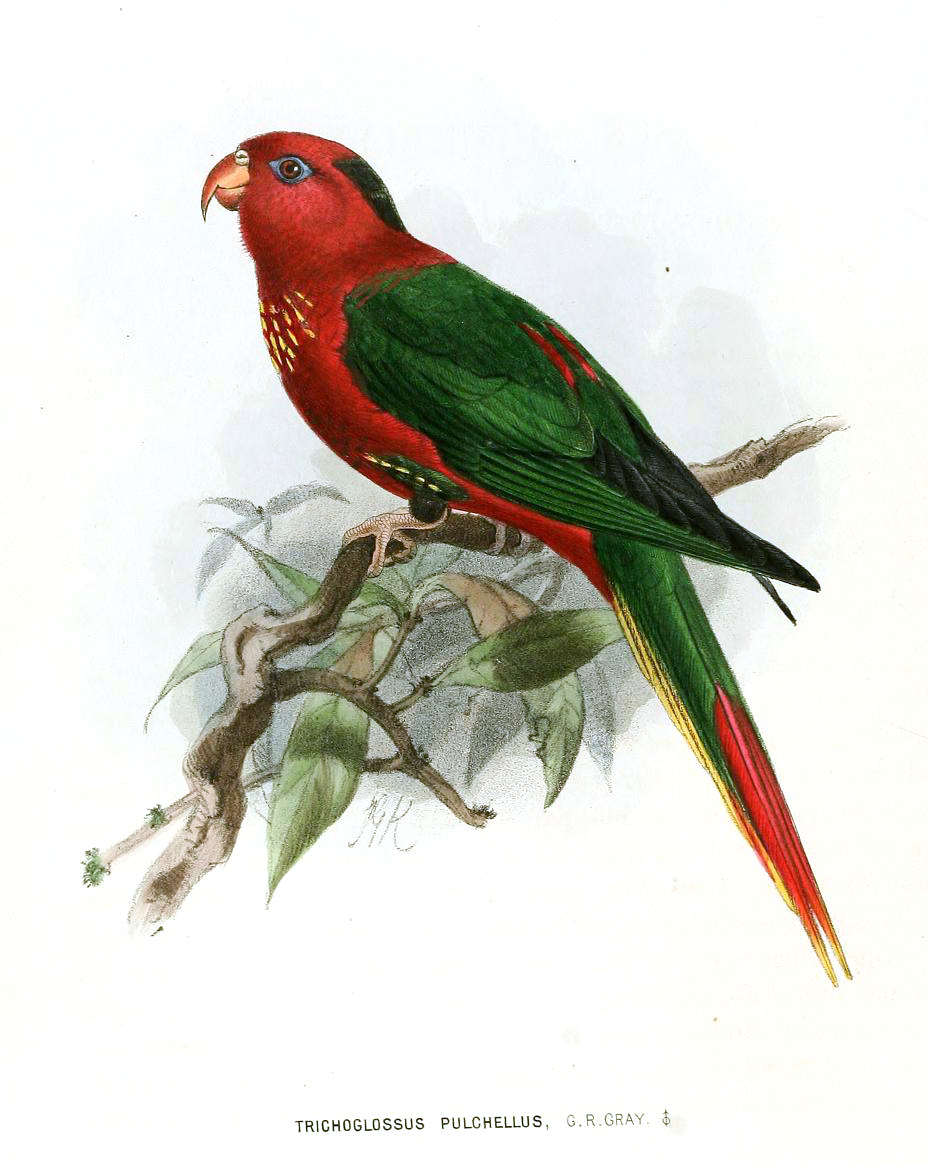
The Mindanao Lorikeet is a small to medium-sized parrot, easily identified by its predominantly green plumage. Adults showcase a vibrant green body with contrasting red bands across their chest, which are more pronounced in males. Females tend to have a slightly duller overall appearance, with less intense red markings. Juveniles resemble adults but are generally less vividly colored and lack the full development of the characteristic red chest band. In the field, the Mindanao Lorikeet can be confused with other green parrots, but its distinctive red chest and the specific habitat help distinguish it. Its flight silhouette is marked by swift, direct flight patterns with rapid wingbeats, typical of lorikeets. When perched, the bird exhibits a slightly hunched posture, often observed in small groups or pairs. Another identifying feature is the blue wash visible on the lorikeet's head, adding to its colorful appearance. This feature, combined with its agile movements and social behavior, makes the Mindanao Lorikeet a delight to observe in its natural habitat.
Having trouble telling birds apart? Upload a photo to our bird identification tool for an instant species match.
Mindanao Lorikeet Habitat and Range
Preferred Habitat
The Mindanao Lorikeet inhabits the montane forests of Mindanao, typically found at elevations ranging from 1,000 to 2,500 meters. These high-altitude forests provide the dense canopy and diverse plant life essential for the lorikeet's survival. The bird is most commonly seen in primary forests, though it can also adapt to secondary growth areas provided they offer sufficient food resources. Seasonal shifts in habitat use are minimal, as the lorikeet remains largely within montane regions year-round. While primarily a forest dweller, the Mindanao Lorikeet occasionally ventures into adjacent clearings or agricultural areas in search of food, reflecting its adaptability to habitat changes. However, urban presence is rare, as the bird favors undisturbed forest environments.
Geographic Range
The Mindanao Lorikeet is endemic to the island of Mindanao in the Philippines, where it occupies suitable montane forest habitats. Its distribution is limited to these high-altitude regions, with no significant migratory behavior observed. The lorikeet's range is primarily within the mountainous areas, particularly in regions such as Mount Kitanglad and Mount Apo, which are known for their rich biodiversity and intact forest ecosystems. Population density tends to be higher in protected areas where habitat conservation efforts are more robust. The bird's limited range and specific habitat requirements highlight its vulnerability to habitat loss, making conservation efforts crucial for its continued survival.
Want to know which birds visit your area? Browse our backyard birds by location guides for region-specific species lists.
What Does the Mindanao Lorikeet Eat?
The Mindanao Lorikeet primarily feeds on nectar and pollen, utilizing its specialized brush-tipped tongue to extract these resources from flowers. Its diet also includes fruits and, occasionally, small insects, particularly during the breeding season when protein demand increases. The lorikeet often forages in the upper canopy, displaying agile movements as it navigates through branches and foliage. It typically feeds in the early morning and late afternoon, taking advantage of cooler temperatures and reduced competition. The bird's role as a pollinator and seed disperser underscores its importance in maintaining the ecological health of its montane forest habitat.
Mindanao Lorikeet Behavior and Social Structure
The Mindanao Lorikeet exhibits a highly social behavior, often seen in small flocks ranging from 5 to 15 individuals. These flocks engage in cooperative foraging and exhibit strong social bonds. The bird is known for its acrobatic flight and energetic movements while feeding. Territorial behavior is observed during the breeding season, with pairs defending nest sites from intruders. Courtship displays involve mutual preening and vocalizations, strengthening pair bonds. The lorikeet's response to predators includes alarm calls and evasive flight, often retreating to the safety of dense foliage. Daily activity patterns are influenced by food availability, with peak activity occurring during feeding periods.
Mindanao Lorikeet Nesting and Reproduction
The Mindanao Lorikeet nests in tree cavities, often selecting sites high in the canopy to ensure safety from ground predators. Nest construction involves minimal material use, primarily relying on existing cavities. Clutch size typically ranges from two to three eggs, which the female incubates for approximately 22-24 days. Both parents participate in feeding the chicks, which fledge about 6-7 weeks after hatching. The lorikeet usually raises one brood per year, although favorable conditions may allow for a second. Parental care extends several weeks post-fledging, ensuring juvenile survival.
Mindanao Lorikeet Sounds and Vocalizations
The Mindanao Lorikeet's vocal repertoire includes a variety of calls, from high-pitched chirps to more complex melodic sequences. Its primary song is characterized by rapid, repeating notes with a clear, ringing quality. Alarm calls are sharp and sudden, serving as a warning to the flock. During the dawn chorus, the lorikeet's calls blend with those of other forest birds, creating a vibrant acoustic environment. The bird's vocalizations are integral to its social interactions, facilitating communication within flocks.
Interesting Facts About the Mindanao Lorikeet
- 1The Mindanao Lorikeet's vibrant plumage not only serves as camouflage in the dense forest canopy but also helps in attracting mates.
- 2With a specialized tongue, the Mindanao Lorikeet can extract nectar from flowers more efficiently than many other bird species.
- 3Despite its small size, the Mindanao Lorikeet can travel considerable distances daily in search of food, showcasing remarkable stamina.
- 4The Mindanao Lorikeet contributes significantly to the regeneration of forests by dispersing seeds over wide areas through its droppings.
- 5Flocking behavior in the Mindanao Lorikeet decreases predation risk, as multiple pairs of eyes can spot threats more effectively.
- 6The lorikeet's preference for high-altitude forests makes it an indicator species for the health of montane ecosystems.
- 7Mindanao Lorikeets often engage in playful interactions, which are thought to strengthen social bonds within flocks.
Mindanao Lorikeet Conservation Status
The Mindanao Lorikeet is currently listed as Near Threatened by the IUCN, with its population experiencing a decline due to habitat loss and degradation. Primary threats include deforestation for agriculture and logging. Conservation efforts focus on habitat protection and restoration, with several protected areas established within its range. Historical population changes highlight the need for ongoing monitoring and community engagement to ensure the lorikeet's long-term survival. Education and awareness programs aim to mitigate human impact and promote sustainable land use practices.
Other Psittaculidae Species


Birds Similar to the Mindanao Lorikeet
These species are often confused with the Mindanao Lorikeet due to similar appearance or overlapping range.

