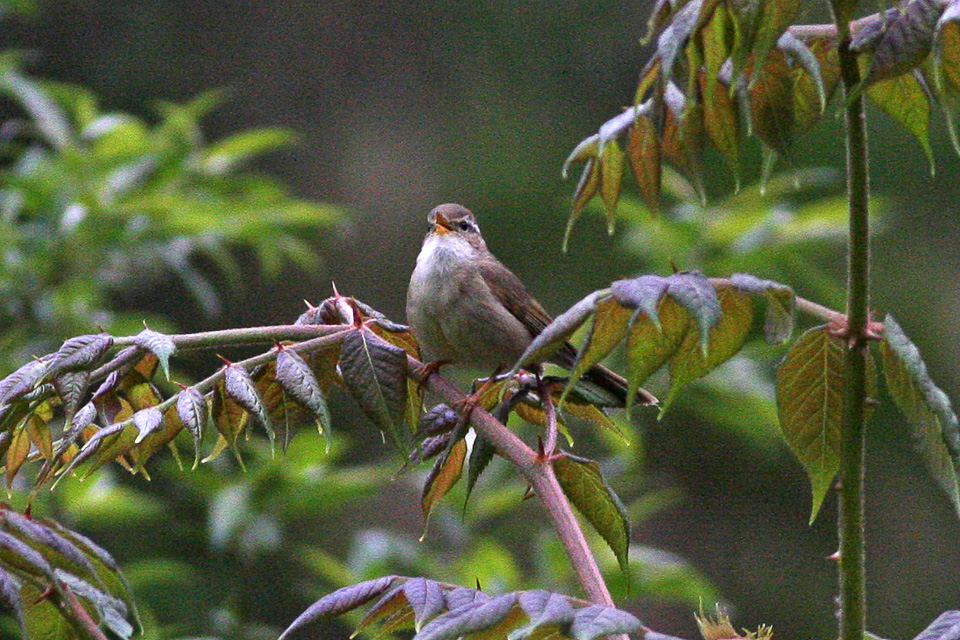
Negros Leaf Warbler
Phylloscopus nigrorum
Order: Passeriformes / Family: Phylloscopidae

Wikimedia Commons
About the Negros Leaf Warbler
The Negros Leaf Warbler (Phylloscopus nigrorum) is an exquisite member of the Phylloscopidae family, thriving in the lush tropical forests of the Philippines. Endemic to the islands of Negros and Panay, this species is a significant part of the region's avian biodiversity. The bird plays an important ecological role, primarily as an insectivore, controlling pest populations and contributing to the health of forest ecosystems. The Negros Leaf Warbler is most commonly found in primary and secondary forests, where it prefers to stay in the middle to upper canopy layers, often in mixed-species flocks. It demonstrates remarkable adaptability, occupying habitats from lowland forests to montane regions. Seasonal behaviors include subtle shifts in altitudinal distribution, possibly related to food availability and breeding needs. During the breeding season, its energetic song can be heard throughout its habitat as it establishes territories and attracts mates. The Negros Leaf Warbler, like many forest-dependent species, faces threats from habitat loss due to logging and agricultural expansion. Conservation efforts are critical to ensure the survival of this species, with habitat protection being a priority. Forest reserves and protected areas on Negros and Panay offer a refuge for this and other endemic species, highlighting the warbler's ecological importance in maintaining the region's biodiversity. The bird's presence in these forests not only contributes to the ecological balance but also adds aesthetic and intrinsic value to the natural beauty of the Philippine archipelago.
The Negros Leaf Warbler belongs to the family Phylloscopidae, within the order Passeriformes. These birds typically live average 3-5 years, with limited data on maximum age.
How to Identify a Negros Leaf Warbler
The Negros Leaf Warbler is a small, agile bird distinguished by its olive-green upperparts and yellowish underparts. Adult plumage is relatively consistent between males and females, though males may exhibit slightly brighter coloring during the breeding season. Juveniles tend to have duller plumage, lacking the subtle gloss found in adults. This warbler can be confused with other Phylloscopus species, but its unique combination of a faint supercilium and distinct olive hue sets it apart. The bird's flight is characterized by rapid, flitting motions, often accompanied by a constant wing flicking. When perched, the warbler maintains an alert posture, frequently moving its head in search of prey. Its small size, typically around 10-12 centimeters in length, aids in navigating dense foliage. Observers may note the bird's nimble movements and its preference for remaining within the cover of the canopy, making it a challenge to spot without keen observation.
Having trouble telling birds apart? Upload a photo to our bird identification tool for an instant species match.
Negros Leaf Warbler Habitat and Range
Preferred Habitat
The preferred habitat of the Negros Leaf Warbler includes both primary and secondary lowland forests, as well as montane forests. It is typically found at elevations ranging from sea level up to 2,000 meters, depending on the availability of suitable forest cover. This bird is well-adapted to densely vegetated environments, thriving in areas with rich undergrowth and abundant insect life. During the breeding season, it may occupy slightly higher elevations, seeking out cooler temperatures and less disturbed habitats. Although primarily a forest bird, it can occasionally be found in adjacent scrublands and forest edges. The warbler's reliance on forest habitats makes it particularly vulnerable to deforestation and habitat fragmentation. Urban presence is rare, as it prefers the seclusion and resources offered by forested areas, avoiding heavily urbanized regions.
Geographic Range
The Negros Leaf Warbler's range is confined to the islands of Negros and Panay in the central Philippines. This endemic species has a relatively limited distribution, inhabiting the forested regions of these islands. It does not undertake long-distance migrations but may exhibit local movements, particularly altitudinal shifts, in response to seasonal changes in food availability and breeding conditions. The warbler's population density is highest in areas with extensive forest cover, such as protected reserves and mountainous regions. On Negros, known hotspots include the forests of Mount Canlaon and the Northern Negros Natural Park. On Panay, it is frequently observed in the Central Panay Mountain Range. Due to its restricted range, the Negros Leaf Warbler is particularly susceptible to environmental changes and habitat loss.
Want to know which birds visit your area? Browse our backyard birds by location guides for region-specific species lists.
What Does the Negros Leaf Warbler Eat?
The diet of the Negros Leaf Warbler consists predominantly of insects and other small arthropods. It forages actively among the foliage, gleaning prey from leaves and branches with precision. This insectivorous diet includes caterpillars, beetles, and spiders, which the warbler captures with quick, nimble movements. Seasonal diet variations occur, with the bird adjusting its food sources based on availability. During periods of insect scarcity, it may supplement its diet with small amounts of fruit or nectar. The warbler employs a variety of foraging techniques, such as hover-gleaning and sallying, which allow it to exploit different vertical strata of the forest. Foraging activity peaks in the early morning and late afternoon, aligning with increased insect movement during these times.
Negros Leaf Warbler Behavior and Social Structure
The Negros Leaf Warbler exhibits a variety of behaviors that reflect its adaptability and social nature. It is typically seen foraging in small groups or mixed-species flocks, which provide increased vigilance against predators and enhanced foraging efficiency. Territorial aggression is most pronounced during the breeding season when males establish and defend territories through vocalizations and occasional physical confrontations. Courtship displays involve song bursts and aerial chases, with males showcasing their vocal prowess to attract mates. The warbler's response to predators includes alarm calls and retreating deeper into the canopy. Daily activity patterns see the warbler most active during the cooler parts of the day, engaging in foraging and social interactions. Rest periods occur during the hottest midday hours, likely to conserve energy and avoid overheating.
Negros Leaf Warbler Nesting and Reproduction
The nesting habits of the Negros Leaf Warbler involve the construction of cup-shaped nests, typically built from moss, leaves, and fine plant fibers. These nests are often placed in the forks of small trees or shrubs, concealed within dense foliage to protect against predators. The breeding season aligns with the onset of the rainy season, when food is abundant. A typical clutch consists of 2-4 eggs, with both parents involved in incubation and feeding duties. Incubation lasts approximately 12-14 days, followed by a fledgling period of about 10-12 days before the young leave the nest. The warbler may produce one or two broods per year, depending on environmental conditions and food availability. Parental care extends beyond fledging, with adults continuing to feed and protect their young until they are fully independent.
Negros Leaf Warbler Sounds and Vocalizations
The primary song of the Negros Leaf Warbler is a series of high-pitched, melodic notes that rise and fall in a rhythmic pattern. This song serves both to establish territory and attract mates during the breeding season. Call notes are short and sharp, often used for communication between individuals and as alarm signals in the presence of predators. The warbler participates in the dawn chorus, contributing its voice to the collective soundscape of the forest. Its song is reminiscent of other Phylloscopus warblers but can be distinguished by its unique tonal quality and rhythm. During non-breeding periods, vocal activity decreases, though the warbler remains vocally active throughout the day.
Interesting Facts About the Negros Leaf Warbler
- 1The Negros Leaf Warbler was only recognized as a distinct species in the late 20th century, highlighting its relatively recent scientific discovery.
- 2Despite its small size, the Negros Leaf Warbler plays a crucial role in pest control, consuming significant quantities of insects.
- 3The warbler's preference for mixed-species flocks provides it with increased protection against predators due to the collective vigilance of the group.
- 4During territorial disputes, males of the species can engage in intense vocal duels, showcasing their singing abilities.
- 5The Negros Leaf Warbler exhibits remarkable adaptability, thriving in both primary and secondary forests across a range of elevations.
- 6The species' limited distribution to only two Philippine islands makes it particularly sensitive to environmental changes.
- 7The Negros Leaf Warbler's song is a key identifier for birdwatchers, often being heard before the bird is seen due to its elusive nature.
Negros Leaf Warbler Conservation Status
The Negros Leaf Warbler is currently listed as Near Threatened on the IUCN Red List, with its population trend showing signs of decline. The primary threat to this species is habitat loss due to deforestation for agriculture and logging. Conservation efforts focus on preserving remaining forest habitats through the establishment of protected areas and reserves. Historical population changes have been influenced by the extent of forest cover, with declines correlating with increased human activity. Current initiatives aim to raise awareness and promote sustainable land use practices that benefit both local communities and biodiversity. Continued monitoring and research are necessary to ensure the survival of this unique warbler.