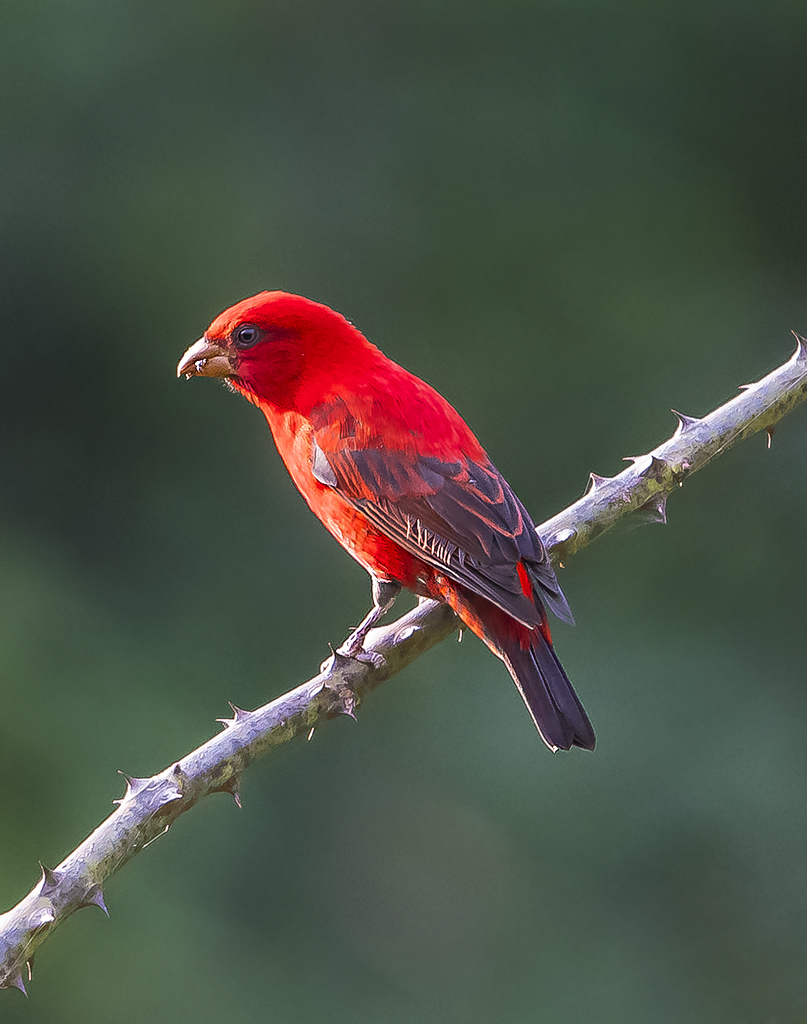
Pale Rosefinch
Carpodacus stoliczkae
Order: Passeriformes / Family: Fringillidae

Wikimedia Commons
About the Pale Rosefinch
The Pale Rosefinch, Carpodacus stoliczkae, is a small passerine bird belonging to the family Fringillidae. It inhabits a range of high-altitude regions across Central Asia, primarily within the montane zones of the Himalayas, Tibet, and the Tien Shan range. Renowned for its subtle beauty, this species exhibits a delicate blend of pale pink and grayish hues, making it a unique member of the rosefinch family. Its presence in these remote and rugged areas underscores its adaptability and the ecological niche it occupies.
This bird plays a significant role in its ecosystem, particularly within alpine and subalpine habitats. As a seed disperser, the Pale Rosefinch contributes to the maintenance and propagation of various plant species across its range. Seasonal variations in its behavior and distribution are closely linked to the harsh climatic conditions of its environment. During the breeding season, which occurs in the warmer months, the Pale Rosefinch is found in higher elevations, while it tends to move to slightly lower altitudes as winter approaches.
The ecological role of the Pale Rosefinch extends to its interactions with other avian species and the broader fauna of its habitat. It often shares its environment with species such as the Tibetan Snowfinch and the Himalayan Bluetail. This bird's preference for mountainous terrains implies a high degree of specialization in terms of feeding and nesting habits. Its existence in these isolated and challenging environments highlights the evolutionary adaptations that enable it to thrive where few other bird species can.
The Pale Rosefinch belongs to the family Fringillidae, within the order Passeriformes. These birds typically live average 5-6 years, with a maximum recorded of 8 years..
How to Identify a Pale Rosefinch
The Pale Rosefinch features distinct field marks that make it identifiable to seasoned birders. Adult males exhibit a soft pink coloration on their head and breast, which fades into lighter gray on their flanks and underparts. This coloration provides a marked contrast with their brownish wings and tail. Females and juveniles display a more subdued palette, with browner tones overall, helping them blend into their rocky surroundings.
One of the key identifiers of the Pale Rosefinch is the pink-washed face of the males, which can be a distinguishing feature against similar species. Compared to the Common Rosefinch, the Pale Rosefinch's tones are much less vivid and more pastel-like. The males possess a distinctive flight silhouette with a slightly rounded tail and broad wings, typical of finches.
In terms of posture, this species often perches upright on exposed rocks or low shrubs, which offers a good vantage point for spotting predators and foraging opportunities. Their foraging behavior involves frequent hopping movements, which can be observed when they are searching for seeds or during interactions with conspecifics.
Having trouble telling birds apart? Upload a photo to our bird identification tool for an instant species match.
Pale Rosefinch Habitat and Range
Preferred Habitat
The Pale Rosefinch thrives in specific high-altitude habitats, primarily in mountainous regions. It favors alpine meadows, rocky slopes, and scrublands, often at elevations ranging from 3,000 to 5,000 meters. In the Himalayas, these birds are commonly found in the mixed shrub and grassland zones just below the snow line, where they can exploit the sparse vegetation.
During winter, the Pale Rosefinch may descend to lower altitudes, seeking refuge in valleys and foothills that offer more temperate conditions and accessible food sources. These seasonal habitat shifts are crucial for their survival, allowing them to cope with the extreme weather variations typical of their environment.
Unlike many songbirds, the Pale Rosefinch is rarely seen in urban settings, as it prefers the solitude and resources offered by remote mountainous areas. Its presence in these zones underscores its adaptation to environments that are challenging for other species.
Geographic Range
The Pale Rosefinch has a breeding range concentrated primarily in Central Asia. It is found across regions such as the Himalayas, the Tibetan Plateau, and the Tien Shan mountains, where it occupies high-altitude zones. During the summer breeding season, these birds inhabit elevations that allow them to take advantage of the brief alpine summer.
Winter brings a shift in their range as they move to lower altitudes within these mountainous regions. This altitudinal migration is not long-distance, as the Pale Rosefinch remains within a relatively confined geographic area. Countries like Nepal, Bhutan, northern India, and parts of western China host these birds throughout different seasons.
Though they are not considered migratory in the traditional sense, the Pale Rosefinch's range is quite specific, with population densities highest in areas where suitable alpine habitats are abundant. This concentration makes them less widespread compared to other finch species, but they can be quite common within their preferred zones.
Want to know which birds visit your area? Browse our backyard birds by location guides for region-specific species lists.
What Does the Pale Rosefinch Eat?
The Pale Rosefinch primarily subsists on a diet of seeds, which it expertly extracts from the sparse vegetation found in its alpine habitat. Grass seeds and those from small shrubs make up the bulk of its diet. During the summer months, when flowers bloom at high altitudes, the Pale Rosefinch may also consume buds and young shoots.
As winter approaches and the availability of seeds diminishes, the Pale Rosefinch will opportunistically feed on any remaining plant material, including lichens and mosses. This adaptability in diet allows the bird to survive in environments where food availability can be unpredictable.
Foraging typically occurs during daylight hours, with peak activity in the early morning and late afternoon. The bird uses a combination of ground foraging and low-branch hopping to find food, showing great agility and precision in its movements.
Pale Rosefinch Behavior and Social Structure
The Pale Rosefinch exhibits a range of behaviors that reflect its adaptation to high-altitude living. Socially, this bird is generally seen in small groups, particularly outside the breeding season, when it may form loose flocks while foraging.
Territorial behavior becomes more pronounced during the breeding season, as males establish and defend small territories to attract mates. Courtship displays include fluttering flights and soft singing, aimed at securing a partner and deterring rival males. These displays highlight the subtle yet distinctive vocalizations of the species.
The Pale Rosefinch's daily activities are largely governed by the availability of food and the need for energy conservation in its cold environment. It is most active during the warmer parts of the day and tends to roost in sheltered rocky crevices or dense shrubbery at night. In response to predators, such as birds of prey, the Pale Rosefinch relies on its cryptic coloration and quick flight to evade capture.
Pale Rosefinch Nesting and Reproduction
The nesting habits of the Pale Rosefinch reflect its adaptation to the rugged terrains it inhabits. Nests are typically built in sheltered locations, such as rock crevices or dense low shrubs, which offer protection from the elements and predators.
Constructed with a mix of grass stems, moss, and lichen, the nest is lined with softer materials like feathers and plant down. The female lays a clutch of 3 to 5 eggs, which she incubates for approximately 12 to 14 days.
Both parents participate in feeding the chicks once they hatch, providing a diet rich in seeds and occasionally insects. Fledging occurs about two weeks after hatching, with young birds gaining independence rapidly in preparation for the coming winter. Generally, the Pale Rosefinch raises one brood per year, though this can vary depending on seasonal conditions.
Pale Rosefinch Sounds and Vocalizations
The vocal repertoire of the Pale Rosefinch includes a soft, warbling song that serves as both a territorial marker and a courtship display. This song consists of a series of melodious whistles and trills, often delivered from an elevated perch. Its call notes, used for communication between individuals, are short and sharp, resembling a 'tink' sound.
When alarmed, the Pale Rosefinch may emit a rapid series of 'chip' notes, alerting others to potential threats. During the dawn chorus, males actively sing to establish their presence and attract mates, creating a serene yet persistent backdrop to the early morning alpine environment.
Interesting Facts About the Pale Rosefinch
- 1The Pale Rosefinch's pink hues are less intense than other rosefinches, making it a subtle yet striking presence in its alpine home.
- 2These birds are among the highest-altitude dwelling finches, often found at elevations exceeding 4,500 meters.
- 3Unlike many other finches, the Pale Rosefinch rarely visits feeders, as it prefers the natural abundance of its mountain habitat.
- 4The Pale Rosefinch's song, though soft and understated, plays a crucial role in mate attraction and territoriality.
- 5These finches have adapted to survive on a diet primarily composed of seeds, even during harsh winter conditions.
- 6Despite their remote habitats, Pale Rosefinches have a surprisingly wide distribution across Central Asia's mountainous regions.
- 7The Pale Rosefinch shares its habitat with other high-altitude specialists, such as the Tibetan Snowfinch and the Alpine Accentor.
Pale Rosefinch Conservation Status
As of the latest assessments, the Pale Rosefinch is classified as Least Concern by the IUCN. Its population appears stable, with no major widespread threats currently identified. However, changes in climate and habitat disturbance, such as overgrazing by livestock, could potentially impact its high-altitude habitats. Conservation efforts focus on monitoring population trends and preserving the delicate mountain ecosystems that support this species. Historical data suggests that while local fluctuations occur, the overall population remains robust across its range.
Other Fringillidae Species


Birds Similar to the Pale Rosefinch
These species are often confused with the Pale Rosefinch due to similar appearance or overlapping range.