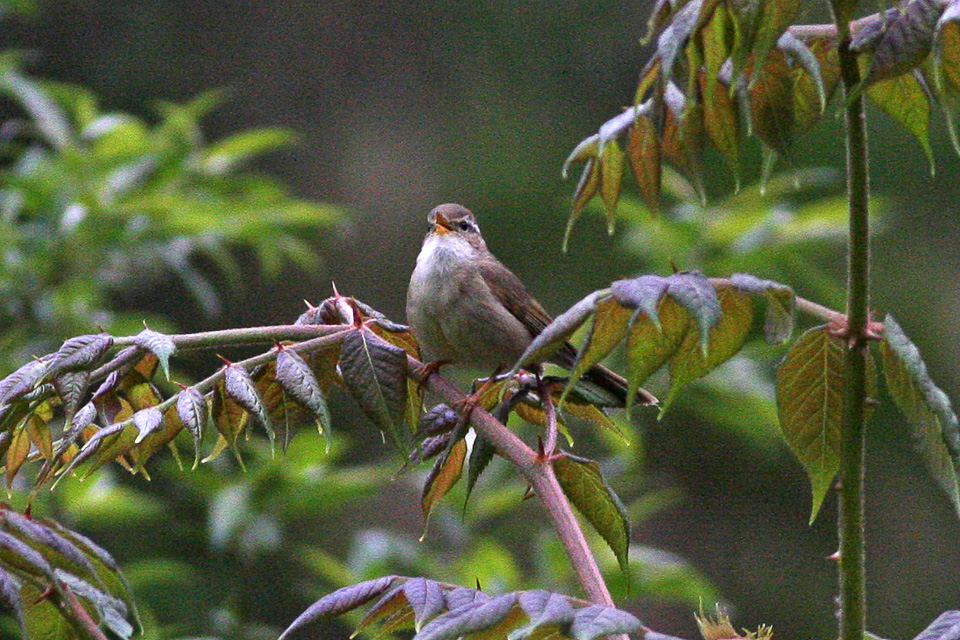
Pale-rumped Warbler
Phylloscopus chloronotus
Order: Passeriformes / Family: Phylloscopidae

Wikimedia Commons
About the Pale-rumped Warbler
The Pale-rumped Warbler, known scientifically as Phylloscopus chloronotus, is a small songbird of the family Phylloscopidae. This bird is primarily found across the Himalayas, extending through the Indian subcontinent and into Southeast Asia. Its significance lies in its adaptability to diverse environments, from lowland forests to high-altitude woodlands. These warblers play a crucial role in their ecosystems as insect controllers, aiding in maintaining forest health by consuming large quantities of insects. During the breeding season in spring and summer, they occupy temperate forests and mixed woodland habitats where dense foliage provides ample cover and abundant food sources. The Pale-rumped Warbler exhibits distinct seasonal behaviors, migrating to lower elevations or more southern regions during the winter months. This migration ensures that these warblers can access food sources even when their breeding grounds are no longer viable due to harsh weather conditions. Throughout their range, these birds contribute to the auditory landscape with their melodious songs, which serve as both a means of communication and a territorial display.
The Pale-rumped Warbler belongs to the family Phylloscopidae, within the order Passeriformes. These birds typically live average 5-7 years, with a maximum recorded of 10 years..
How to Identify a Pale-rumped Warbler
The Pale-rumped Warbler is a small songbird characterized by its striking pale rump, which contrasts with its otherwise olive-green plumage. Adults exhibit a distinct white supercilium, or eyebrow line, which is a key field mark for identification. The underparts are generally whitish, becoming slightly yellowish towards the flanks. Juveniles resemble adults but may have a duller appearance with less distinct markings. There is no significant sexual dimorphism in this species, meaning males and females look alike. However, during the breeding season, males may exhibit a brighter coloration due to hormonal changes. This warbler is similar in appearance to other Phylloscopus species, such as the Greenish Warbler, yet the pale rump and distinct song set it apart. In flight, the Pale-rumped Warbler shows a rapid, fluttering wingbeat and tends to maintain a low profile, often flying just above the treetops. When perched, it often adopts an upright posture, flicking its tail and wings intermittently.
Having trouble telling birds apart? Upload a photo to our bird identification tool for an instant species match.
Pale-rumped Warbler Habitat and Range
Preferred Habitat
The Pale-rumped Warbler occupies a range of habitats across different elevations, from lowland subtropical forests to high-altitude temperate woodlands. It is commonly found in dense, humid forests where foliage provides ample cover. In the Himalayas, these warblers inhabit elevations ranging from 1,500 to 3,500 meters. During the breeding season, they prefer mixed deciduous and coniferous forests. In winter, they may descend to lower altitudes or move to more southerly locations where conditions are milder. The Pale-rumped Warbler is less frequently seen in urban environments, typically avoiding heavily disturbed areas, although it may occasionally be spotted in suburban gardens near forest edges.
Geographic Range
The Pale-rumped Warbler breeds predominantly in the Himalayan region, extending from northern Pakistan through northern India, Nepal, Bhutan, and into the eastern Himalayas of Myanmar. During the non-breeding season, it migrates to lower elevations and more southern regions, including parts of southern India and Southeast Asia, such as Thailand and Laos. This species follows a migratory corridor that includes mountainous and forested areas where it can find food and shelter. While not densely populated, certain hotspots, such as the forests of northern India and Nepal, serve as key habitats during migration and wintering periods.
Want to know which birds visit your area? Browse our backyard birds by location guides for region-specific species lists.
What Does the Pale-rumped Warbler Eat?
The Pale-rumped Warbler primarily feeds on insects, which constitute the bulk of its diet. It forages actively among leaves and branches, employing a variety of techniques such as gleaning and hover-gleaning to capture prey. The warbler's diet includes small insects like caterpillars, beetles, and spiders, which it typically captures by darting swiftly through foliage. Seasonal changes affect its diet, with the abundance of insects during the breeding season allowing for greater reliance on this food source. Outside of the breeding season, it may supplement its diet with small quantities of berries and seeds, especially when insects become scarce. This warbler often feeds alone or in small groups, maintaining a regular feeding schedule throughout daylight hours.
Pale-rumped Warbler Behavior and Social Structure
The Pale-rumped Warbler exhibits solitary or loosely social behavior, often seen foraging alone or in pairs. During the breeding season, males establish territories through vocal displays and are highly territorial, defending their areas against intruders with vigorous song and visual displays. Courtship includes aerial displays and singing to attract females. In response to predators, such as birds of prey, the Pale-rumped Warbler employs evasive maneuvers and seeks dense cover. Daily activity patterns involve active foraging during daylight, predominantly in the morning and late afternoon. Outside the breeding season, these warblers may form small flocks, joining mixed-species foraging groups, which helps reduce individual predation risk and increases foraging efficiency.
Pale-rumped Warbler Nesting and Reproduction
Pale-rumped Warblers typically build cup-shaped nests composed of grass, moss, and leaves, which are carefully hidden in dense shrubbery or on the ground in well-concealed locations. The female primarily constructs the nest, while both parents participate in feeding the young. Clutch size generally ranges from 3 to 5 eggs, with an incubation period of approximately 12 to 14 days. Females undertake the majority of incubation duties, while males may assist with feeding once the eggs hatch. The fledging period lasts about 12 to 15 days, during which time both parents actively feed and protect the young. This species usually raises one brood per year, although in favorable conditions, a second brood may be attempted.
Pale-rumped Warbler Sounds and Vocalizations
The Pale-rumped Warbler's song comprises a series of rapid, high-pitched trills and warbles, often described as melodious and lively. These songs play a critical role in territory establishment and mate attraction during the breeding season. Call notes are sharp and metallic, used frequently for communication between individuals. Alarm calls are distinct, short, and sharp, serving as warnings to other birds about potential threats. During the dawn chorus, these warblers contribute a vibrant, rhythmic component to the overall symphony of bird song, often starting before sunrise and continuing sporadically throughout the day.
Interesting Facts About the Pale-rumped Warbler
- 1The Pale-rumped Warbler can consume several hundred insects per day, making it a valuable pest controller.
- 2Despite its small size, the Pale-rumped Warbler can migrate over 1,000 kilometers between breeding and wintering grounds.
- 3Its song, a combination of trills and warbles, can last up to 30 seconds, showcasing complex vocal abilities.
- 4The Pale-rumped Warbler's pale rump is not just for show; it serves as an important visual cue during flight.
- 5These warblers prefer to nest in hidden locations, often choosing spots less than a meter above the ground.
- 6In mixed-species flocks, Pale-rumped Warblers are often seen with other Phylloscopus species, sharing foraging spaces.
- 7The Pale-rumped Warbler's adaptability to different habitats helps it thrive across a wide geographic range.
Pale-rumped Warbler Conservation Status
Currently, the Pale-rumped Warbler is classified as a species of Least Concern by the IUCN. Its population appears stable, with no significant long-term declines observed. However, habitat loss due to deforestation and land-use changes poses a threat to its populations, particularly in breeding and wintering areas. Conservation efforts focus on preserving critical habitats, especially in the Himalayas and Southeast Asia. Historical data suggests that while populations have fluctuated, the overall trend remains relatively stable. Continued monitoring and habitat protection are essential to ensure the long-term survival of this species.