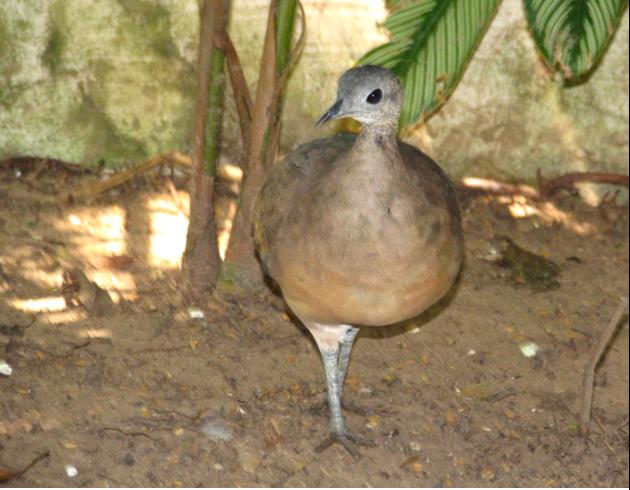
Patagonian Tinamou
Tinamotis ingoufi
Order: Tinamiformes / Family: Tinamidae

Wikimedia Commons
About the Patagonian Tinamou
The Patagonian Tinamou (Tinamotis ingoufi) is a remarkable bird native to the southernmost regions of South America. It thrives in the vast, windswept grasslands of Patagonia, a region known for its rugged beauty and challenging climate. This species belongs to the family Tinamidae, which includes some of the most ancient avian lineages still in existence. Unlike most birds, tinamous are ground-dwelling and engage in minimal flight, preferring to run from predators using their strong legs. The Patagonian Tinamou is unique among its family for its adaptation to the harsh open habitats of the Patagonian steppe, where temperatures can fluctuate dramatically between seasons.
The ecological role of the Patagonian Tinamou is significant within its habitat. As a ground bird, it contributes to seed dispersal and acts as a prey species for various native predators, including foxes and birds of prey. Its presence is an indicator of the health of the grassland ecosystems in which it resides. During the breeding season, which occurs in the austral spring and summer, the Patagonian Tinamou is more vocal and visible, engaging in behaviors that highlight its role in the ecosystem. The bird is noted for its cryptic coloration that blends seamlessly with the dry grasses and shrubs, providing excellent camouflage against predators.
The Patagonian Tinamou's adaptation to its environment is a marvel of evolutionary biology. It shows a preference for open landscapes, avoiding dense forests and high altitudes. The species is non-migratory, staying within its range year-round, although individuals may move locally in response to food availability and climatic conditions. This tinamou's resilience in the face of environmental extremes makes it a fascinating subject for study in the fields of ecology and evolutionary biology. Despite being elusive, its presence in the Patagonian ecosystem is crucial for maintaining the balance of its natural habitat.
The Patagonian Tinamou belongs to the family Tinamidae, within the order Tinamiformes. These birds typically live typically 10-12 years, with some living up to 15 years..
How to Identify a Patagonian Tinamou
The adult Patagonian Tinamou is most easily identified by its gray-brown plumage, which provides effective camouflage in its grassland habitat. The feathers have a mottled appearance, with subtle variations in shade that help the bird blend into its surroundings. The underparts are typically lighter, with a creamy buff color that extends from the breast to the belly. Its legs are strong and well-suited for running, a key feature for a ground-dwelling bird.
Males and females are similar in appearance, making it challenging to distinguish between the sexes in the field. Juveniles resemble adults but have a more pronounced mottled pattern, which aids in their concealment from predators. As with many ground birds, the Patagonian Tinamou has a compact body and a relatively short tail, contributing to a silhouette that is low and streamlined when viewed in flight.
In comparison to similar species, such as the Chilean Tinamou, the Patagonian Tinamou is slightly larger and possesses a more uniform coloration. Its flight is typically low and short, as it relies more on running than flying to escape threats. When perched, it tends to remain motionless, relying on its plumage to avoid detection.
Having trouble telling birds apart? Upload a photo to our bird identification tool for an instant species match.
Patagonian Tinamou Habitat and Range
Preferred Habitat
The Patagonian Tinamou inhabits the open grasslands and shrubby steppes of southern Argentina and Chile. These regions are characterized by sparse vegetation and vast stretches of flat or gently rolling terrain, which suit the tinamou's ground-dwelling lifestyle. The species is typically found at elevations ranging from sea level to about 1,500 meters, though it avoids higher mountainous areas and dense forests.
In these open habitats, the tinamou finds ample food resources and suitable nesting sites. The bird's presence in urban areas is rare, as it prefers the expansive rural landscapes where human disturbance is minimal. Seasonal habitat shifts are limited, but the species may move locally to exploit areas with better food availability during different times of the year.
The Patagonian Tinamou's habitat is under threat from agricultural expansion and climate change, which can alter the delicate balance of its native ecosystems. Conservation of its habitat is crucial for the survival of this and other grassland-dependent species.
Geographic Range
The Patagonian Tinamou is endemic to the southern cone of South America, with its range extending across the Patagonian region of Argentina and Chile. The bird resides primarily in the provinces of Santa Cruz, Chubut, and Río Negro in Argentina, and in the Magallanes and Aysén regions of Chile. It is a non-migratory species, maintaining its presence in these areas year-round.
During the breeding season, the Patagonian Tinamou becomes more locally active, often observed in areas with taller grasses that provide good cover. In the winter months, it remains in the general vicinity, though it might shift slightly within its range to access food resources more efficiently. The population density varies, with some areas hosting higher concentrations due to favorable conditions such as abundant food and suitable nesting sites.
While the bird's range is relatively restricted, it is well-adapted to its environment. However, habitat fragmentation and land-use changes pose challenges to its long-term viability. The importance of preserving large tracts of grassland is vital for maintaining healthy populations of this unique species.
Want to know which birds visit your area? Browse our backyard birds by location guides for region-specific species lists.
What Does the Patagonian Tinamou Eat?
The diet of the Patagonian Tinamou primarily consists of a variety of seeds, fruits, and small invertebrates. Grasses and shrubs provide an abundant supply of seeds, which form the bulk of its diet, especially during the growing season. The tinamou forages by walking slowly through its habitat, using its keen eyesight to spot food items on the ground.
During different seasons, its diet may shift slightly to include more insects and other invertebrates, such as beetles and ants, which are especially plentiful in the warmer months. This dietary flexibility helps the Patagonian Tinamou to thrive in its variable environment, where food availability can fluctuate with weather conditions.
The bird typically feeds during the early morning and late afternoon, taking advantage of the cooler temperatures and lower predation risk. It is less active during the hottest part of the day and at night, when it shelters in thick grasses or shallow depressions in the ground to avoid predators.
Patagonian Tinamou Behavior and Social Structure
The Patagonian Tinamou exhibits a solitary or loosely social behavior, often seen alone or in small groups. During the breeding season, males become more territorial, using vocalizations to establish their presence and attract females. These calls are an essential part of their courtship rituals, which also include displays of plumage and posturing.
While generally elusive, the Patagonian Tinamou is known for its ability to run quickly, making it adept at avoiding predators. Its response to threats is to remain still and rely on its camouflage, but if pressed, it will take short, low flights to escape. The bird's daily activity patterns are influenced by the need to balance feeding with predator avoidance, leading to periods of activity during the cooler parts of the day.
Flocking behavior is not prominent in this species, which prefers the cover provided by grasslands. However, outside of the breeding season, it may be found in loose associations with other tinamous. Its interactions with other species are limited, as the Patagonian Tinamou is primarily focused on its ecological niche within the grassland ecosystem.
Patagonian Tinamou Nesting and Reproduction
The nesting habits of the Patagonian Tinamou are adapted to its open habitat. Nests are typically shallow scrapes on the ground, often located in areas with dense grass or shrubs that provide some concealment. The nest is lined with plant material, such as grass stems and leaves, to offer minimal protection from the elements.
A typical clutch consists of 3 to 5 eggs, which are glossy and vary in color from pale brown to olive. The incubation period lasts approximately 20 to 22 days and is primarily the responsibility of the male. After hatching, the chicks are precocial, meaning they are relatively mature and mobile shortly after birth. The young tinamous are capable of following the adult male as they forage, learning essential survival skills along the way.
The Patagonian Tinamou usually has one brood per year, although in favorable conditions, a second brood may occur. The male's role in incubation and chick-rearing highlights the unique reproductive strategy of tinamous, where males invest heavily in parental care while females may mate with multiple partners.
Patagonian Tinamou Sounds and Vocalizations
The Patagonian Tinamou's vocalizations are a key aspect of its behavior, especially during the breeding season. Its call is a series of low, mournful whistles, often heard at dawn and dusk. These whistles have a clear, melodic quality and can carry over long distances, serving both to attract mates and to establish territory.
In addition to its primary song, the tinamou also produces various call notes used in communication between individuals. Alarm calls are sharp and more urgent, alerting others to the presence of potential threats. These sounds are less musical and more abrupt, serving as an effective warning system in the open landscapes where the bird lives.
Compared to other tinamous, the Patagonian Tinamou's calls are distinctive, with a rhythm and pitch that make them recognizable to experienced birders. These vocalizations contribute to the bird's enigmatic presence in its native habitat, often being heard long before the bird is seen.
Interesting Facts About the Patagonian Tinamou
- 1The Patagonian Tinamou can run at speeds up to 20 kilometers per hour, making it one of the fastest ground birds in its habitat.
- 2Unlike many birds, male Patagonian Tinamous take on the primary role of incubating eggs and caring for the chicks.
- 3The glossy eggs of the Patagonian Tinamou are highly reflective, an unusual trait among ground-nesting birds.
- 4Patagonian Tinamous can be challenging to spot due to their excellent camouflage, blending seamlessly into the grasslands.
- 5Their call is often heard during the early morning and late evening, adding a haunting melody to the Patagonian landscape.
- 6The species' ancestors date back millions of years, making them one of the most ancient bird lineages still in existence.
- 7Patagonian Tinamous are primarily found in the open grasslands of Patagonia, avoiding dense forests and high altitudes.
Patagonian Tinamou Conservation Status
The conservation status of the Patagonian Tinamou is currently listed as Least Concern by the IUCN. However, the species faces threats from habitat loss due to agricultural expansion and land-use changes in Patagonia. These activities lead to fragmentation of the grasslands, reducing the available habitat for tinamous. Population trends are generally stable, but localized declines have been noted in areas where human activities are most intense. Conservation efforts focus on preserving large areas of natural grassland, which are vital for the survival of the Patagonian Tinamou and other species dependent on this ecosystem. Historically, the species has maintained a stable population, thanks in part to its adaptability and the relatively low human population density in its range. Nevertheless, ongoing monitoring and habitat protection are essential to ensure that this unique bird continues to thrive in its natural environment.
Other Tinamidae Species


Birds Similar to the Patagonian Tinamou
These species are often confused with the Patagonian Tinamou due to similar appearance or overlapping range.