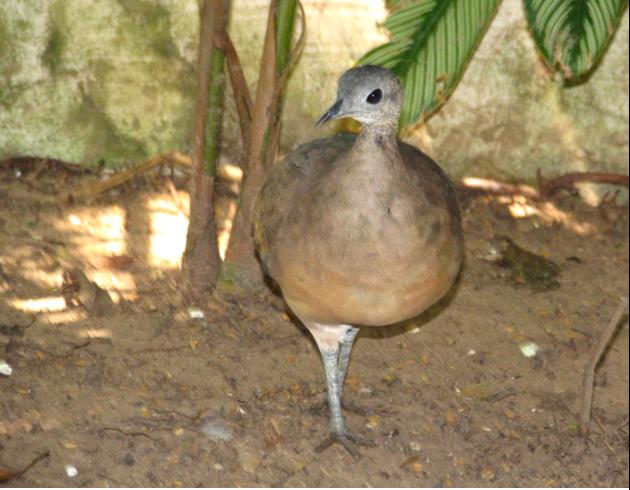
Puna Tinamou
Tinamotis pentlandii
Order: Tinamiformes / Family: Tinamidae

Wikimedia Commons
About the Puna Tinamou
The Puna Tinamou (Tinamotis pentlandii) inhabits the high-altitude grasslands of the Andes, particularly in regions of Peru, Bolivia, Chile, and northwest Argentina. This bird, belonging to the family Tinamidae, plays an essential role in its ecosystem by aiding in seed dispersal, which contributes to the maintenance of the high-altitude grassland ecosystems. Its adaptation to the harsh conditions of high altitudes is remarkable; it thrives in environments where temperatures fluctuate drastically between day and night. During breeding seasons, typically between September and December, the Puna Tinamou becomes more visible as it seeks mates and territories. Outside the breeding period, it adopts a more cryptic lifestyle, using its mottled plumage as camouflage against predators. As a ground-dwelling bird, it is rarely seen in flight, preferring to run swiftly through the vegetation to evade threats. The Puna Tinamou's ecological role extends beyond seed dispersal, as it is also an important prey species for various predators, including raptors and terrestrial carnivores. Its presence indicates a healthy ecosystem, as it requires undisturbed habitats to thrive. Its adaptability to different high-altitude environments, from wet puna grasslands to arid puna deserts, highlights its ecological versatility. Despite its adaptability, the Puna Tinamou faces numerous threats, such as habitat destruction due to agricultural expansion and mining activities. Conservation efforts aim to mitigate these impacts by promoting sustainable land use practices and protecting key habitats. The Puna Tinamou is a quintessential species for understanding high-altitude avian ecology and the challenges faced by birds in such specialized environments.
The Puna Tinamou belongs to the family Tinamidae, within the order Tinamiformes. These birds typically live typically 8-10 years, with some individuals reaching up to 12 years..
How to Identify a Puna Tinamou
The adult Puna Tinamou is characterized by its mottled brown and gray plumage, which provides excellent camouflage in its native grassland habitats. Its plumage consists of intricate patterns of browns, grays, and occasional white speckles, contributing to its cryptic appearance. Juvenile Puna Tinamous are similar in appearance to adults but may display slightly duller coloration and less defined patterns. Males and females can be challenging to differentiate in the field due to their similar sizes and plumage, although males are typically slightly larger. The Puna Tinamou's silhouette is robust, with a rounded body and short tail, and it holds a low profile against the ground. Unlike many birds, tinamous are not typically confused with any other species due to their distinctive appearance and behavior. When flushed, they take off with a rapid, low flight, characterized by strong wing beats followed by gliding. Their posture while perching or resting involves crouching low to the ground, which further aids their camouflage.
Having trouble telling birds apart? Upload a photo to our bird identification tool for an instant species match.
Puna Tinamou Habitat and Range
Preferred Habitat
The Puna Tinamou primarily inhabits high-altitude grasslands, known as puna, ranging from 3,000 to 5,000 meters above sea level. This environment consists of sparse vegetation, such as tussock grasses and low shrubs, and is characterized by sharp temperature fluctuations. The bird can also be found in arid desert-like puna areas, where it relies on its camouflage for protection. Seasonal habitat shifts are minimal due to its adaptation to high altitudes, though it may move to slightly lower elevations during severe weather conditions. The Puna Tinamou rarely ventures into urban areas, preferring remote and undisturbed habitats where it can maintain its secretive lifestyle.
Geographic Range
The Puna Tinamou has a broad range along the Andes, specifically in countries like Peru, Bolivia, Chile, and northwestern Argentina. Its breeding range spans these regions, where it remains year-round due to the lack of significant altitudinal migration. While they do not migrate in the traditional sense, some local movements occur in response to food availability and weather conditions. The highest population densities are typically found in the extensive grasslands of the Altiplano region, where the bird benefits from the abundance of its preferred habitats. Despite its wide range, the Puna Tinamou is considered uncommon due to its secretive nature and the difficulty in surveying its populations.
Want to know which birds visit your area? Browse our backyard birds by location guides for region-specific species lists.
What Does the Puna Tinamou Eat?
The Puna Tinamou's diet primarily consists of seeds, leaves, and small invertebrates. During the rainy season, when food is abundant, it feeds on a variety of seeds and fruits from native grasses and shrubs. In drier months, it supplements its diet with insects, worms, and small invertebrates, which provide necessary protein. Foraging usually occurs in the early morning and late afternoon, during cooler parts of the day, to avoid the intense midday sun. The bird employs a methodical foraging technique, using its bill to probe the ground and sift through leaf litter. Its diet flexibility allows it to adjust to seasonal changes in food availability, a critical adaptation for survival in its fluctuating environment.
Puna Tinamou Behavior and Social Structure
The Puna Tinamou exhibits solitary or small group behavior, often found alone or in pairs rather than large flocks. During the breeding season, males establish territories and engage in vocal displays to attract females. These vocalizations serve both as courtship displays and territorial signals to deter rival males. Courtship involves a series of calls and subtle displays, with males showing increased vocal activity at dawn and dusk. The Puna Tinamou is non-migratory but may perform short-distance movements in response to local climatic conditions. Its response to predators involves remaining motionless to utilize its camouflage or running swiftly to dense cover. Daily activity patterns include foraging in early morning and late afternoon, resting during the hottest part of the day.
Puna Tinamou Nesting and Reproduction
Puna Tinamous build nests on the ground, often in dense grass or under shrubs to provide concealment from predators. The nest is a simple depression lined with grass and feathers to offer some insulation. Clutch size varies from 3 to 5 eggs, with the male primarily responsible for incubation. The eggs are glossy and olive in color, blending well with their environment. Incubation lasts about 18 to 20 days, after which the precocial chicks hatch. Chicks are capable of leaving the nest shortly after hatching and follow the male, who cares for and protects them from threats. Typically, the species raises one brood per year, though this can vary with environmental conditions.
Puna Tinamou Sounds and Vocalizations
The primary vocalization of the Puna Tinamou is a series of soft, melodious whistles, often described as haunting and flute-like. These calls are most frequently heard at dawn and dusk, serving as both territorial signals and courtship displays. The call consists of a rhythmic series of notes with a clear, rising pitch that carries well in open grasslands. Alarm calls are sharp and abrupt, used to alert others of potential danger. Compared to other birds, the Puna Tinamou's vocalizations are subtle but distinctive, providing an aural identity in its otherwise visually cryptic existence.
Interesting Facts About the Puna Tinamou
- 1The Puna Tinamou's eggs are glossy and olive-colored, providing excellent camouflage in grassland nests.
- 2Despite being a ground-dwelling bird, the Puna Tinamou can run at impressive speeds to escape predators.
- 3The Puna Tinamou's call is often compared to a flute, with a clear, haunting quality that carries over long distances.
- 4Males are the primary caregivers, taking on incubation duties and leading chicks after hatching.
- 5Puna Tinamous rarely fly; they prefer to run and rely on their cryptic plumage for protection.
- 6Their adaptation to high altitudes allows them to survive in environments with extreme temperature variations.
- 7The Puna Tinamou plays a crucial role in seed dispersal, contributing to the health of its grassland ecosystem.
Puna Tinamou Conservation Status
Currently listed as Least Concern by the IUCN, the Puna Tinamou population is stable, though localized declines occur due to habitat loss. Primary threats include agricultural expansion, mining activities, and human encroachment impacting their grassland habitats. Conservation efforts focus on habitat protection and sustainable land use practices. Historical population changes have been minimal, but continuous monitoring is necessary to ensure the species remains unaffected by increasing environmental pressures. Conservationists emphasize the importance of protecting the puna ecosystem to safeguard the Puna Tinamou's future.
Other Tinamidae Species


Birds Similar to the Puna Tinamou
These species are often confused with the Puna Tinamou due to similar appearance or overlapping range.