
White-throated Tinamou
Tinamus guttatus
Order: Tinamiformes / Family: Tinamidae
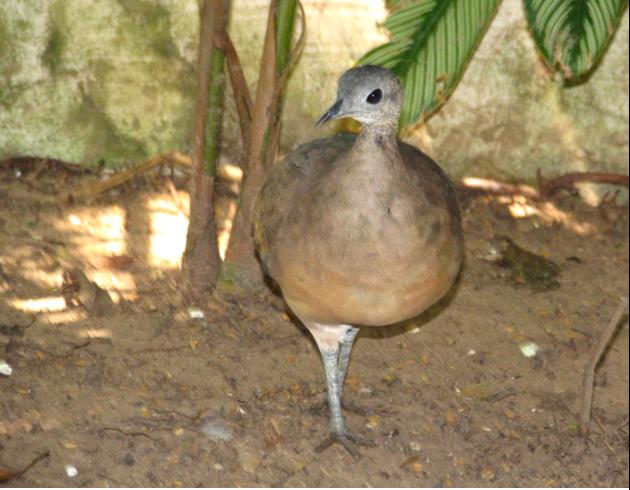
Wikimedia Commons
About the White-throated Tinamou
The White-throated Tinamou (Tinamus guttatus) is an enigmatic bird species found primarily within the dense tropical rainforests of South America. Its range extends into regions such as the Amazon Basin, encompassing countries like Brazil, Colombia, and Peru. This bird is a member of the family Tinamidae, which includes species known for their ground-dwelling habits and secretive nature. The White-throated Tinamou plays a crucial ecological role as both a seed disperser and a prey item within its ecosystem. Its presence in the dense understory of tropical rainforests contributes significantly to the biodiversity and health of these environments. Despite its elusive nature, the bird's distinctive vocalizations often betray its presence, providing keen birders with an auditory clue to its whereabouts.
The species is primarily non-migratory, residing year-round in its lush, humid habitat. However, there may be some slight altitudinal movements in response to seasonal changes in food availability or habitat conditions. During the breeding season, which typically coincides with the wetter months, the White-throated Tinamou becomes more vocal, with males calling persistently to establish territories and attract mates. This increased vocal activity provides an excellent opportunity for birders and researchers to study the species' behavior and population dynamics.
Ecologically, the White-throated Tinamou holds a significant position within its habitat. It feeds on a varied diet that includes seeds, fruits, and small invertebrates, making it an important agent of seed dispersal. Additionally, as a ground-nesting bird, it is susceptible to predation by a variety of forest predators, including snakes, mammals, and birds of prey. This fact underscores its role in the food web, both as a consumer of plant material and as a prey species that supports higher trophic levels. Understanding the habits and habitats of the White-throated Tinamou is critical for conservation efforts, as its presence is indicative of a healthy, intact rainforest ecosystem.
The White-throated Tinamou belongs to the family Tinamidae, within the order Tinamiformes. These birds typically live typically 10-12 years, with some individuals living up to 15 years..
How to Identify a White-throated Tinamou
The White-throated Tinamou is a medium-sized bird, measuring approximately 38 to 40 centimeters in length. Its plumage is predominantly brown with a subtle mottling pattern that helps it blend into the forest floor. The bird's most distinguishing feature is its white throat, which contrasts sharply with the surrounding darker feathers and serves as a key field mark for identification. The rest of the underparts are a lighter brown, transitioning to a creamy buff on the belly.
Males and females are similar in appearance, although females tend to be slightly larger and heavier. Juvenile White-throated Tinamous resemble adults but may display a more muted color palette and less distinct throat markings, which can make them challenging to identify for the untrained eye. In flight, the bird presents a compact silhouette with rounded wings and a short tail, a typical characteristic among tinamous.
In terms of confusion with other species, the White-throated Tinamou can be mistaken for other tinamous that share its habitat. However, the distinct white throat is a reliable differentiator. When perched, the bird maintains a low profile, often hunkering down in leaf litter to avoid detection. Its cryptic coloration and tendency to remain motionless when threatened make visual observation difficult, emphasizing the importance of recognizing auditory cues.
Having trouble telling birds apart? Upload a photo to our bird identification tool for an instant species match.
White-throated Tinamou Habitat and Range
Preferred Habitat
The White-throated Tinamou thrives in the dense, humid environments of tropical rainforests. It occupies the understory layer, where it forages on the forest floor in search of food. This species prefers areas with thick vegetation, which provides cover from predators and an abundance of food resources. The bird is most commonly found in primary forests, which offer the complex structure and biodiversity that support its needs.
While it typically inhabits lowland forests, the White-throated Tinamou may also be found in foothill regions, particularly in areas where the forest remains intact and undisturbed. It does not typically venture into urban or highly developed areas, as these environments lack the dense cover and food resources the bird requires.
Seasonal habitat shifts are minimal, as the bird tends to remain within its preferred forested environments throughout the year. However, slight altitudinal movements may occur in response to changes in food availability or climatic conditions.
Geographic Range
The White-throated Tinamou is native to South America, where it inhabits the expansive tropical rainforests of the Amazon Basin. Its range includes several countries such as Brazil, Colombia, Peru, and potentially extends into parts of Bolivia and Ecuador. Within these regions, the bird is typically found in lowland forests but may also occur in some foothill areas where suitable habitat exists.
This species does not undertake long-distance migrations, instead maintaining a relatively stable presence within its home range throughout the year. The dense rainforest canopy provides a consistent environment that supports the bird's needs, negating the necessity for large-scale seasonal movements.
Population density tends to be highest in regions of undisturbed primary forest, where the complex ecosystem structure can sustain a diverse array of wildlife, including the White-throated Tinamou. In contrast, areas subjected to deforestation or habitat fragmentation may support lower densities of this species, as these changes can significantly impact its habitat and food sources.
Want to know which birds visit your area? Browse our backyard birds by location guides for region-specific species lists.
What Does the White-throated Tinamou Eat?
The White-throated Tinamou's diet primarily consists of seeds and fruits, making it an important frugivore and granivore within its ecosystem. It forages on the forest floor, using its keen sense of smell to locate fallen fruits and seeds among the leaf litter. This bird will also consume small invertebrates, such as insects and spiders, supplementing its diet with protein-rich sources when available.
Seasonal diet variations occur as different fruits and seeds become available throughout the year. During the wet season, when plant growth and fruit production peak, the White-throated Tinamou can access a more diverse range of food resources. Conversely, during drier periods, the bird may rely more heavily on seeds and invertebrates, which are more consistently available.
The White-throated Tinamou employs a methodical foraging technique, slowly moving through its territory and using its beak to turn over leaf litter in search of food. This behavior not only aids in locating food but also contributes to the aeration and turnover of the forest floor, further highlighting the bird's ecological importance.
White-throated Tinamou Behavior and Social Structure
The White-throated Tinamou exhibits solitary and secretive behavior, spending much of its time foraging alone or in pairs. During the breeding season, males become more territorial and vocal, using their calls to establish dominance and attract potential mates. These calls, which can be heard echoing through the rainforest, serve as a primary means of communication and play a vital role in their social interactions.
Courtship displays are subtle, often involving vocalizations paired with simple postural changes rather than elaborate visual displays. Once a mate is secured, the pair may remain together for the duration of the breeding season, though tinamous are known for their flexible social structures.
The White-throated Tinamou's response to predators involves remaining motionless and relying on its cryptic plumage to avoid detection. If startled, it may take short, rapid flights to escape danger. Daily activity patterns typically involve foraging during the cooler hours of the day, such as early morning and late afternoon, when the forest is less stifling and predators are less active.
White-throated Tinamou Nesting and Reproduction
The White-throated Tinamou nests on the ground, selecting well-concealed sites among dense vegetation or in depressions lined with leaves and other plant material. These nests are simple in construction, relying on the natural cover provided by the forest floor to protect the eggs from predators.
The typical clutch size ranges from 2 to 5 eggs, which are characteristically shiny and smooth, often exhibiting a rich chestnut or olive hue. The incubation period lasts approximately 16 to 19 days, with the male primarily responsible for incubation duties. This role reversal is a unique trait among tinamous and distinguishes them from many other bird species.
After hatching, the precocial chicks are able to leave the nest shortly thereafter, relying on their innate ability to follow the father and learn essential survival skills. The fledging period is brief, lasting just a few weeks, as the young birds quickly develop the ability to forage independently. The White-throated Tinamou may produce one or two broods per year, depending on environmental conditions and food availability.
White-throated Tinamou Sounds and Vocalizations
The vocal repertoire of the White-throated Tinamou consists of a series of low-pitched, resonant whistles that can carry over long distances. The primary song is typically a series of three to five notes with a rich, flute-like quality. These calls are most frequently heard during the dawn and dusk hours, times when the bird is most active and vocal.
Alarm calls differ from the primary song, characterized by shorter, more abrupt notes that signal distress or the presence of predators. These calls serve as an important communication tool between individuals, especially in dense forest habitats where visual contact is limited.
The dawn chorus is a particularly notable aspect of the White-throated Tinamou's behavior, as the bird's distinctive whistles contribute to the rich tapestry of sounds that define the rainforest soundscape. For those familiar with the calls of forest birds, the White-throated Tinamou's song is a recognizable and evocative element of its environment.
Interesting Facts About the White-throated Tinamou
- 1The White-throated Tinamou's call can be heard over distances of up to 1 kilometer, making it one of the more vocal residents of the rainforest.
- 2Unlike many birds, the male White-throated Tinamou takes on the primary role of incubating eggs and caring for young.
- 3This tinamou species is known for its impressive ability to blend into the forest floor, thanks to its cryptic plumage.
- 4The White-throated Tinamou is a vital seed disperser, helping maintain the plant diversity of its rainforest habitat.
- 5Tinamous are among the most primitive of all living birds, with a lineage that dates back millions of years.
- 6Despite their ground-dwelling habits, White-throated Tinamous are capable of short, rapid flights to escape predators.
- 7The species' diet includes a wide variety of fruits and seeds, contributing to its role as an ecosystem engineer.
White-throated Tinamou Conservation Status
The IUCN lists the White-throated Tinamou as a species of Least Concern, indicating that its population is currently stable. However, ongoing threats such as deforestation and habitat degradation pose significant risks to its long-term survival. The species' reliance on intact primary forests makes it particularly vulnerable to habitat loss, which can disrupt its food resources and breeding sites. Conservation efforts for the White-throated Tinamou focus on protecting its natural habitat through the establishment of protected areas and sustainable land-use practices. Efforts to curb deforestation and promote forest regeneration are crucial for maintaining the ecological health of the regions where this species occurs. Historically, the White-throated Tinamou has benefited from the vastness of the Amazon rainforest, but as human encroachment increases, continuous monitoring and proactive conservation measures are necessary to ensure its continued presence in these biodiverse ecosystems.
Other Tinamidae Species


Birds Similar to the White-throated Tinamou
These species are often confused with the White-throated Tinamou due to similar appearance or overlapping range.

