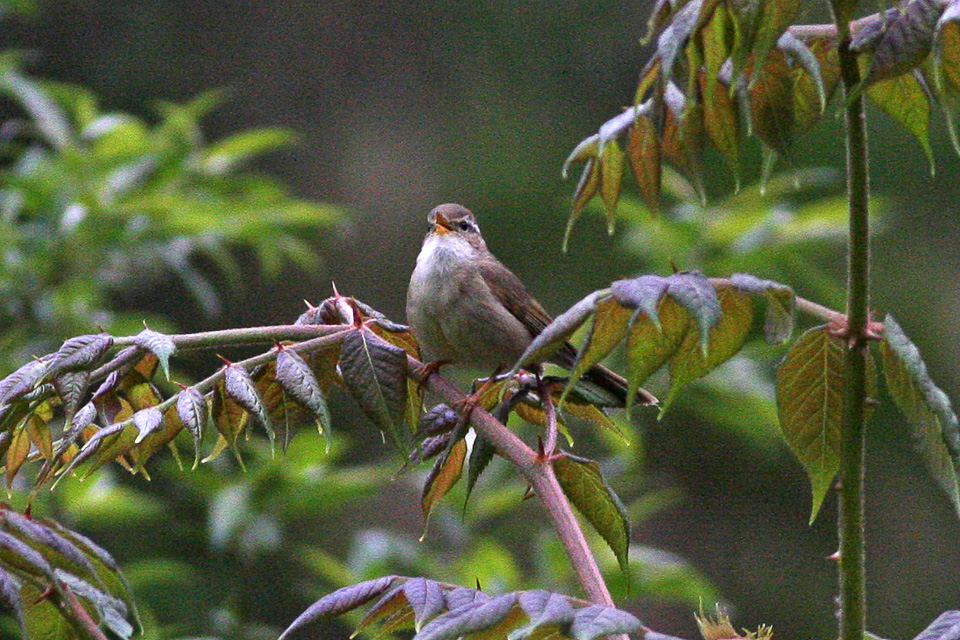
Philippine Leaf Warbler
Phylloscopus olivaceus
Order: Passeriformes / Family: Phylloscopidae

Wikimedia Commons
About the Philippine Leaf Warbler
The Philippine Leaf Warbler (Phylloscopus olivaceus) is a small yet robust bird endemic to the Philippines. It plays a vital role in its ecosystem by controlling insect populations and serving as prey for larger predators. Found primarily in the islands' dense and lush forests, the Philippine Leaf Warbler is a quintessential representative of avian biodiversity in Southeast Asia. Its presence is most pronounced in the montane and lowland forests of Luzon, Mindanao, and other large islands. These regions provide the canopy cover and insect-rich environment that the bird requires for survival and reproduction. As a year-round resident, the Philippine Leaf Warbler does not engage in long migrations, but it may exhibit altitudinal movements depending on food availability and climate conditions. During the breeding season, these warblers are particularly active, filling the forest with their distinctive calls. They contribute significantly to the ecological balance by participating in seed dispersal and pollination indirectly through their interactions with various flora and fauna. Their adaptation to both native and secondary forests underlines their ecological importance, especially as natural habitats face increasing anthropogenic pressures.
The Philippine Leaf Warbler belongs to the family Phylloscopidae, within the order Passeriformes. These birds typically live average 5 years, with some living up to 7 years..
How to Identify a Philippine Leaf Warbler
The Philippine Leaf Warbler is easily recognizable by its olive-green upperparts and pale yellow underparts. Adult plumage is consistent across sexes, though females may appear slightly duller. Juveniles exhibit a softer, more muted coloration, lacking the sharpness of the adults' plumage. The bird's small size, averaging 10 centimeters in length, along with its slender bill and agile movements, are key identification features. Unlike some similar species, such as the Arctic Warbler, the Philippine Leaf Warbler lacks distinct wing bars, which helps in distinguishing it. In flight, it presents a compact silhouette with rapid wingbeats, while its perching posture is often horizontal, making it less conspicuous among the foliage.
Having trouble telling birds apart? Upload a photo to our bird identification tool for an instant species match.
Philippine Leaf Warbler Habitat and Range
Preferred Habitat
This warbler thrives in tropical rainforests, often at elevations ranging from sea level up to 2,500 meters. It prefers dense, moist environments where it can forage for insects among the foliage. Although primarily a forest dweller, the Philippine Leaf Warbler can adapt to secondary growth and disturbed habitats, provided there is adequate canopy cover. During certain seasons, it may venture into lower elevations or more open areas, but typically remains within forested regions, avoiding urban settings. Its adaptability to various forest types highlights its resilience in the face of habitat alterations.
Geographic Range
The Philippine Leaf Warbler is confined to the Philippine archipelago. Its breeding range includes the islands of Luzon, Mindanao, Leyte, and several smaller islands. Unlike many migratory warblers, it remains a resident throughout the year. The bird occupies a diverse array of altitudinal zones within its range, from lowland forests to montane regions. Population densities are highest in areas where old-growth forests remain intact, offering abundant resources and breeding sites. The lack of significant migratory behavior underscores the species' strong territorial nature and adaptability to local environmental conditions.
Want to know which birds visit your area? Browse our backyard birds by location guides for region-specific species lists.
What Does the Philippine Leaf Warbler Eat?
Insectivorous by nature, the Philippine Leaf Warbler primarily consumes a variety of insects and arthropods. Its diet includes caterpillars, beetles, and spiders, which it gleans from leaves and branches. During the rainy season, when insect abundance peaks, its feeding activity intensifies. The warbler employs a methodical foraging technique, hopping from branch to branch, using its sharp eyesight to detect prey. Occasionally, it supplements its diet with small seeds and fruits, particularly when insect prey is scarce. This dietary flexibility aids its survival in fluctuating environmental conditions.
Philippine Leaf Warbler Behavior and Social Structure
Socially, the Philippine Leaf Warbler is most often observed alone or in pairs, especially during the breeding season when territorial behavior intensifies. Courtship involves elaborate displays and vocalizations, as males strive to attract mates. Outside of the breeding season, the warbler may join mixed-species foraging flocks, benefiting from the increased vigilance against predators. While generally non-aggressive, it will assertively defend its territory against intruders. Daily, it follows a predictable activity pattern, with peak foraging occurring in the early morning and late afternoon. Its response to predators involves rapid, erratic flight and the use of dense foliage for cover.
Philippine Leaf Warbler Nesting and Reproduction
The Philippine Leaf Warbler constructs its nest in the understory of dense forests, typically using materials like grass, leaves, and spider silk to create a compact, cup-shaped structure. It prefers sites with ample cover to shield from predators and harsh weather. The female lays a clutch of 2 to 4 eggs, which she incubates for about 12 to 14 days. Both parents partake in feeding the chicks, which fledge approximately 12 to 15 days post-hatching. The species usually raises one brood per year, although favorable conditions may support a second.
Philippine Leaf Warbler Sounds and Vocalizations
The Philippine Leaf Warbler's song is a rapid series of high-pitched notes, resembling the sound of a squeaky wheel. This energetic song is primarily used during the breeding season to attract mates and assert territorial boundaries. Additionally, the warbler produces soft, repetitive call notes that facilitate communication between pairs. Alarm calls are sharper and more urgent, serving as warnings to nearby conspecifics of approaching threats. During the dawn chorus, its song contributes to the symphony of forest sounds, marking its presence in the dense canopy.
Interesting Facts About the Philippine Leaf Warbler
- 1The Philippine Leaf Warbler was first described scientifically in the early 20th century, highlighting its relatively recent addition to ornithology.
- 2Despite its small size, the Philippine Leaf Warbler plays a crucial role in controlling insect populations in the forest ecosystem.
- 3During the breeding season, the warbler's song can be heard echoing across the forest, signifying its territorial presence.
- 4This agile bird can hover briefly while feeding, a trait not common among all warbler species.
- 5Philippine Leaf Warblers are known to join mixed-species flocks outside the breeding season, enhancing their foraging efficiency.
- 6Unlike many birds, the Philippine Leaf Warbler is not migratory, remaining in the Philippines throughout the year.
- 7The species displays a remarkable ability to adapt to both primary and secondary forest environments.
Philippine Leaf Warbler Conservation Status
Currently, the Philippine Leaf Warbler is listed as a species of Least Concern by the IUCN. However, its populations are experiencing pressures due to habitat loss from deforestation and land conversion. Conservation efforts focus on preserving large tracts of forest and establishing protected areas throughout the Philippines. Historical population data suggest a decline in areas undergoing rapid development, underscoring the need for continuous monitoring and habitat management to ensure the species' long-term survival.