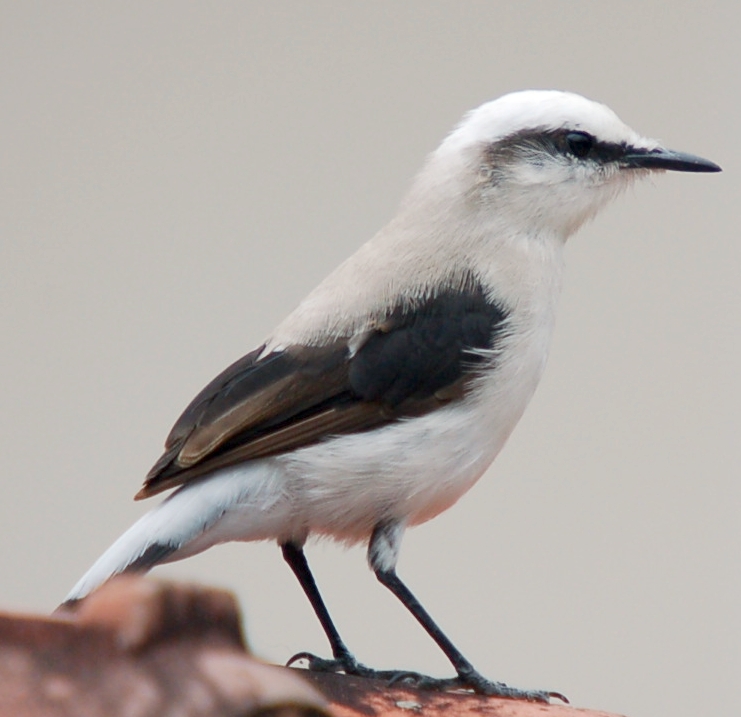
Pied Water-Tyrant
Fluvicola pica
Order: Passeriformes / Family: Tyrannidae

Wikimedia Commons
About the Pied Water-Tyrant
The Pied Water-Tyrant (Fluvicola pica) is a captivating member of the Tyrannidae family, renowned for its striking black and white coloration. This small passerine bird inhabits various regions of South America, typically found near water bodies such as rivers, marshes, and ponds. Its presence is noted from the lowland regions of Venezuela and Colombia, extending southward through Brazil and into northern Argentina. The bird's preference for riparian and wetland habitats highlights its ecological role in these environments, where it often perches conspicuously on reeds or low bushes. The Pied Water-Tyrant plays a significant role in controlling insect populations, as its diet primarily consists of small insects and other invertebrates. Its presence is often a reliable indicator of the health of wetland ecosystems, providing valuable insights into the biodiversity and ecological balance within these areas. During the breeding season, the Pied Water-Tyrant becomes more territorial, establishing and defending nesting sites with vigor. This behavior ensures the protection of their offspring and contributes to the stability of local populations. Throughout the year, the bird exhibits a degree of fidelity to its territory, although some altitudinal movements may occur in response to changing water levels and seasonal variations in food availability. The Pied Water-Tyrant's adaptability to diverse wetland habitats underscores its resilience in the face of environmental changes, making it a species of interest for ornithologists and conservationists alike.
The Pied Water-Tyrant belongs to the family Tyrannidae, within the order Passeriformes. These birds typically live average 5 years with a maximum recorded of 7 years..
How to Identify a Pied Water-Tyrant
Adult Pied Water-Tyrants are easily recognized by their bold black and white plumage. The head and upperparts are primarily white, with a contrasting black mask extending from the eye to the nape. The back and wings are black, while the underparts remain white, creating a striking visual contrast. Juveniles exhibit a more muted coloration, with brownish tones interspersed with the characteristic black and white pattern, gradually acquiring the adult plumage as they mature. Both sexes appear similar in plumage, making it challenging to distinguish between males and females in the field. The Pied Water-Tyrant can be confused with other black and white flycatchers, but its distinctive perching posture and habitat preferences aid in identification. In flight, the bird displays a swift, direct flight pattern with rapid wingbeats, while its perching behavior often involves short sallies from a conspicuous vantage point to capture prey. Observers should note the bird's slender build and relatively long legs, which are adapted for foraging in shallow waters and navigating dense vegetation. These characteristics, combined with its vocalizations, facilitate identification and differentiation from similar species.
Having trouble telling birds apart? Upload a photo to our bird identification tool for an instant species match.
Pied Water-Tyrant Habitat and Range
Preferred Habitat
The Pied Water-Tyrant thrives in wetland habitats, including marshes, riverbanks, ponds, and flooded grasslands. These environments provide abundant food resources and suitable nesting sites. In lowland tropical regions, such as the Amazon Basin, the bird is a familiar sight along slow-moving rivers and streams. It is commonly found at elevations ranging from sea level to about 1200 meters, although its presence diminishes at higher altitudes. During periods of seasonal flooding, the Pied Water-Tyrant may shift to higher ground or seek refuge in nearby agricultural areas, where it can exploit new foraging opportunities. While predominantly a rural species, it occasionally ventures into suburban areas where suitable wetlands exist, demonstrating some adaptability to human-altered landscapes.
Geographic Range
The Pied Water-Tyrant's range encompasses a wide swath of northern South America. It is prevalent throughout Venezuela and Colombia, extending southward through the Guianas, Brazil, and into eastern Bolivia, Paraguay, and northern Argentina. In Brazil, it is notably abundant in the Pantanal and along the Amazon River. The species does not undertake long-distance migrations, but local movements within its range occur in response to seasonal changes in water levels and food availability. Population density is highest in regions with extensive wetland habitats, where the bird benefits from the year-round presence of suitable foraging and nesting conditions.
Want to know which birds visit your area? Browse our backyard birds by location guides for region-specific species lists.
What Does the Pied Water-Tyrant Eat?
The Pied Water-Tyrant primarily feeds on insects and other small invertebrates, which it captures with skillful aerial sallies or by gleaning from vegetation. Its diet includes a variety of flies, beetles, and aquatic larvae. During the wet season, when insect abundance peaks, the bird's feeding activity increases, providing ample nutrition for breeding and rearing young. The foraging strategy of the Pied Water-Tyrant involves perching on low vegetation or reeds, from where it launches quick flights to snatch prey from the air or water surface. This opportunistic feeding behavior allows the bird to exploit transient food resources effectively, ensuring its survival across diverse environmental conditions.
Pied Water-Tyrant Behavior and Social Structure
Pied Water-Tyrants exhibit a fascinating array of behaviors that reflect their adaptation to wetland environments. They are typically solitary or found in pairs, with pairs maintaining territories during the breeding season. Territorial disputes are common, often involving song displays and aerial chases to ward off intruders. Courtship displays involve vocalizations and posturing, with birds engaging in synchronized flight patterns to strengthen pair bonds. Pied Water-Tyrants are diurnal, with peak activity occurring in the early morning and late afternoon. During these times, they engage in foraging, preening, and social interactions. Their response to predators involves swift evasive maneuvers and alarm calls to alert nearby individuals. Despite their solitary nature, they occasionally join mixed-species flocks, benefiting from the collective vigilance against predators.
Pied Water-Tyrant Nesting and Reproduction
The Pied Water-Tyrant constructs a cup-shaped nest using grasses, reeds, and other plant materials, typically situated close to water. Nests are often placed in low shrubs or reeds, providing concealment from predators. The clutch size generally ranges from two to three eggs, with both parents sharing incubation duties over a period of approximately 15 days. After hatching, the chicks remain in the nest for another two weeks, during which both parents actively participate in feeding and care. The fledging period coincides with periods of high insect abundance, ensuring ample food supply for the growing chicks. The species typically raises one or two broods per year, depending on environmental conditions and food availability.
Pied Water-Tyrant Sounds and Vocalizations
The vocalizations of the Pied Water-Tyrant are characterized by a series of sharp, high-pitched notes, often described as a rapid 'chip-chip-chip' sound. These calls serve both territorial and communication purposes, with variations in rhythm and intensity indicating different contexts. During the dawn chorus, the bird's clear, ringing calls contribute to the vibrant soundscape of its wetland habitat. Alarm calls are more urgent and staccato in nature, serving as warnings to conspecifics and other nearby species.
Interesting Facts About the Pied Water-Tyrant
- 1The Pied Water-Tyrant is named for its striking black and white plumage, reminiscent of a formal dress code.
- 2Despite being a 'tyrant,' this bird is relatively small, measuring only about 14 centimeters in length.
- 3Pied Water-Tyrants are known to exhibit a 'tail wagging' behavior, which may help in communication or balance.
- 4These birds are often found in pairs, displaying strong pair bonds during the breeding season.
- 5Pied Water-Tyrants have a preference for perching on reed stems, where they scan for prey with precision.
- 6The species' scientific name, Fluvicola pica, reflects its affinity for riverine habitats (Fluvicola means river dweller).
- 7Pied Water-Tyrants are often used as indicators of wetland health due to their habitat-specific requirements.
Pied Water-Tyrant Conservation Status
The Pied Water-Tyrant is currently classified as Least Concern by the IUCN, with stable population trends across its range. While not facing immediate threats, habitat destruction through wetland drainage and pollution poses potential risks. Conservation efforts focus on preserving wetland habitats and promoting sustainable land use practices. Historically, the species has demonstrated resilience in adapting to changing environmental conditions, contributing to its widespread distribution and stable population status.
Other Tyrannidae Species


Birds Similar to the Pied Water-Tyrant
These species are often confused with the Pied Water-Tyrant due to similar appearance or overlapping range.