
Plain-throated Antwren
Isleria hauxwelli
Order: Passeriformes / Family: Thamnophilidae

Wikimedia Commons
About the Plain-throated Antwren
The Plain-throated Antwren (Isleria hauxwelli) is a small passerine bird in the family Thamnophilidae, primarily inhabiting the dense underbrush of South American tropical forests. This bird is a vital component of its ecosystem, playing a significant role in insect population control. Found predominantly in regions such as the Amazon Basin, the species thrives in the humid lowland and foothill forests that stretch across countries like Brazil, Peru, Bolivia, and Colombia. Its presence in these biodiverse habitats underscores the ecological richness of these areas and highlights the importance of conservation efforts in preserving such environments.
Ecologically, the Plain-throated Antwren contributes to the balance of insect populations, feeding on a variety of arthropods and other small invertebrates. Its foraging behavior, which involves gleaning insects from leaves and branches, helps maintain the health of forest vegetation by controlling herbivore populations. The bird's activities provide a service that indirectly supports plant growth and diversity, illustrating its role in the broader ecological community.
Seasonally, the Plain-throated Antwren does not engage in long-distance migration but may exhibit local movements in response to changes in food availability and habitat conditions. During the breeding season, pairs become more territorial and vocal, defending their small patches of forest with a series of calls and displays. Outside of the breeding season, they may join mixed-species flocks, which offer increased protection from predators. Such behavior reflects the complex social structures and adaptive strategies of this and similar avian species in tropical ecosystems.
The Plain-throated Antwren belongs to the family Thamnophilidae, within the order Passeriformes. These birds typically live average 3 years with max recorded 5 years.
How to Identify a Plain-throated Antwren
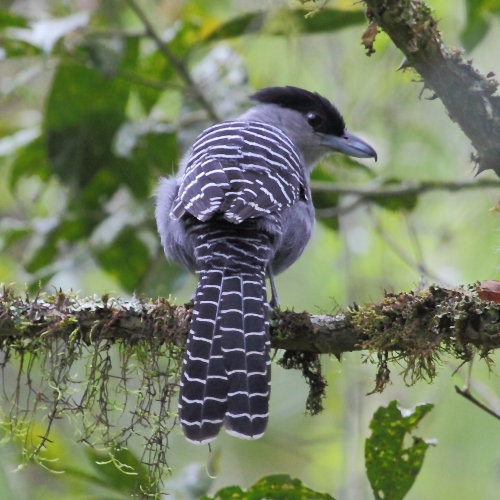
The Plain-throated Antwren measures approximately 11 centimeters in length and weighs around 10 grams, making it a small-sized bird. Adults display a predominantly brown plumage, with subtle variations between males and females. Males typically exhibit darker upperparts and a more pronounced contrast between the back and wings, while females may appear slightly paler overall. Both sexes share the distinctive plain throat that gives the species its common name, though closer inspection reveals faint streaking in some individuals.
Juvenile Plain-throated Antwrens resemble the adults but may have slightly duller plumage, lacking the sharp contrasts seen in mature birds. This can make field identification challenging, particularly in the dense understory where the species resides. Observers should note the bird's active foraging behavior, often characterized by rapid movements and short bursts of flight as it searches for food.
In comparison to similar species, the Plain-throated Antwren can be confused with other antwrens, such as the Rufous-backed Antwren (Epinecrophylla haematonota), but differences in throat patterning and overall coloration aid in distinguishing between them. The bird's perching posture is upright and alert, often accompanied by quick, flicking movements of the wings and tail as it navigates through the foliage.
Having trouble telling birds apart? Upload a photo to our bird identification tool for an instant species match.
Plain-throated Antwren Habitat and Range
Preferred Habitat
The Plain-throated Antwren resides primarily in the dense tropical forests of the Amazon Basin. It favors the humid lowland and foothill forests, typically found at elevations ranging from sea level up to about 1,000 meters. The bird thrives in regions with abundant understory vegetation, which provides cover and a rich supply of insects for foraging.
This species shows a preference for primary and secondary forests, demonstrating some adaptability to habitat changes, though it remains less common in heavily disturbed areas. Seasonal habitat shifts are minimal, as the bird tends to remain within its preferred forested environments year-round.
While the Plain-throated Antwren is not typically associated with urban areas, it can occasionally be found near forest edges and in larger forested parks. Its reliance on dense, natural habitats makes it more vulnerable to deforestation and habitat fragmentation, issues that have become increasingly pressing in its native range.
Geographic Range
The Plain-throated Antwren's range spans several South American countries, primarily within the Amazon Basin. It can be found in Brazil, Peru, Bolivia, and Colombia, with some populations extending into adjacent areas of Venezuela and Ecuador. The bird occupies a relatively narrow niche within these countries, favoring dense forest habitats that offer the cover and food resources it requires.
While the species is non-migratory, it may engage in local movements to exploit seasonal food resources or avoid disturbances. Population density hotspots include the extensive, undisturbed forest regions of the central and western Amazon, where environmental conditions remain favorable year-round.
Breeding territories are established within these forests, and the bird's range remains relatively stable throughout the year. However, ongoing deforestation and habitat degradation pose significant threats to its distribution, potentially leading to range contractions if current trends continue.
Want to know which birds visit your area? Browse our backyard birds by location guides for region-specific species lists.
What Does the Plain-throated Antwren Eat?
The diet of the Plain-throated Antwren primarily consists of insects and other small arthropods. It forages actively in the understory, often gleaning prey from the surface of leaves, branches, and twigs. Common prey items include ants, spiders, caterpillars, and various beetles.
Seasonal variations in diet are minimal, although the bird may adjust its foraging strategies based on prey availability. During periods of abundant insect emergence, the antwren takes advantage by increasing its foraging activity, ensuring a steady food supply.
The Plain-throated Antwren employs a methodical foraging technique, moving quickly and efficiently through the foliage to locate prey. It often pauses momentarily to inspect potential feeding sites, using its acute vision to detect movement. This behavior is typical of many antwrens, reflecting their adaptation to a life of constant motion in search of food.
Plain-throated Antwren Behavior and Social Structure
The Plain-throated Antwren is a socially complex species, often found in monogamous pairs or small family groups. During the breeding season, pairs become highly territorial, engaging in vocal displays and aggressive interactions to defend their territory from intruders.
Courtship displays include a combination of vocalizations and physical displays, with males often performing elaborate songs to attract females. Once a pair bond is established, both partners participate in territory defense and nest building.
The antwren's response to predators involves a combination of vocal alarms and evasive maneuvers. When threatened, it emits sharp, repetitive calls to alert other birds and may retreat into denser foliage to avoid detection.
Daily activity patterns revolve around foraging, with peak activity occurring in the cooler hours of the morning and late afternoon. The bird's energetic foraging behavior and its tendency to join mixed-species flocks during non-breeding periods reflect its adaptability and ecological integration.
Plain-throated Antwren Nesting and Reproduction
The nesting habits of the Plain-throated Antwren involve constructing a small, cup-shaped nest made from fine plant materials such as leaves, grasses, and spider silk. These nests are typically placed low in the understory, often well-concealed among dense vegetation.
Clutch size generally consists of two eggs, which are incubated by both parents for a period of approximately 14 days. After hatching, the nestlings remain under parental care for an additional two to three weeks, during which time both parents are involved in feeding and protecting the young.
The bird may produce multiple broods per year, particularly in regions where environmental conditions remain favorable. Parental roles are shared, with both sexes contributing to incubation, feeding, and fledgling care. This cooperative breeding strategy enhances the survival prospects of the young and reflects the species' adaptability to its dynamic forest habitat.
Plain-throated Antwren Sounds and Vocalizations
The Plain-throated Antwren's primary song consists of a series of sharp, metallic notes delivered in rapid succession. The rhythm is steady, and the pitch remains relatively constant, creating a distinctive and easily recognizable sound pattern within its habitat.
Call notes are typically short and sharp, often used in communication between mates or as a warning to intruders. Alarm calls are more urgent and repetitive, serving as an effective deterrent against predators.
During the dawn chorus, the Plain-throated Antwren contributes to the symphony of forest sounds, its song blending with those of other understory dwellers. The bird's vocalizations, while not particularly musical, are an essential component of its communication repertoire.
Interesting Facts About the Plain-throated Antwren
- 1The Plain-throated Antwren was described by the British ornithologist Philip Sclater in 1857, highlighting its long-standing recognition in ornithology.
- 2The species' scientific name, Isleria hauxwelli, honors John Hauxwell, an English naturalist who collected specimens in the Amazon.
- 3Plain-throated Antwrens often join mixed-species flocks, benefiting from the increased protection these groups offer against predators.
- 4Despite its small size, the Plain-throated Antwren's calls can be heard over 100 meters away in the dense forest understory.
- 5The bird's foraging technique involves gleaning insects from leaves, a behavior that helps keep herbivore populations in check.
- 6Plain-throated Antwrens contribute to seed dispersal by inadvertently moving small seeds attached to the insects they capture.
- 7The species' reliance on dense forest makes it an effective indicator of habitat quality and ecological integrity.
Plain-throated Antwren Conservation Status
The IUCN currently classifies the Plain-throated Antwren as a species of Least Concern, although its population trend is subject to ongoing scrutiny due to habitat loss. Deforestation, driven by logging, agriculture, and infrastructure development, poses the most significant threat to its habitat. Conservation efforts focus on protecting large tracts of primary forest and promoting sustainable land-use practices. Local initiatives, coupled with broader regional policies, aim to mitigate the impacts of habitat fragmentation and ensure the long-term viability of the species. While the Plain-throated Antwren remains relatively widespread, continued habitat degradation could lead to declines in population numbers. Monitoring and conservation strategies are essential to safeguard this species and the ecosystems it inhabits.
Other Thamnophilidae Species



Birds Similar to the Plain-throated Antwren
These species are often confused with the Plain-throated Antwren due to similar appearance or overlapping range.

