
Plain-winged Antwren
Myrmotherula behni
Order: Passeriformes / Family: Thamnophilidae

Wikimedia Commons
About the Plain-winged Antwren
The Plain-winged Antwren, Myrmotherula behni, is a small passerine bird that inhabits the rich understory of lowland tropical forests primarily in South America. This species, belonging to the Thamnophilidae family, plays a crucial role in its ecosystem as both a predator of small insects and a prey item for larger birds and mammals. Its presence is significant in the maintenance of insect populations, contributing to the ecological balance of its habitat.
Found primarily in the Amazon Basin, the Plain-winged Antwren ranges through countries such as Brazil, Peru, and Bolivia. This bird prefers dense, humid environments, often in the company of mixed-species flocks that forage together for increased efficiency and safety from predators. Unlike many other antwren species, the Plain-winged Antwren does not migrate extensively and tends to be a year-round resident within its range.
In terms of behavior, the Plain-winged Antwren exhibits a number of fascinating adaptations. It is known for its active foraging, often seen flitting through foliage as it searches for insects. During the breeding season, which varies slightly depending on the specific region, these birds become more vocal and territorial. Their calls are important for communication between mates and to delineate territory boundaries from neighboring pairs. As a species adapted to a specific niche, the Plain-winged Antwren acts as an indicator of forest health, with its presence often signaling undisturbed or well-managed forest environments.
The Plain-winged Antwren belongs to the family Thamnophilidae, within the order Passeriformes. These birds typically live typically 4-6 years, with longer lifespans rare..
How to Identify a Plain-winged Antwren
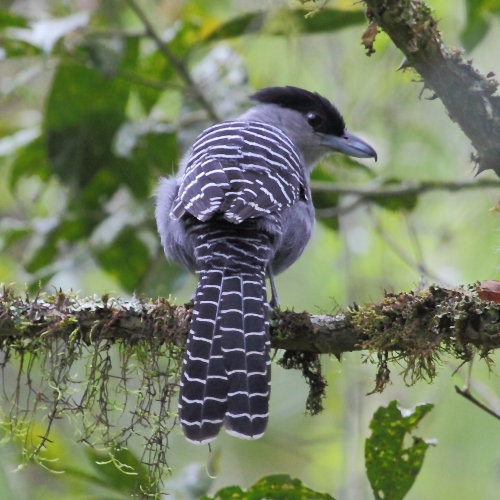
Identifying the Plain-winged Antwren requires attention to its subtle yet distinct field marks. Adult males typically exhibit a grayish-brown plumage with plain wings, lacking the prominent wing bars found in some other antwren species. This coloration aids in their camouflage among the dense understory foliage. Females are generally similar but may display slightly paler tones. Juveniles resemble adults but may have more mottled appearances as they transition to adult plumage.
One of the key identification features of Myrmotherula behni is its lack of striking color contrasts, which can be a challenge for birders accustomed to more visually distinctive species. This leads to potential confusion with similar species such as the White-flanked Antwren or the Dusky-throated Antshrike. However, the Plain-winged Antwren's consistent plain wing pattern and size, typically smaller than similar species, can aid in accurate identification.
In flight, the antwren's silhouette is somewhat nondescript, with short, rounded wings that contribute to its agile maneuverability through dense vegetation. When perched, it often adopts a horizontal posture, facilitating its rapid movement as it searches for prey.
Having trouble telling birds apart? Upload a photo to our bird identification tool for an instant species match.
Plain-winged Antwren Habitat and Range
Preferred Habitat
The Plain-winged Antwren inhabits a variety of forested environments, including primary and secondary lowland tropical forests. It thrives in the intricate network of the Amazon Basin, where dense understory vegetation provides both sustenance and protection. These birds prefer humid areas rich in insect life, often found near streams or in forest edges where sunlight enhances undergrowth diversity.
While the antwren primarily resides in lowland areas, typically below 900 meters in elevation, it occasionally ventures into slightly higher terrain where suitable habitat conditions persist. Unlike some bird species that adapt to urban environments, the Plain-winged Antwren remains largely absent from developed areas, favoring the seclusion of forest interiors. Its habitat preference remains consistent throughout the year, with little seasonal migration or habitat shift observed.
Geographic Range
The range of the Plain-winged Antwren is concentrated in the vast and biodiverse Amazon Basin, covering significant portions of Brazil, Peru, and Bolivia. This bird is a non-migratory resident, demonstrating a stable presence within its defined range throughout the year.
Within Brazil, the antwren is notably present in the states of Acre and Amazonas, where it frequents extensive forest tracts. In Peru, it inhabits regions such as Madre de Dios, known for its rich biodiversity and protected areas. Bolivia’s northern forested regions also host the Plain-winged Antwren, particularly in areas adjacent to the Brazilian border.
While its population density varies, the antwren is commonly found in undisturbed primary forests where insect prey is abundant. However, its presence in secondary forests suggests some adaptability to changing landscapes, although its reliance on forested habitats makes it vulnerable to deforestation.
Want to know which birds visit your area? Browse our backyard birds by location guides for region-specific species lists.
What Does the Plain-winged Antwren Eat?
The diet of the Plain-winged Antwren primarily consists of small insects and arthropods, which it gleans from the foliage as it moves through the forest understory. This bird employs a foraging technique known as 'gleaning,' where it picks insects off leaves and branches with precision.
In terms of prey size, the antwren targets smaller insects such as ants, beetles, and spiders, which are abundant in its habitat. Seasonal changes in insect availability can influence its diet, prompting it to occasionally consume larger prey items or a greater variety of arthropods during periods of scarcity.
The antwren is diurnal, with peak feeding activity occurring in the early morning and late afternoon, coinciding with optimal insect activity. Its role as an insectivore is vital, helping control insect populations and contributing to the biodiversity of its ecosystem.
Plain-winged Antwren Behavior and Social Structure
The Plain-winged Antwren exhibits a range of intriguing behaviors that reflect its adaptation to life in dense forest environments. Socially, this bird often associates with mixed-species flocks, a strategy that enhances its foraging efficiency and provides mutual protection against predators. Within these flocks, the antwren maintains a non-aggressive, cooperative presence.
Territorial behavior is pronounced during the breeding season, with males defending their territory through vocalizations and displays. Courtship involves males showcasing their agility and plumage to attract females, often accompanied by soft calls. Once paired, they exhibit strong monogamous bonds.
In the presence of predators, the Plain-winged Antwren relies on its cryptic plumage and rapid movements to escape detection. Its daily activity patterns are primarily diurnal, with active periods interspersed with rest, ensuring it remains alert to environmental changes and potential threats.
Plain-winged Antwren Nesting and Reproduction
The nesting habits of the Plain-winged Antwren are fascinating and reflect its adaptation to forested environments. These birds construct cup-shaped nests, which they often place low in shrubs or small trees, ensuring both concealment and accessibility. Nest materials typically include fine twigs, leaves, and other plant matter, woven together with great care.
The typical clutch size for Myrmotherula behni is between two and three eggs. Both parents participate in incubation, which lasts approximately two weeks. During this period, the adults exhibit heightened vigilance, protecting the nest from predators and environmental disturbances.
Once the chicks hatch, they remain in the nest for another two weeks before fledging. Parental roles are shared, with both male and female taking turns feeding the chicks and teaching them critical survival skills. The species generally raises one brood per year, although favorable conditions may occasionally allow for a second.
Plain-winged Antwren Sounds and Vocalizations
The vocal repertoire of the Plain-winged Antwren is characterized by its distinctive song and calls. The primary song consists of a series of rapid, high-pitched notes delivered in a steady rhythm, often described as 'tseep-tseep-tseep.' This song, though simple, plays a vital role in territory defense and mate attraction.
In addition to its song, the antwren emits a variety of call notes that serve different purposes. Alarm calls, which are sharper and more urgent, alert mates and flock members to potential threats. These calls can escalate in intensity depending on the level of perceived danger.
During the dawn chorus, a time when many birds vocalize actively, the Plain-winged Antwren's calls become more frequent and varied, contributing to the rich tapestry of sounds in its forest habitat.
Interesting Facts About the Plain-winged Antwren
- 1The Plain-winged Antwren often forages alongside larger tanagers, benefiting from their ability to flush out hiding insects.
- 2Despite its modest size, the Plain-winged Antwren's territory can span several hectares, reflecting its need for abundant resources.
- 3The antwren's song is often mistaken for insect calls due to its high pitch and repetitive nature, illustrating nature's acoustic camouflage.
- 4In some regions, the Plain-winged Antwren has been observed using spider webs as nesting material, showcasing its resourcefulness.
- 5The species' population is a valuable indicator of forest health, as it thrives only in relatively undisturbed environments.
- 6The Plain-winged Antwren's metabolic rate is adapted to its active hunting lifestyle, requiring frequent feeding throughout the day.
- 7During courtship, the male performs a wing-fluttering display, a behavior that highlights his strength and vitality to potential mates.
Plain-winged Antwren Conservation Status
The Plain-winged Antwren is currently classified as Least Concern by the IUCN, with stable population trends observed across its range. However, it faces several threats that could impact its long-term viability, primarily habitat destruction due to deforestation and land conversion in the Amazon Basin. Despite these challenges, conservation efforts in the region, including the establishment of protected areas and sustainable forest management practices, offer some hope for the species' future. Historical population changes have not shown significant declines, but continued monitoring is essential to ensure that the Plain-winged Antwren remains a thriving component of its ecosystem. Efforts to raise awareness about the importance of preserving lowland tropical forests and their biodiversity are crucial for the ongoing protection of this and other forest-dependent species.
Other Thamnophilidae Species



Birds Similar to the Plain-winged Antwren
These species are often confused with the Plain-winged Antwren due to similar appearance or overlapping range.

