
Pygmy Antwren
Myrmotherula brachyura
Order: Passeriformes / Family: Thamnophilidae
Wikimedia Commons
About the Pygmy Antwren
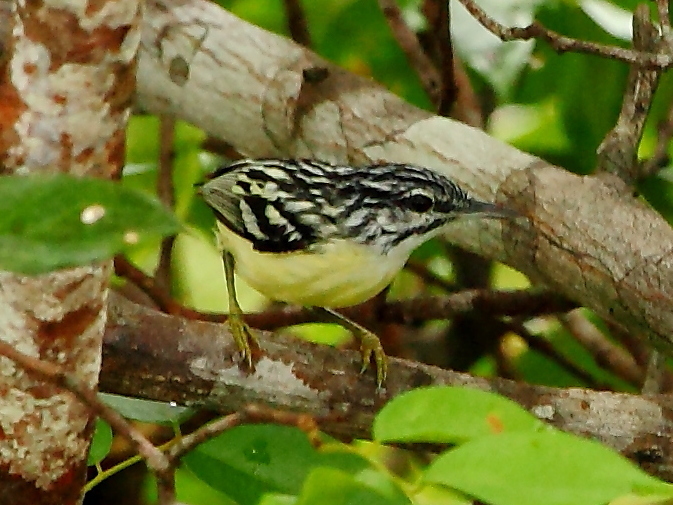
The Pygmy Antwren (Myrmotherula brachyura) is a small passerine bird belonging to the Thamnophilidae family, a group renowned for its diversity and ecological significance in Neotropical forests. This species exhibits a striking combination of black and white plumage, which serves as effective camouflage against the dappled light of the rainforest understory. Predominantly found in the lowland tropical forests of South America, the Pygmy Antwren inhabits areas from the Amazon Basin to the Guianas, extending through parts of Colombia, Venezuela, and Brazil. Its presence is a key indicator of healthy forest ecosystems, as it plays an integral role in controlling insect populations.
The Pygmy Antwren contributes significantly to the ecological dynamics of its habitat. As an insectivore, it helps maintain a balance in the ecosystem by regulating insect populations, which in turn preserves plant health. The species is typically associated with mixed-species flocks, a common phenomenon in tropical forests that enhances foraging efficiency and reduces predation risks. Within these flocks, the Pygmy Antwren often assumes a peripheral role, benefiting from the alertness of larger and more conspicuous species.
Seasonally, the Pygmy Antwren exhibits slight alterations in behavior. During the breeding season, pairs become more territorial, defending their nesting sites against intruders. Outside of this period, they are more tolerant of conspecifics and other species, often following understory flocks through their forest territory. Despite its small size, the Pygmy Antwren's presence is a vivid reminder of the intricate web of life that characterizes the world's rainforests.
The Pygmy Antwren belongs to the family Thamnophilidae, within the order Passeriformes. These birds typically live 4-5 years in the wild, with some individuals living slightly longer..
How to Identify a Pygmy Antwren
The Pygmy Antwren is a tiny bird, measuring about 9 cm in length and weighing approximately 7 grams. Males are particularly striking with their black upperparts adorned with white spots and streaks, creating a bold contrast. Their underparts are white, providing a stark contrast to the darker upper body. Females, while similar, have a more subdued coloration, with brownish tones replacing the black in some areas, especially on the crown and back.
Juveniles resemble females but are even duller, with less distinct markings. This bird often causes confusion with other small antwrens, such as the Amazonian Streaked Antwren. However, the Pygmy Antwren can be distinguished by its size and the specific arrangement of its plumage patterns. When seen in flight, the Pygmy Antwren displays a quick, fluttery motion, typical of small passerines.
In terms of posture, the Pygmy Antwren is often observed clinging to vertical branches or hanging upside down as it forages, a trait that can help differentiate it from similar species. Its short tail and compact body shape are also key features that aid identification when the bird is at rest or moving through dense foliage.
Having trouble telling birds apart? Upload a photo to our bird identification tool for an instant species match.
Pygmy Antwren Habitat and Range
Preferred Habitat
The Pygmy Antwren primarily inhabits the lowland tropical rainforests of South America, favoring dense understory environments. It thrives in primary forests but can also be found in secondary growth and forest edges, where it exploits the rich insect life.
This species is particularly associated with humid environments at elevations ranging from sea level to about 1000 meters. It is less common in drier forest types, as it relies on the lush, layered vegetation of tropical rainforests to support its foraging habits.
Unlike some other antbirds, the Pygmy Antwren shows little inclination to venture into urban areas, remaining firmly tied to forested regions. It does not exhibit significant seasonal habitat shifts, although it may move locally in response to changes in prey availability or competition within its habitat.
Geographic Range
The Pygmy Antwren's breeding range encompasses much of the Amazon Basin, extending from eastern Colombia and Venezuela down through Brazil, particularly in the states of Amazonas, Pará, and Acre. It is also found in the Guianas and parts of Peru and Bolivia.
The species is considered resident throughout its range, showing no significant migratory patterns. However, local movements might occur, driven by food availability or environmental pressures.
Population densities are highest in areas with undisturbed forests, where the species benefits from a rich insect fauna and suitable nesting sites. Despite its wide distribution, the Pygmy Antwren remains elusive and is often overlooked due to its size and secretive behavior.
Want to know which birds visit your area? Browse our backyard birds by location guides for region-specific species lists.
What Does the Pygmy Antwren Eat?
The Pygmy Antwren's diet consists mainly of small arthropods, including insects such as ants, beetles, and caterpillars. It employs a gleaning foraging technique, picking prey from leaves and branches with precision.
The bird's small size allows it to exploit niches unavailable to larger species, accessing insects hidden in dense foliage. Seasonal variations in diet are minimal, though the availability of specific prey types may fluctuate throughout the year.
Foraging occurs primarily during the early morning and late afternoon, as the bird capitalizes on peak insect activity. The Pygmy Antwren often follows mixed-species flocks, benefiting from the collective vigilance and varied foraging strategies of the group.
Pygmy Antwren Behavior and Social Structure
Socially, the Pygmy Antwren often associates with mixed-species flocks, enhancing its foraging success and safety. Within these flocks, it maintains a somewhat peripheral role, allowing it to exploit different feeding niches.
Territorial behavior becomes prominent during the breeding season, with pairs defending their nesting areas from conspecifics and other intruding species. Courtship displays are subtle, often involving mutual preening and soft calls exchanged between mates.
Activity peaks during cooler parts of the day, with the bird spending midday resting in dense cover. Its response to predators involves quick darting movements and utilizing its cryptic plumage to blend into the surroundings, reducing detection risk.
Pygmy Antwren Nesting and Reproduction
The Pygmy Antwren constructs a small, cup-shaped nest using fine plant fibers, leaves, and spider silk. These nests are often well-concealed among dense foliage, typically placed between 1-3 meters above ground.
Clutch size typically consists of two eggs, which both parents incubate over a period of approximately 14-16 days. The fledging period lasts about 10-12 days, during which time both parents continue to feed and care for the young.
The species typically raises one brood per year, although in areas with favorable conditions, a second brood may occasionally occur. Parental roles are shared, with both male and female involved in feeding and protecting the chicks.
Pygmy Antwren Sounds and Vocalizations
The primary song of the Pygmy Antwren is a series of rapid, high-pitched notes that accelerate into a trill. This song serves as both a territorial call and a means of communication between mates.
Its call notes are soft, short, and somewhat metallic, often given in quick succession. Alarm calls are sharper and more insistent, alerting flock members to potential threats.
At dawn, the Pygmy Antwren participates in the chorus typical of tropical forests, its high-pitched notes blending with the cacophony of sounds from other birds. The song's rhythm and pitch are reminiscent of a soft, quick, mechanical trill, providing an acoustic marker for identification.
Interesting Facts About the Pygmy Antwren
- 1The Pygmy Antwren weighs just about 7 grams, making it one of the lightest birds in its family.
- 2Despite its small size, the Pygmy Antwren's territory can span several acres, highlighting its active lifestyle.
- 3The species often acts as an indicator of forest health, reflecting the overall biodiversity and insect abundance.
- 4Pygmy Antwrens are known to join flocks of up to 30 different bird species, showcasing their social adaptability.
- 5Their nests are often camouflaged with leaves and silk, making them challenging to spot even for experienced birders.
- 6The Pygmy Antwren's call is one of the highest-pitched among antbirds, aiding identification by sound in dense forests.
- 7They typically forage in the middle strata of forests, a niche less occupied by other antwrens, reducing competition.
Pygmy Antwren Conservation Status
Currently, the IUCN lists the Pygmy Antwren as Least Concern, with a stable population trend. Despite this status, habitat loss due to deforestation remains a primary threat, particularly in the Amazon. Conservation efforts focus on preserving large tracts of continuous forest to ensure the survival of this and other forest-dependent species. Historical population data indicate that while some local declines have occurred, the species' wide range provides a buffer against extensive declines. Continued monitoring and habitat protection are vital to maintaining its population, as ongoing environmental changes and deforestation pose potential risks.
Other Thamnophilidae Species



Birds Similar to the Pygmy Antwren
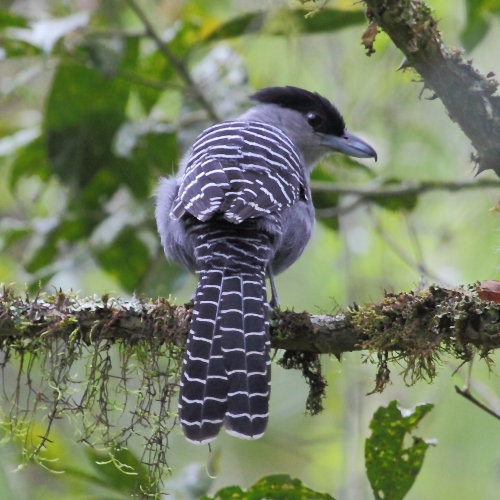
These species are often confused with the Pygmy Antwren due to similar appearance or overlapping range.

