Pygmy Batis
Batis perkeo
Order: Passeriformes / Family: Platysteiridae

Wikimedia Commons
About the Pygmy Batis
The Pygmy Batis, scientifically known as Batis perkeo, captivates bird watchers with its vivid black and white plumage. This species inhabits the dry savannas and thornbush regions of Eastern Africa, particularly in countries like Kenya, Ethiopia, and Somalia. Its presence in these arid landscapes highlights its adaptation to challenging environments. As a member of the Platysteiridae family, the Pygmy Batis plays a significant role in controlling insect populations, making it a crucial component of its ecosystem. Observing these birds reveals their ecological significance, as they are often seen flitting about in search of insects, which they expertly snatch mid-air or glean from foliage. The Pygmy Batis is not just a passive resident of its habitat; it actively contributes to the ecological balance by keeping insect numbers in check. Their foraging behavior also aids in seed dispersal, indirectly supporting plant regeneration in their habitats. Seasonally, the Pygmy Batis adapts its foraging techniques and diet to the availability of food sources, ensuring its survival in regions where resources can become scarce. The bird's striking appearance and ecological role make it a subject of interest for ornithologists and conservationists alike. Research into the Pygmy Batis's behavior and interaction with its environment provides insights into the health of the ecosystems it inhabits. Conservation efforts focus on understanding how habitat changes impact this species, emphasizing the need to protect these arid landscapes from overgrazing and human encroachment. As climate change continues to alter weather patterns and habitat structures, the Pygmy Batis serves as an indicator species, reflecting the larger shifts occurring within its ecosystem. The survival of the Pygmy Batis is closely tied to the health of its environment, making conservation strategies that address habitat preservation and restoration crucial. By observing and protecting this small yet vital bird, we gain a deeper understanding of the intricate web of life within Eastern Africa's dry savannas.
The Pygmy Batis belongs to the family Platysteiridae, within the order Passeriformes. These birds typically live average 4 years with a maximum recorded of 6 years.
How to Identify a Pygmy Batis
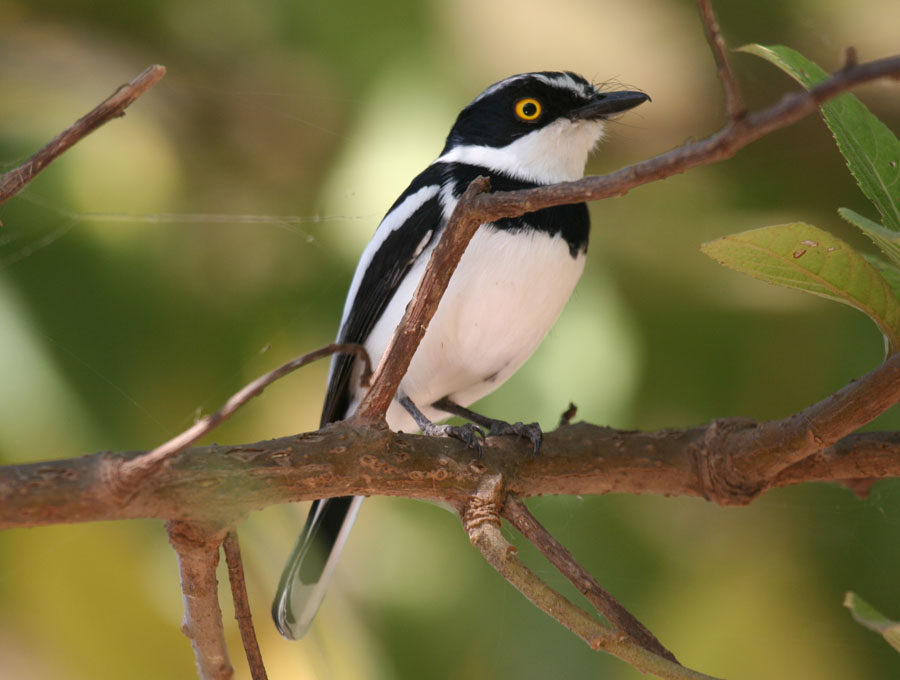
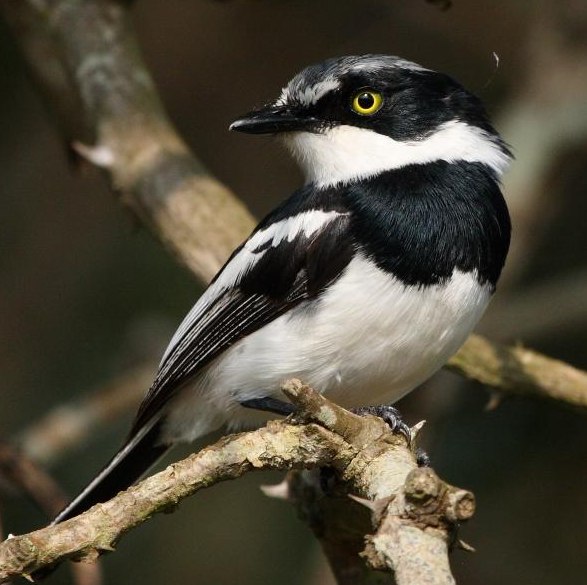
Distinguishing the Pygmy Batis involves noting its contrastive black and white coloration. Males boast a striking black mask across their eyes and a white supercilium, which enhances their bandit-like appearance. Their upper parts are predominantly grayish-black, contrasting sharply with the bright white underparts. Females, while similar in pattern, exhibit a more subdued coloration with a browner back and a chestnut wash across the breast. Juveniles resemble females but may have additional brown mottling. Despite its small size, the Pygmy Batis is a dynamic presence in its habitat, often perching conspicuously. In flight, it displays a distinctive silhouette with rounded wings and a slightly notched tail. The bird's perching posture is frequently upright, allowing easy observation of its characteristic markings. When compared to similar species, such as the Chinspot Batis, the Pygmy Batis is notably smaller and lacks the chinspot marking. Its flight is often quick and flitting, with rapid wingbeats, as it moves through its arid habitat. These field marks are crucial for birders attempting to identify the Pygmy Batis in the diverse avian landscape of Eastern Africa.
Having trouble telling birds apart? Upload a photo to our bird identification tool for an instant species match.
Pygmy Batis Habitat and Range
Preferred Habitat
The Pygmy Batis predominantly inhabits the dry savannas and thornbush ecosystems of Eastern Africa. These regions, characterized by sparse vegetation and thorny acacias, provide an ideal environment for this species. The bird shows a preference for areas that combine open ground with scattered shrubs and low trees, allowing it to hunt insects efficiently. It thrives at elevations ranging from 500 to 1500 meters, adapting well to the hot and arid conditions. Although primarily a resident of rural and semi-wild areas, the Pygmy Batis occasionally ventures into more disturbed habitats, including farmland edges and even gardens in rural settlements. Its ability to exploit a range of semi-arid environments underscores its adaptability, although it remains absent from densely forested or urbanized areas. Seasonal shifts in habitat may occur, driven by changes in food availability, yet the species remains largely within its preferred habitat types throughout the year.
Geographic Range
The Pygmy Batis's range spans across parts of Eastern Africa, with a strong presence in countries such as Kenya, Ethiopia, and Somalia. Within this range, it occupies a variety of dry habitats, adapting to the unique conditions found in each region. The bird is a year-round resident, showing limited migratory behavior and generally remaining within its established territories. Population densities are highest in areas where thornbush and open savanna intersect, creating optimal conditions for foraging and nesting. While not considered migratory, local movements may occur in response to seasonal variations in food availability or environmental conditions. In Ethiopia, for example, the bird can be found in the Rift Valley, while in Kenya, it inhabits the dry northern territories. The consistent presence of the Pygmy Batis in these regions highlights its specialization in managing the challenges of its arid environment.
Want to know which birds visit your area? Browse our backyard birds by location guides for region-specific species lists.
What Does the Pygmy Batis Eat?
As an insectivore, the Pygmy Batis primarily consumes a diet of small insects, including beetles, ants, and flies. During the dry season, when insect activity may decrease, the bird's diet can expand to include spiders and other arthropods. Its foraging technique is both active and versatile, characterized by short sallying flights from perches to capture prey mid-air or glean insects from foliage and bark. The Pygmy Batis often hunts alone or in pairs, maintaining a keen vigilance for movement within its territory. Prey size varies but generally aligns with the bird's small stature, focusing on insects less than two centimeters in length. Feeding activity peaks during the cooler morning and late afternoon hours, coinciding with increased insect activity. Seasonal dietary adjustments ensure that the Pygmy Batis meets its energetic needs across varying environmental conditions.
Pygmy Batis Behavior and Social Structure
The social structure of the Pygmy Batis leans towards solitary or paired existence, though small family groups may form, particularly during the breeding season. Territorial behavior is pronounced, with pairs defending their chosen area vigorously against intruders. Courtship displays involve a series of aerial maneuvers and vocalizations, designed to strengthen pair bonds and signal readiness for breeding. Despite their small size, Pygmy Batis are assertive in their territories, often engaging in vocal duels with neighboring pairs. Flocking behavior is rare outside the breeding context, as individuals prefer to maintain distinct territories. When faced with predators, such as raptors or snakes, the Pygmy Batis employs alarm calls and evasive flight, utilizing cover provided by shrubs and trees. Daily activity patterns revolve around foraging and territory defense, with peak activity during the cooler hours of the day.
Pygmy Batis Nesting and Reproduction
The Pygmy Batis constructs cup-shaped nests, typically situated in the fork of a tree or shrub. These nests consist of woven grass, spider silk, and small twigs, camouflaged with lichen and bark fragments to blend seamlessly with their surroundings. Preferred nesting locations are within thorny acacias or similar vegetation, providing protection from potential nest predators. A typical clutch comprises 2 to 3 eggs, with both parents sharing incubation duties over a period of approximately 14 days. Post-hatching, the fledging timeline extends for another 14 to 16 days, during which both parents participate in feeding and guarding the chicks. The Pygmy Batis usually produces one brood per year, though favorable conditions may lead to a second attempt. Parental roles are well-defined, with males often taking a more active role in territory defense, while females focus on nurturing the young.
Pygmy Batis Sounds and Vocalizations
The primary song of the Pygmy Batis consists of a series of sharp, high-pitched whistles, delivered in rapid succession. This song serves both as a territorial marker and a communication tool between pairs. Call notes are short and clipped, often used in close-contact communication. Alarm calls, triggered by threats, are more strident and urgent, alerting nearby birds to potential danger. During the dawn chorus, the Pygmy Batis's song blends with the symphony of other savanna birds, creating a lively and competitive vocal environment. The clarity and rhythm of its song can be likened to the metallic 'tick-tick' of a small clock, making it distinguishable amidst the avian cacophony.
Interesting Facts About the Pygmy Batis
- 1The Pygmy Batis is among the smallest members of the Platysteiridae family, with an average length of just 10 cm.
- 2Despite its small size, the Pygmy Batis can be fiercely territorial, often engaging in vocal disputes with neighbors.
- 3The species is a master of camouflage; its nests are almost indistinguishable from the surrounding vegetation.
- 4Pygmy Batis are known for their acrobatic flight displays, which play a key role in courtship and territory defense.
- 5These birds maintain territories year-round, but their home range is relatively small, often just a few hectares.
- 6In times of food scarcity, Pygmy Batis may alter their diet to include more diverse insect prey and even small spiders.
- 7The Pygmy Batis contributes to insect population control, feeding on a variety of pests that impact vegetation.
Pygmy Batis Conservation Status
Currently, the Pygmy Batis is listed as Least Concern by the IUCN, with stable population trends observed across its range. However, habitat destruction due to overgrazing and agricultural expansion poses a potential threat. Conservation efforts focus on protecting key habitat areas within its range and promoting sustainable land use practices. Historical population changes have been minimal, but ongoing monitoring is essential to detect any future shifts. Continued research into the Pygmy Batis's ecological role and habitat requirements supports the development of informed conservation strategies, aimed at preserving both the species and the delicate ecosystems it inhabits.
Other Platysteiridae Species


Birds Similar to the Pygmy Batis
These species are often confused with the Pygmy Batis due to similar appearance or overlapping range.