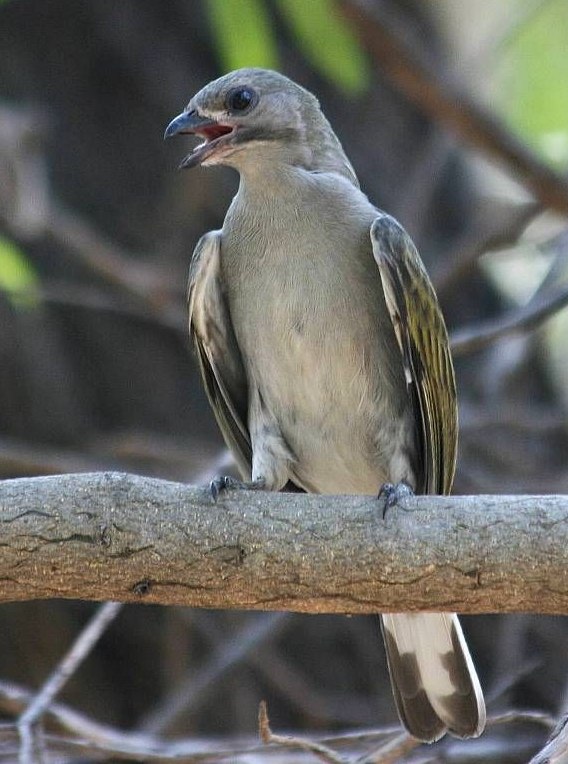
Red-bearded Bee-eater
Nyctyornis amictus
Order: Coraciiformes / Family: Meropidae

Wikimedia Commons
About the Red-bearded Bee-eater
The Red-bearded Bee-eater (Nyctyornis amictus) is a striking bird found predominantly in the tropical forests of Southeast Asia. It holds a special place among birdwatchers and ornithologists due to its vibrant colors and fascinating behaviors. This species' vibrant green plumage, complemented by the distinctive red throat, makes it a visual delight for those fortunate enough to spot it in the wild. The Red-bearded Bee-eater is not just a visual treat but also plays a crucial ecological role as a predator of flying insects, particularly bees and wasps, which it catches with remarkable agility.
This bird's range extends across countries such as Thailand, Malaysia, Sumatra, Borneo, and parts of Myanmar, where it inhabits dense, humid tropical forests. The Red-bearded Bee-eater is most active during the early morning and late afternoon, which coincides with peak insect activity. During these times, it can be seen performing acrobatic flights from high perches to capture prey. Its presence is a strong indicator of healthy forest ecosystems, as it relies on rich insect populations for sustenance.
Seasonally, the Red-bearded Bee-eater may move short distances in response to insect availability, although it is not known for long migratory behavior. The species is vital to its ecosystem, controlling insect populations and offering pollination services inadvertently as it feeds on nectar-rich insects. The Red-bearded Bee-eater's role in the ecosystem highlights the interconnectedness of species within tropical forest habitats, emphasizing the importance of conserving these biodiverse environments.
The Red-bearded Bee-eater belongs to the family Meropidae, within the order Coraciiformes. These birds typically live average 5-10 years with a maximum recorded of 15 years..
How to Identify a Red-bearded Bee-eater
The adult Red-bearded Bee-eater stands out with its vivid emerald green plumage and a distinctive red throat and 'beard', which give the species its name. The striking coloration makes it relatively easy to identify in the field. Males and females appear similar, though males may exhibit slightly more vibrant red hues on their throats. Juveniles, on the other hand, display a duller version of the adult plumage with less pronounced red markings, making them more challenging to distinguish in dense foliage.
In flight, the Red-bearded Bee-eater exhibits a streamlined silhouette, characterized by long pointed wings and a slightly forked tail, which aids in its agile aerial pursuits. When perched, it often sits upright on high branches, scanning the surroundings for flying insects. Compared to similar species, such as the Blue-bearded Bee-eater, the Red-bearded variety lacks the blue coloration and boasts a more vivid red throat, aiding in identification.
The bird's size, approximately 25 to 30 cm in length, generally categorizes it as a medium-sized member of the Meropidae family. Its posture and behavior, combined with its brilliant coloration, make it an unmistakable presence in its natural habitat, provided one knows where to look and listen for its distinct calls.
Having trouble telling birds apart? Upload a photo to our bird identification tool for an instant species match.
Red-bearded Bee-eater Habitat and Range
Preferred Habitat
Red-bearded Bee-eaters primarily inhabit the dense, humid forests of Southeast Asia. They thrive in lowland and hill forests, often found at elevations ranging from sea level up to 1,500 meters. These birds prefer regions with abundant tall trees and thick canopy cover, which provide ideal perching and hunting opportunities.
In particular, they frequent primary rainforests but can also adapt to secondary forests, provided the ecosystem remains relatively undisturbed. Unlike some other bee-eaters, they are seldom found in open woodland or scrubland, emphasizing their reliance on well-established forest habitats. Seasonal shifts in habitat use often coincide with the availability of prey, although the Red-bearded Bee-eater generally remains a year-round resident within its range.
The presence of Red-bearded Bee-eaters in urban areas is uncommon, as they tend to avoid human-altered landscapes. However, they can occasionally be observed in forested parks or reserves near urban centers, provided these areas offer sufficient natural coverage and insect prey.
Geographic Range
The Red-bearded Bee-eater's range encompasses the tropical forests of Southeast Asia, spanning from the southern tip of Myanmar through Thailand, Malaysia, and into the islands of Sumatra and Borneo. This bird is primarily sedentary, residing in these regions year-round, although minor altitudinal movements may occur based on food availability.
In Thailand, they are found predominantly in the southern parts, where dense forests remain intact. Malaysia, both Peninsular and East, serves as a core habitat area, with populations thriving in its expansive forest reserves. Borneo and Sumatra also host significant populations, particularly in protected forest regions and national parks.
While the species is not considered migratory, local movements in response to seasonal changes in prey abundance are not uncommon. Despite their wide distribution, the Red-bearded Bee-eater's presence is closely tied to the availability of undisturbed forest habitat, and they are rarely found outside these areas.
Want to know which birds visit your area? Browse our backyard birds by location guides for region-specific species lists.
What Does the Red-bearded Bee-eater Eat?
The Red-bearded Bee-eater primarily feeds on bees, wasps, and other flying insects, capturing them mid-air with impressive agility. Their hunting technique involves perching quietly on a high branch, scanning the surroundings, and then launching into swift, direct flight to snatch prey in their beaks.
During periods of high insect activity, such as early mornings and late afternoons, these bee-eaters become particularly active hunters. While bees and wasps are the main food sources, they also consume other insects like dragonflies and butterflies, adapting their diet based on seasonal availability.
The Red-bearded Bee-eater's diet is supplemented occasionally by small fruits and berries, particularly when insect numbers dwindle, demonstrating their opportunistic feeding behavior. These dietary habits not only help regulate insect populations but also play a role in seed dispersal within their ecosystems.
Red-bearded Bee-eater Behavior and Social Structure
The Red-bearded Bee-eater displays intriguing social and solitary behaviors. While often seen alone or in pairs, they occasionally form small family groups, especially outside of the breeding season. These birds exhibit strong territorial instincts, with pairs vigorously defending their chosen nesting and hunting grounds from intruders.
Courtship involves elaborate displays, where the male performs aerial acrobatics and presents food offerings to the female. These courtship rituals strengthen pair bonds and ensure successful mating. Flocking behavior is rare, but during periods of high insect abundance, multiple individuals may gather in a favored feeding location.
Daily activity patterns show a preference for early morning and late afternoon foraging. During the heat of the day, they often retreat to shaded perches within the canopy. When faced with predators, such as raptors, Red-bearded Bee-eaters rely on their agility and cryptic coloration to evade capture, swiftly darting into dense foliage for cover.
Red-bearded Bee-eater Nesting and Reproduction
Red-bearded Bee-eaters exhibit fascinating nesting behaviors, typically excavating burrows in sandy banks or earthen embankments within their forested habitat. These burrows can measure up to a meter in length, ending in a small chamber where the clutch is laid.
A typical clutch consists of 2 to 4 white eggs. Both parents share responsibilities during incubation, which lasts approximately 21 to 24 days. After hatching, the young are fed by both adults, receiving a steady diet of regurgitated insects.
Fledging occurs about 4 weeks after hatching, with the juveniles initially staying close to the nest site, where they continue to be fed and protected by the parents. Red-bearded Bee-eaters typically raise one brood per year, although in regions with abundant resources, they may attempt a second.
Red-bearded Bee-eater Sounds and Vocalizations
The Red-bearded Bee-eater's vocalizations are distinctive and varied, featuring a series of melodious whistles and trills. The primary song consists of a repetitive, clear whistle, often described as 'tee-tee-tee', delivered with a rising inflection. These sounds can be heard during courtship displays and territorial declarations.
In addition to their song, Red-bearded Bee-eaters produce sharp, alarm calls when threatened, alerting nearby birds to potential danger. Their calls, although less complex than those of some songbirds, serve crucial communication roles within their social structures.
During the dawn chorus, their calls can blend with those of other forest birds, creating a vibrant and dynamic soundscape. While not as overtly musical as some avian counterparts, the Red-bearded Bee-eater's vocalizations are an integral part of their behavior and ecology.
Interesting Facts About the Red-bearded Bee-eater
- 1Red-bearded Bee-eaters can catch and eat up to 250 insects a day, showcasing their crucial role in insect population control.
- 2Unlike many bee-eaters, the Red-bearded Bee-eater often hunts alone or in pairs, rather than in large flocks.
- 3Their burrow nests are typically located in secluded forest banks, offering protection from many ground predators.
- 4Red-bearded Bee-eaters have a unique flight style, characterized by rapid wing beats interspersed with glides.
- 5The bird’s vivid coloration, particularly its red throat, is used in courtship displays to attract mates.
- 6Juvenile Red-bearded Bee-eaters lack the distinctive red throat, gaining it only after their first molt.
- 7Their diet includes not only insects but occasionally small reptiles, demonstrating their flexible feeding habits.
Red-bearded Bee-eater Conservation Status
The IUCN currently lists the Red-bearded Bee-eater as a species of Least Concern, reflecting a stable population trend across its range. However, habitat loss due to deforestation poses a significant threat, particularly in Malaysia and Indonesia, where logging and agricultural expansion continue to encroach on forest habitats. Conservation efforts are underway in several regions, focusing on habitat preservation and the establishment of protected areas. These initiatives aim to mitigate the impacts of human activities and ensure the long-term survival of this and other forest-dependent species. Historical data suggests that while the species has maintained relatively stable numbers, ongoing monitoring is essential to identify potential declines early. Engaging local communities in conservation efforts remains a priority, promoting sustainable practices that benefit both people and wildlife.