
Rufescent Antshrike
Thamnistes rufescens
Order: Passeriformes / Family: Thamnophilidae

Wikimedia Commons
About the Rufescent Antshrike
The Rufescent Antshrike (Thamnistes rufescens) is a captivating member of the Thamnophilidae family, showcasing the quintessential traits of antbirds. This small passerine is notable for its warm, rufous-colored plumage, which provides excellent camouflage within its preferred dense forest habitats. Found predominantly in the humid forests of the Andean foothills, the Rufescent Antshrike thrives in regions such as Colombia, Ecuador, Peru, and Bolivia. Its presence signifies the health of these ecosystems, as it plays a pivotal role in controlling insect populations. This bird is often observed moving through the understory, where it forages actively, contributing to the ecological balance by preying on various arthropods. Seasonally, the Rufescent Antshrike may adjust its activity patterns in response to changes in insect abundance, although it generally remains within its established territories throughout the year. Its ability to adapt to slight seasonal variations in food supply highlights its importance as a resilient component of Neotropical biodiversity. The Rufescent Antshrike is a vital indicator of forest integrity and serves as a crucial subject for conservation efforts aimed at preserving the rich tapestry of life in South America's montane forests.
The Rufescent Antshrike belongs to the family Thamnophilidae, within the order Passeriformes. These birds typically live average 4-6 years with a maximum recorded of 8 years..
How to Identify a Rufescent Antshrike
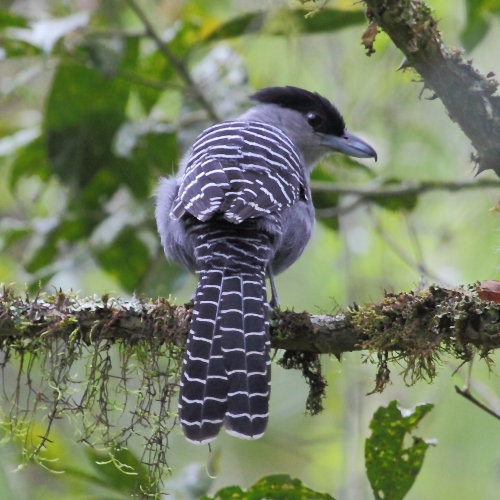
The Rufescent Antshrike is a small bird, typically measuring around 12 to 14 cm in length. Its most distinguishing feature is its rufous or rusty-colored plumage, which covers much of its body, providing effective camouflage against the backdrop of the forest floor. The coloration is consistent across both sexes, although males may have marginally brighter tones. Juveniles resemble adults, but their plumage may appear slightly duller until they reach full maturity. A keen observer may notice the subtle differences in tail length and bill shape when distinguishing between similar species. In the field, the Rufescent Antshrike is often confused with other members of the antbird family, such as the Dusky Antbird. However, the Rufescent's unique coloration and preferred habitat help differentiate it from its relatives. When perched, it presents a compact silhouette, with a slightly curved bill and a relatively short tail, often seen moving methodically through the foliage. This bird's perching posture, characterized by its angled stance and alert demeanor, is a key field mark for birders.
Having trouble telling birds apart? Upload a photo to our bird identification tool for an instant species match.
Rufescent Antshrike Habitat and Range
Preferred Habitat
The Rufescent Antshrike inhabits the dense, humid forests of the Andean foothills, favoring areas with thick understory vegetation. It thrives at elevations ranging from 500 to 1,500 meters, often in primary and mature secondary forests. This bird is particularly associated with the cloud forests of Colombia, Ecuador, and Peru, where it finds ample food resources and suitable nesting sites. While primarily a forest dweller, the Rufescent Antshrike occasionally ventures into adjacent forest edges and clearings, especially when in search of food. Unlike some antbird species, it does not typically inhabit urban areas, preferring instead the seclusion of undisturbed forest habitats. Throughout the year, its habitat preferences remain relatively stable, although minor shifts may occur in response to seasonal changes in prey availability.
Geographic Range
The Rufescent Antshrike's range is largely confined to the western slopes of the Andes in South America. Its distribution spans from southern Colombia through Ecuador and Peru, extending into northern Bolivia. Within this range, the bird occupies specific altitudinal zones, from the lowland tropical forests to the montane cloud forests, primarily between 500 and 1,500 meters elevation. It is a non-migratory species, maintaining residence within its range year-round. While the bird does not engage in long-distance migration, it may exhibit local movements, particularly in search of food or suitable nesting sites. Population densities are highest in regions where dense forest habitats remain intact, such as the protected areas of the Ecuadorian Andes and parts of the Peruvian Amazon. Conservation efforts in these regions are crucial for maintaining the stability of Rufescent Antshrike populations.
Want to know which birds visit your area? Browse our backyard birds by location guides for region-specific species lists.
What Does the Rufescent Antshrike Eat?
The Rufescent Antshrike primarily feeds on insects and other small arthropods, which it skillfully gleans from the forest understory. Its diet includes a variety of prey, such as beetles, spiders, and caterpillars, which it captures using a combination of visual and auditory cues. During the breeding season, the bird's dietary needs intensify, leading to an increase in foraging activity. Insects with higher protein content become a critical component of its diet during this period, supporting the nutritional demands of egg production and chick rearing. The Rufescent Antshrike employs a methodical foraging technique, moving through the foliage with deliberate, calculated movements to flush out hidden prey. This bird often joins mixed-species flocks, benefiting from the collective foraging efficiency and increased vigilance against predators. Its feeding schedule is most active during the early morning and late afternoon, coinciding with peak insect activity.
Rufescent Antshrike Behavior and Social Structure
The Rufescent Antshrike is a territorial bird, with pairs establishing and vigorously defending their territories throughout the year. Its social structure revolves around monogamous pair bonds, with both partners participating in territory defense and nesting duties. During the breeding season, the male performs courtship displays that include vocalizations and subtle plumage posturing to attract and maintain the attention of the female. Rufescent Antshrikes often join mixed-species foraging flocks, which provide safety in numbers and enhance foraging success. Their response to predators involves alarm calls and evasive maneuvers, often retreating deeper into the understory to evade detection. Daily activity patterns show peaks of activity in the cooler parts of the day, with periods of rest during the midday heat. These behavioral adaptations ensure the Rufescent Antshrike's survival in the competitive and predator-rich environments of the Neotropics.
Rufescent Antshrike Nesting and Reproduction
The Rufescent Antshrike constructs a cup-shaped nest, typically situated in the fork of a small tree or shrub within dense understory vegetation. The nest is composed of twigs, leaves, and plant fibers, intricately woven to provide stability and concealment. Clutch size usually ranges from two to three eggs, which are incubated by both parents for approximately 14 to 16 days. Following hatching, both male and female participate in feeding and caring for the chicks, which fledge after about 12 to 15 days. The fledglings remain dependent on their parents for several weeks post-fledging, during which they learn essential survival skills. The Rufescent Antshrike typically raises one or two broods per year, with breeding timing aligned to the local rainy season, ensuring a plentiful food supply for growing chicks. Parental roles are shared equitably, with both birds contributing significantly to the success of the brood.
Rufescent Antshrike Sounds and Vocalizations
The Rufescent Antshrike's vocalizations are a key element in its communication and territory defense. Its primary song consists of a series of sharp, clear notes delivered in rapid succession, often described as a 'chit-chit-chit' sound. This song serves both to attract mates and deter rivals. In addition to its song, the bird emits a variety of call notes, including soft contact calls used between paired individuals and harsher alarm calls that signal the presence of predators. During the dawn chorus, the Rufescent Antshrike's vocalizations are particularly prominent, contributing to the rich auditory tapestry of the forest. Its calls, while distinctive, can sometimes be mistaken for those of closely related antbird species, requiring careful listening to distinguish.
Interesting Facts About the Rufescent Antshrike
- 1The Rufescent Antshrike's rufous plumage is an excellent example of adaptive camouflage, blending seamlessly with the forest floor and leaf litter.
- 2Despite its name, the Rufescent Antshrike is not an aggressive bird; rather, it is known for its calm demeanor and deliberate movements.
- 3The bird's presence in mixed-species flocks highlights its cooperative nature, as it benefits from enhanced foraging efficiency and predator vigilance.
- 4Studies have shown that Rufescent Antshrikes play a crucial role in controlling insect populations, particularly during the breeding season when their dietary needs increase.
- 5Unlike many other antbirds, the Rufescent Antshrike does not follow army ant swarms, preferring instead to forage independently or in mixed flocks.
- 6The Rufescent Antshrike's song, though repetitive, is a key tool in territory defense and mate attraction, underscoring the importance of vocal communication in the dense forest environment.
- 7Its preference for dense understory habitats makes the Rufescent Antshrike a reliable indicator species for the health and integrity of Neotropical forest ecosystems.
Rufescent Antshrike Conservation Status
The Rufescent Antshrike is currently listed as Least Concern by the IUCN, although its populations face pressures from habitat loss and fragmentation. Deforestation for agriculture and logging poses significant threats, particularly in regions where protective measures are lax. Despite these challenges, the species has shown resilience in certain protected areas, where conservation efforts focus on preserving large tracts of continuous forest. Historical population data suggest a relatively stable trend, but ongoing habitat destruction could alter this status. Conservation initiatives aimed at promoting sustainable land use and establishing corridors between fragmented habitats are vital for ensuring the long-term survival of the Rufescent Antshrike.
Other Thamnophilidae Species



Birds Similar to the Rufescent Antshrike
These species are often confused with the Rufescent Antshrike due to similar appearance or overlapping range.

