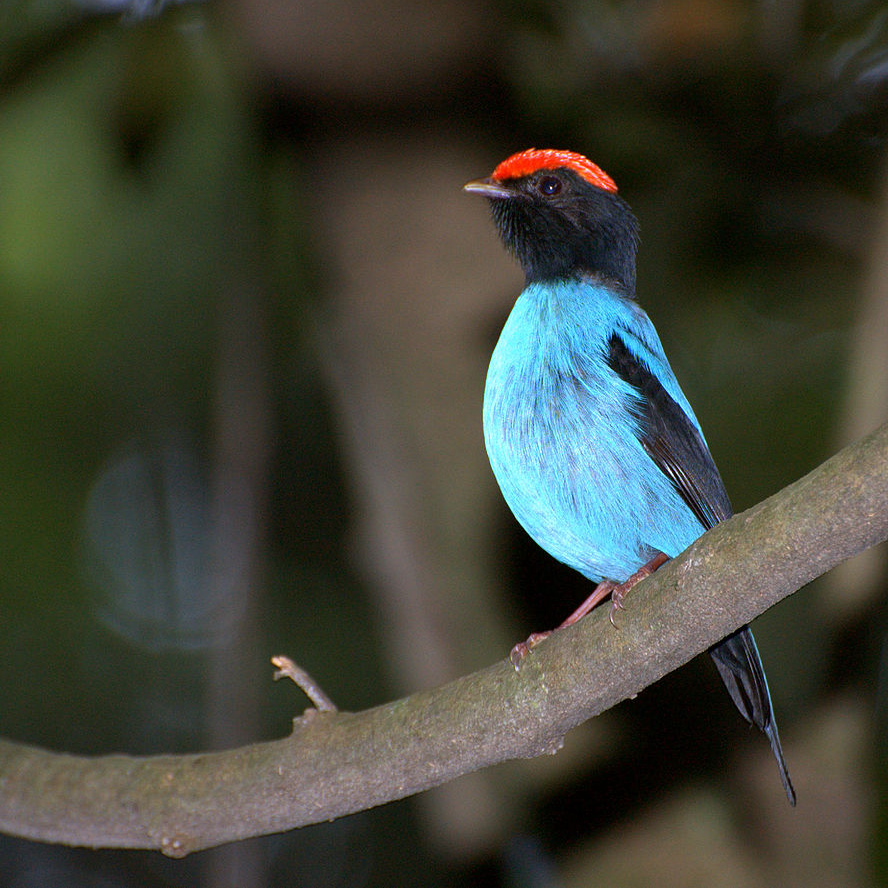
Saffron-crested Tyrant-Manakin
Neopelma chrysocephalum
Order: Passeriformes / Family: Pipridae

Wikimedia Commons
About the Saffron-crested Tyrant-Manakin
The Saffron-crested Tyrant-Manakin, scientifically known as Neopelma chrysocephalum, is a striking member of the Pipridae family. This small passerine bird is native to the tropical forests of South America, primarily found in the Amazon Basin. Known for its brilliant saffron-yellow crest atop its head, the bird is both a visual delight and a challenge to spot in its dense, verdant habitat. The Saffron-crested Tyrant-Manakin plays an important ecological role as an insectivore, contributing to insect population control within its ecosystem. Its presence in the undergrowth and mid-level canopy helps maintain the delicate balance of the tropical forest by participating in seed dispersal, a byproduct of its frugivorous activities during certain seasons. Despite its small size, this bird commands attention due to its unique plumage and vocalizations which often echo through the forest, especially during the breeding season when males perform elaborate courtship displays. Geographically, the Saffron-crested Tyrant-Manakin is most commonly associated with the lowland rainforests of Brazil, although its range does extend into parts of Colombia, Venezuela, and the Guianas. The bird's preference for undisturbed, humid forest environments makes it an indicator species for the health of its ecosystem. Its seasonal behaviors, such as more pronounced territoriality during the breeding season, reflect the rich tapestry of interactions that characterize the Amazon's biodiversity. The Saffron-crested Tyrant-Manakin is also a key participant in the forest's seasonal rhythms, adjusting its diet and behaviors in accordance with annual cycles of rainfall and fruiting in the Amazon Basin.
The Saffron-crested Tyrant-Manakin belongs to the family Pipridae, within the order Passeriformes. These birds typically live averages around 5 years in the wild..
How to Identify a Saffron-crested Tyrant-Manakin
Identifying the Saffron-crested Tyrant-Manakin involves looking for its distinctive saffron-yellow crest, which contrasts sharply with its otherwise olive-green body and wings. The male of the species bears this vibrant crest more prominently, while the female's is less pronounced, often appearing more muted. Juveniles resemble females but with even subtler coloration, making them more challenging to identify without a clear view of the crest. The bird's overall small size, approximately 11 cm in length, and its compact, rounded wings contribute to its characteristic silhouette. In flight, the Saffron-crested Tyrant-Manakin appears as a quick dart of green and yellow, often moving in short bursts from perch to perch. When perched, it often sits upright, occasionally flicking its wings or tail, a behavior that can help in field identification. Despite its striking crest, this bird can sometimes be confused with similar species like the White-crowned Manakin, but the latter lacks the distinctive saffron hue. Observers should note the unique combination of crest color and posture when identifying this species in its natural habitat.
Having trouble telling birds apart? Upload a photo to our bird identification tool for an instant species match.
Saffron-crested Tyrant-Manakin Habitat and Range
Preferred Habitat
The Saffron-crested Tyrant-Manakin primarily inhabits lowland tropical rainforests, thriving below elevations of 800 meters. Its favored environments include dense, humid forests where it can find ample cover and food sources. This bird is typically found in areas with thick understory foliage and is less commonly observed in open or fragmented forests. Seasonal habitat shifts for the Saffron-crested Tyrant-Manakin are minimal, as it tends to remain within its preferred habitat year-round, avoiding urban and suburban areas. Unlike some bird species that adapt to human-altered landscapes, the Saffron-crested Tyrant-Manakin is more sensitive to habitat disturbance, necessitating intact forest environments for its survival.
Geographic Range
The Saffron-crested Tyrant-Manakin's range is centered around the Amazon Basin, with a distribution that spans several countries. It is predominantly found in Brazil, especially within the central and northern regions where the Amazon rainforest is most extensive. The bird's range extends into eastern Colombia, southern Venezuela, and the Guianas, where similar forest habitats exist. Unlike some migratory birds, the Saffron-crested Tyrant-Manakin is largely sedentary, with its movements confined to local dispersal rather than long-distance migration. As a result, its population density is highest in undisturbed rainforest areas where human impact is minimal. Conservation efforts in these regions focus on preserving large tracts of contiguous forest to maintain the bird's habitat integrity.
Want to know which birds visit your area? Browse our backyard birds by location guides for region-specific species lists.
What Does the Saffron-crested Tyrant-Manakin Eat?
The diet of the Saffron-crested Tyrant-Manakin consists primarily of insects and small arthropods, which it expertly gleans from foliage and branches. During the rainy season, when insect activity is at its peak, this bird's diet is almost entirely insect-based. However, it also consumes a variety of fruits, particularly during drier seasons when insects are less abundant. This dietary flexibility aids in its survival across different seasons. The bird employs a sit-and-wait foraging technique, remaining still on a perch before making quick, agile movements to snatch prey. Prey size typically ranges from small to medium insects, including beetles and caterpillars. The Saffron-crested Tyrant-Manakin generally forages alone or in pairs, often during early morning and late afternoon when insect activity is highest.
Saffron-crested Tyrant-Manakin Behavior and Social Structure
The Saffron-crested Tyrant-Manakin exhibits interesting social and territorial behaviors. Males are known for their elaborate courtship displays, which are crucial for attracting mates. These displays often involve acrobatic flights and vocalizations that demonstrate the male's fitness. The bird is generally solitary outside of the breeding season, but during mating periods, it becomes more social, interacting frequently with potential mates and rivals. Territoriality is pronounced during these times, with males defending small territories from intruders. In terms of daily activity, the Saffron-crested Tyrant-Manakin is primarily diurnal, with peak activity occurring in the early morning and late afternoon. Its response to predators includes quick, evasive flights and seeking cover in dense foliage, relying on its camouflaged plumage to remain unnoticed.
Saffron-crested Tyrant-Manakin Nesting and Reproduction
The nesting habits of the Saffron-crested Tyrant-Manakin are characterized by its choice of location and materials. Nests are typically built low in the dense understory of the forest, often within 2 meters of the ground. The nest itself is a small, cup-shaped structure made from twigs, leaves, and other plant materials, carefully woven together. The clutch size generally consists of 2 eggs, with both parents sharing incubation duties over a period of approximately 17 days. Once hatched, the young remain in the nest for about 20 days before fledging. The Saffron-crested Tyrant-Manakin usually has one brood per year, although in particularly favorable conditions, two broods may be possible. Parental care continues after fledging, with both parents involved in feeding and protecting the young.
Saffron-crested Tyrant-Manakin Sounds and Vocalizations
The vocalizations of the Saffron-crested Tyrant-Manakin are both distinctive and varied. The primary song is a melodic series of high-pitched whistles, often repeated in a rhythmic pattern that can carry through the dense forest. These clear, sweet notes are interspersed with shorter call notes that serve as communication between mates or to signal alarm. During the dawn chorus, the bird's song is particularly pronounced, contributing to the vibrant acoustic tapestry of the tropical forest. The alarm calls are harsher and more abrupt, resembling a sharp 'chip' sound used to warn of nearby predators. These vocalizations are an important aspect of the bird's behavior, playing a key role in territory establishment and mate attraction.
Interesting Facts About the Saffron-crested Tyrant-Manakin
- 1The Saffron-crested Tyrant-Manakin's elaborate courtship displays can last several minutes and involve multiple flights.
- 2Despite its vibrant crest, the Saffron-crested Tyrant-Manakin is often missed by birders due to its preference for dense foliage.
- 3This bird's call is among the most recognizable in Amazonian forests, often heard before the bird is seen.
- 4The species plays a critical role in seed dispersal, contributing to the forest's regeneration.
- 5The Saffron-crested Tyrant-Manakin's diet shifts from primarily insects to more fruits in the dry season.
- 6Males and females can be distinguished by the brightness of their crests, with males being more vivid.
- 7This bird's presence is an indicator of high-quality, undisturbed rainforest habitat.
Saffron-crested Tyrant-Manakin Conservation Status
The Saffron-crested Tyrant-Manakin is currently listed as Least Concern by the IUCN, with a stable population trend. However, the primary threat to its existence is habitat destruction due to deforestation for agriculture and logging. Conservation efforts focus on protecting large tracts of rainforest, ensuring that the bird's habitat remains intact. Historically, the bird's population has been more robust, but recent trends in deforestation pose significant risks. Organizations working in the region aim to implement sustainable land management practices that benefit both local communities and wildlife, thereby securing the future of the Saffron-crested Tyrant-Manakin.