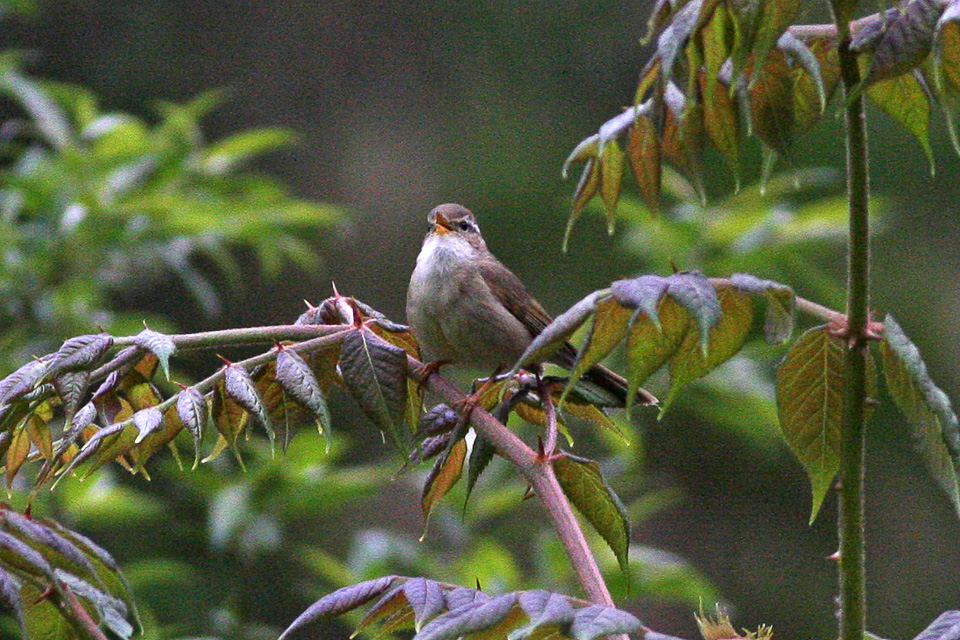
Sakhalin Leaf Warbler
Phylloscopus borealoides
Order: Passeriformes / Family: Phylloscopidae

Wikimedia Commons
About the Sakhalin Leaf Warbler
The Sakhalin Leaf Warbler, Phylloscopus borealoides, is a small passerine bird found primarily in northeastern Asia. It belongs to the family Phylloscopidae, renowned for its tiny and agile members. This species holds particular significance due to its limited breeding range, primarily confined to Sakhalin Island and the southern Kuril Islands. These regions provide the dense deciduous and mixed forests that the warbler requires for breeding. The bird plays a crucial ecological role as an insectivore, helping to control insect populations in these forests, which are rich with biodiversity. During the breeding season, the Sakhalin Leaf Warbler becomes a constant presence among the foliage, its distinctive song echoing through the forest.
In the context of seasonal behavior, this warbler is migratory, with a breeding season extending from late spring to early summer. After breeding, it embarks on a migration to its wintering grounds in Southeast Asia, predominantly the Philippines and parts of Borneo. This migration is a critical period for the bird, requiring significant energy reserves and navigational skills. The journey is fraught with challenges, including weather conditions and predation risks, making the Sakhalin Leaf Warbler's successful migration a true testament to its adaptability and resilience.
The Sakhalin Leaf Warbler contributes to the forest ecosystem not only by controlling insect populations but also by serving as prey for larger avian predators. Its presence indicates a healthy forest environment, and studying its population trends can provide insights into the broader health of these ecosystems. The bird's ecological role extends beyond its immediate habitat, as its migratory patterns link disparate ecosystems across Asia. Understanding these connections is vital for conservation efforts, particularly as climate change and habitat destruction pose increasing threats to migratory species like the Sakhalin Leaf Warbler.
The Sakhalin Leaf Warbler belongs to the family Phylloscopidae, within the order Passeriformes. These birds typically live typically 3-5 years, with a maximum recorded of 7 years..
How to Identify a Sakhalin Leaf Warbler
The Sakhalin Leaf Warbler is a small bird, measuring about 11 to 12 centimeters in length, with a wingspan of approximately 17 to 21 centimeters. Its plumage is characterized by bright olive-green upperparts and a paler, yellowish-white underside. A conspicuous pale supercilium, or 'eyebrow', extends from the base of the bill to behind the eye, providing a key field mark for identification. The wings and tail are relatively short, a common trait among Phylloscopus warblers, aiding in its quick, darting flight and agile movement through foliage.
Males and females appear similar, lacking significant sexual dimorphism, which can make gender identification in the field challenging. Juveniles closely resemble adults but may exhibit slightly duller plumage. This subtle difference can be noticeable during the late summer months when young birds begin to forage independently.
The Sakhalin Leaf Warbler is sometimes confused with the Arctic Warbler, another Phylloscopus species. However, the Sakhalin Leaf Warbler's brighter plumage and distinct vocalizations help differentiate these two species. In flight, the warbler's rapid wingbeats and tendency to stay close to vegetation are distinctive, while its perching posture often involves a tilted forward stance, suggesting alertness and readiness to move quickly.
Having trouble telling birds apart? Upload a photo to our bird identification tool for an instant species match.
Sakhalin Leaf Warbler Habitat and Range
Preferred Habitat
The Sakhalin Leaf Warbler primarily inhabits temperate deciduous and mixed forests, with a preference for areas rich in undergrowth. These forests provide ample cover and foraging opportunities. The bird typically resides at elevations ranging from sea level up to 1500 meters, although it is more commonly found in low to mid-elevation forests during the breeding season.
During migration and in its wintering grounds, the warbler adapts to various habitats, including secondary growth forests and edges of agricultural lands. In these areas, it seeks out dense scrub and undergrowth, which offer protection and food resources. Unlike some other Phylloscopus species, the Sakhalin Leaf Warbler is less likely to venture into urban environments, although it may occasionally be spotted in parks or gardens with suitable tree cover.
Seasonal habitat shifts are prominent, with the bird leaving its breeding grounds as temperatures drop in autumn. The warbler's precise habitat requirements underscore the importance of preserving forested areas in both its breeding and wintering ranges.
Geographic Range
The breeding range of the Sakhalin Leaf Warbler is primarily restricted to Sakhalin Island and the southern Kuril Islands in Russia. These areas offer the ideal forested environments that the warbler requires for reproduction. Outside the breeding season, the bird migrates to Southeast Asia, with significant populations wintering in the Philippines, particularly on Luzon and Mindanao, as well as parts of Borneo.
During migration, the warbler travels through the Korean Peninsula and parts of eastern China, using a corridor that traverses varied landscapes. These migration routes are crucial for its survival, providing stopover sites where the bird can rest and refuel. Understanding these migration corridors is essential for conservation efforts, as disruptions to these pathways could have significant impacts on the species' overall population.
Population density hotspots are primarily found in the breeding areas, where the birds are concentrated during the spring and summer months. In contrast, the wintering grounds see a more dispersed distribution, reflecting the broader range of habitats the bird utilizes outside the breeding season.
Want to know which birds visit your area? Browse our backyard birds by location guides for region-specific species lists.
What Does the Sakhalin Leaf Warbler Eat?
The Sakhalin Leaf Warbler primarily consumes insects and other small arthropods, making it an important insectivore in its habitat. Its diet includes a wide range of prey such as caterpillars, beetles, and spiders, which it skillfully extracts from leaves and branches. This warbler employs a variety of foraging techniques, including gleaning and hover-gleaning, where it hovers momentarily to pick insects from the undersides of leaves.
Seasonal changes influence the warbler's diet, with a higher intake of caterpillars during the breeding season when these are abundant and energy-rich, providing the necessary nutrition for raising young. As autumn approaches and insect populations dwindle, the warbler may supplement its diet with small berries or seeds, particularly during migration when energy demands peak.
The bird's feeding schedule is largely diurnal, with peak activity in the early morning and late afternoon. During these times, it is most active and can often be seen vigorously foraging through the foliage, sometimes in mixed-species flocks that enhance foraging efficiency and offer protection from predators.
Sakhalin Leaf Warbler Behavior and Social Structure
The Sakhalin Leaf Warbler exhibits a generally solitary or paired lifestyle, especially during the breeding season when pairs maintain territories. Territorial behavior includes both vocal and physical displays, with the male frequently singing to assert dominance and ward off rivals. Courtship involves the male performing song flights and displaying its plumage to attract a mate.
Flocking behavior becomes more prevalent outside the breeding season. During migration and in winter, the warbler often joins mixed-species flocks. This social behavior provides increased vigilance against predators and enhances foraging opportunities. The warbler shows a keen response to potential threats, employing swift evasive maneuvers and using dense foliage as cover.
Daily activity patterns feature peak periods of activity during the cooler parts of the day, such as early morning and late afternoon. The warbler is known for its energetic foraging, moving quickly and methodically through its environment as it searches for food. Despite its small size, the Sakhalin Leaf Warbler's behaviors reflect a well-adapted strategy for survival in both its breeding and wintering habitats.
Sakhalin Leaf Warbler Nesting and Reproduction
The Sakhalin Leaf Warbler constructs a dome-shaped nest, typically situated on or near the ground, well-concealed in dense vegetation. This nest is composed of a variety of materials, including grass, moss, leaves, and fine twigs, which provide insulation and camouflage. The female primarily undertakes nest building, demonstrating meticulous care in its construction.
Clutch size ranges from 3 to 5 eggs, with incubation carried out solely by the female over a period of approximately 12 to 14 days. During this time, the male contributes by defending the territory and occasionally providing food to the incubating female. After hatching, both parents participate in feeding the chicks, which remain in the nest for about 10 to 12 days before fledging.
The warbler typically raises one brood per year, although in optimal conditions, a second brood may be attempted. The fledging timeline is critical, as young birds must quickly learn to forage and evade predators. Parental care extends beyond fledging, with adults continuing to feed and protect the juveniles as they develop the skills necessary for independent survival.
Sakhalin Leaf Warbler Sounds and Vocalizations
The primary song of the Sakhalin Leaf Warbler is a series of high-pitched, melodious notes delivered in rapid succession. This song is often heard during the breeding season, serving as a territorial and courtship signal. The rhythm is fast-paced, with a clear, sweet quality that resonates through the forest.
In addition to its song, the warbler emits a variety of call notes, including sharp 'chip' sounds that serve as contact calls among individuals. Alarm calls are more abrupt and can be described as harsh, serving as a warning to others of potential danger.
Dawn chorus behavior is prominent during the breeding season, with males vigorously singing at first light to establish their presence. The Sakhalin Leaf Warbler's vocalizations are distinctive and play a crucial role in communication and territory maintenance.
Interesting Facts About the Sakhalin Leaf Warbler
- 1The Sakhalin Leaf Warbler migrates over 3,000 kilometers from its breeding grounds to its wintering sites.
- 2Despite its small size, the Sakhalin Leaf Warbler can consume up to 40% of its body weight in insects each day.
- 3The warbler's song is so distinctive that it can be used to identify individual males within a population.
- 4During migration, the warbler may travel in mixed-species flocks, increasing its chances of avoiding predators.
- 5The Sakhalin Leaf Warbler's nesting success is highly dependent on the density of the undergrowth, which provides essential cover.
- 6This warbler's presence is a key indicator of forest health, as it thrives in biodiverse, undisturbed environments.
- 7The Sakhalin Leaf Warbler's bright plumage makes it one of the more visually striking members of the Phylloscopidae family.
Sakhalin Leaf Warbler Conservation Status
The IUCN currently lists the Sakhalin Leaf Warbler as Least Concern, with stable population trends. However, its restricted breeding range makes it vulnerable to habitat loss, particularly due to logging and development on Sakhalin Island. Conservation efforts focus on preserving critical breeding and migration habitats, ensuring connectivity between these areas. Historical population changes are not well-documented, but current threats emphasize the need for ongoing monitoring. Climate change poses an additional risk, potentially altering the availability of suitable habitats and affecting migration patterns. Efforts to mitigate these threats include habitat restoration and the establishment of protected areas to safeguard the warbler's environment. Public awareness and engagement in conservation initiatives can further support the Sakhalin Leaf Warbler, highlighting the importance of maintaining biodiversity in its native regions.