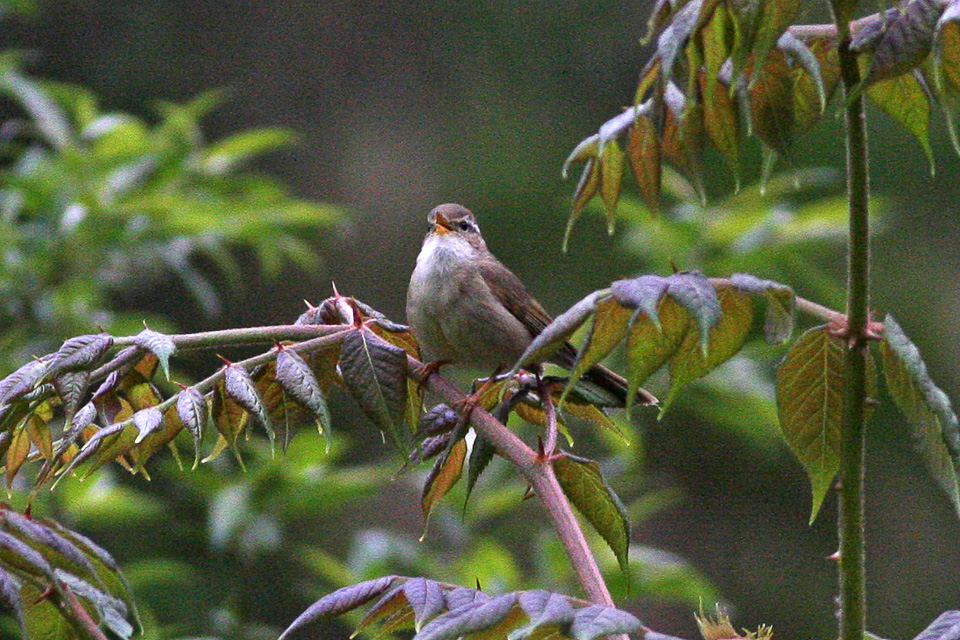
Siberian Chiffchaff
Phylloscopus tristis
Order: Passeriformes / Family: Phylloscopidae

Wikimedia Commons
About the Siberian Chiffchaff
The Siberian Chiffchaff (Phylloscopus tristis) is a small, agile songbird that inhabits the vast taiga forests stretching across Eurasia, from the Ural Mountains to eastern Siberia. Known for its plain plumage, the bird has gained significant attention from ornithologists due to its subtle differences from its close relative, the Common Chiffchaff. Its ecological role is vital in controlling insect populations, particularly during the breeding season when the demand for protein-rich prey intensifies. During the summer, the Siberian Chiffchaff occupies the dense undergrowth of birch and willow forests, where it forages for insects and caterpillars. As autumn approaches, the bird embarks on a long-distance migration to wintering grounds in southern Asia, including countries like India and Pakistan. This seasonal movement is crucial for its survival, allowing it to exploit different ecological niches throughout the year. The Siberian Chiffchaff often migrates alone or in small groups, blending into mixed-species flocks during its journey. Its presence in diverse habitats underscores its adaptability, though it remains closely tied to forested environments. Its subtle coloration and distinctive vocalizations provide a classic challenge for birdwatchers hoping to distinguish it from other Phylloscopus species. Understanding its migratory patterns and habitat preferences is essential for conservation efforts, especially as climate change continues to alter its traditional habitats. The Siberian Chiffchaff is not only a subject of scientific study but also an indicator of the health of the boreal forests it calls home. Its reliance on specific forest habitats makes it particularly sensitive to environmental changes, highlighting the need for continued research and monitoring.
The Siberian Chiffchaff belongs to the family Phylloscopidae, within the order Passeriformes. These birds typically live average 5-7 years, with a maximum recorded of 9 years..
How to Identify a Siberian Chiffchaff
The Siberian Chiffchaff, a member of the genus Phylloscopus, is a small, unassuming bird with an average length of about 11-12 cm and a wingspan of 18-21 cm. It exhibits a predominantly brown-gray plumage, with olive hints on the upperparts and a paler, buff underbelly. Unlike the Common Chiffchaff, its supercilium is less pronounced, often a grayish-brown, blending seamlessly with the head. The legs are dark, a distinguishing feature compared to similar species. Juveniles resemble adults but may show slightly fresher plumage with more pronounced olive tones. Males and females are alike in plumage, making visual sexing difficult without behavioral context. Confusion often arises with the Willow Warbler; however, the Siberian Chiffchaff's shorter primary projection and more monotone coloration assist in differentiation. In flight, the bird presents a rapid, fluttery movement, typical of warblers. When perched, it often flits its tail, a characteristic behavior that can aid in identification. Its call, a thin 'peep', is an additional auditory cue for distinguishing it from other warblers.
Having trouble telling birds apart? Upload a photo to our bird identification tool for an instant species match.
Siberian Chiffchaff Habitat and Range
Preferred Habitat
The Siberian Chiffchaff predominantly inhabits temperate and boreal forests, favoring the dense underbrush of birch and willow. These forests provide both ample food sources and protection from predators. During the breeding season, it is found at elevations ranging from sea level to 2000 meters in Siberia's vast taiga. In winter, it migrates southward to more temperate regions, settling in woodlands, gardens, and shrubby areas across southern Asia. Its adaptability allows it to occupy urban parks and rural landscapes, though it remains primarily associated with forested environments. Seasonal variation in habitat choice is evident, with summer months spent in cooler northern forests and winter months in warmer, more temperate zones.
Geographic Range
The Siberian Chiffchaff breeds across a broad swath of Eurasia, from the Ural Mountains eastward through Siberia. Its breeding range extends into regions of Russia and parts of northern Mongolia. In winter, it migrates to southern Asia, with significant populations arriving in India, Pakistan, and occasionally the Arabian Peninsula. Migration corridors include Central Asia, where it may be observed in transit. While its breeding population is widespread across Siberia, wintering populations tend to concentrate in specific areas such as the Indian subcontinent. Its occurrence in Western Europe is rare, typically as a vagrant during migration.
Want to know which birds visit your area? Browse our backyard birds by location guides for region-specific species lists.
What Does the Siberian Chiffchaff Eat?
The Siberian Chiffchaff primarily feeds on a variety of small insects, including caterpillars, beetles, and spiders. During the breeding season, its diet shifts to accommodate the increased protein needs, focusing on insect larvae and other invertebrates found in forest undergrowth. In winter, it may supplement its diet with seeds and berries, reflecting the seasonal availability of resources. Foraging behavior involves gleaning from foliage and occasionally hover-gleaning, demonstrating its adaptability in feeding strategies. The bird's small size allows it to exploit niches unavailable to larger species, maintaining its role as an efficient insectivore throughout its range.
Siberian Chiffchaff Behavior and Social Structure
The Siberian Chiffchaff exhibits solitary tendencies outside the breeding season, often foraging alone or in loose association with mixed-species flocks. During the breeding season, males establish territories marked by their distinctive song, a series of high-pitched notes delivered from perches within the forest canopy. Courtship involves subtle displays, with males sometimes engaging in short flights to demonstrate vigor. The species does not form large flocks, maintaining a degree of independence even during migration. Its response to predators includes rapid escape flights and the use of dense cover for concealment. Daily activities are largely diurnal, with peak foraging occurring in the early morning and late afternoon.
Siberian Chiffchaff Nesting and Reproduction
Siberian Chiffchaffs construct nests low to the ground, often within dense undergrowth or shrubbery. The nest is a carefully woven cup made from grass, moss, and plant fibers, lined with feathers for insulation. Clutch size typically ranges from 4 to 6 eggs, which are pale with slight speckling. Incubation, primarily performed by the female, lasts about 12-14 days. Once hatched, both parents contribute to feeding the chicks, which fledge approximately 14-16 days later. The species usually produces one brood per year, though favorable conditions may occasionally allow for a second.
Siberian Chiffchaff Sounds and Vocalizations
The Siberian Chiffchaff's song consists of a series of thin, high-pitched notes, often described as a 'swee-swee-swee' sequence. The tempo is brisk, with a distinctive clarity that sets it apart from the more rhythmic song of the Common Chiffchaff. Call notes are simple and piercing, often a single 'peep' used for contact between individuals. Alarm calls are sharper, reacting to perceived threats with a more urgent tone. During the dawn chorus, males sing vigorously, establishing territory and attracting mates. The song's simplicity and tone make it easier to recognize amidst the dense foliage of its habitat.
Interesting Facts About the Siberian Chiffchaff
- 1The Siberian Chiffchaff can migrate over 4,000 kilometers from its breeding grounds to wintering sites in southern Asia.
- 2Unlike many songbirds, the Siberian Chiffchaff's plumage lacks bright colors, providing effective camouflage in its forest habitat.
- 3The bird's distinctive song, although simple, serves as a crucial tool for territory establishment and mate attraction during breeding seasons.
- 4Siberian Chiffchaffs are known to hybridize with the Common Chiffchaff, resulting in birds with mixed characteristics.
- 5Despite its small size, the Siberian Chiffchaff plays an important role in controlling insect populations within its ecosystem.
- 6The species adapts to varying climates by shifting habitats seasonally, showcasing remarkable ecological flexibility.
- 7Ornithologists use the Siberian Chiffchaff as a bioindicator to assess the health of boreal forest ecosystems.
Siberian Chiffchaff Conservation Status
Currently, the Siberian Chiffchaff is listed as Least Concern by the IUCN, with stable population trends across its range. Key threats include habitat loss due to deforestation and climate change, which may alter its breeding and wintering habitats. Conservation efforts focus on preserving forest ecosystems and monitoring population dynamics through banding and migration studies. Historically, the species has maintained a robust population across its range, though ongoing environmental changes necessitate continued vigilance. Collaborative efforts between countries along its migratory path are essential for its long-term conservation.