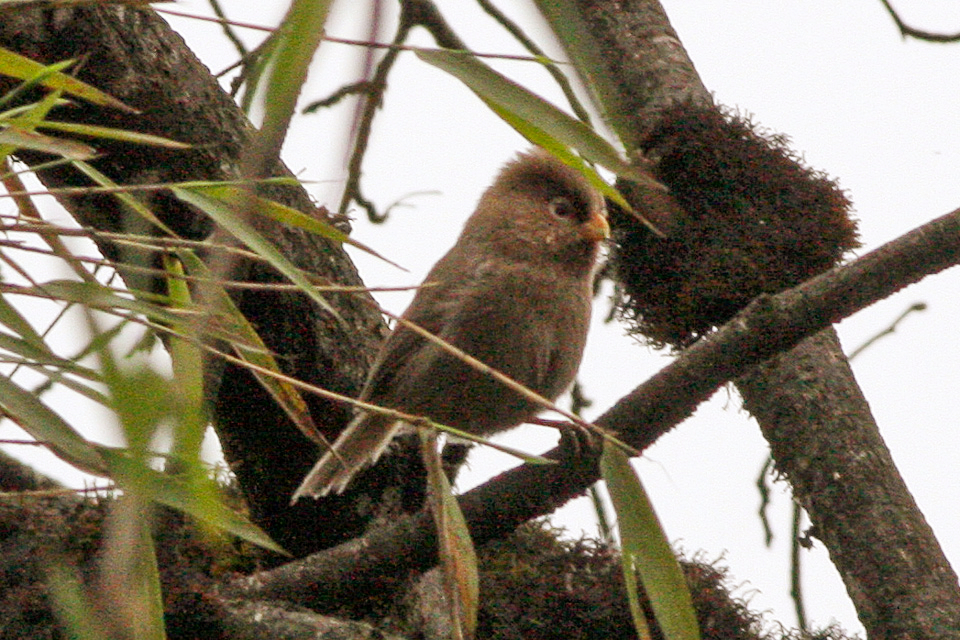
Spectacled Warbler
Sylvia conspicillata
Order: Passeriformes / Family: Sylviidae

Wikimedia Commons
About the Spectacled Warbler
The Spectacled Warbler (Sylvia conspicillata) is a fascinating member of the Sylviidae family, known for its adaptability and wide distribution across several continents. This small passerine bird is often recognized by its distinctive eye-ring, which gives it a 'spectacled' appearance, making it easier to identify among other warblers. Found predominantly in the Mediterranean region, the Spectacled Warbler thrives in a variety of habitats, including scrublands, coastal dunes, and semi-arid areas. Its range extends across Southern Europe, North Africa, and parts of the Middle East, with populations also present on several Mediterranean islands. The bird's adaptability to both natural and modified habitats underscores its ecological significance. In terms of its ecological role, the Spectacled Warbler is an important insectivore, helping to control insect populations in its environment. During the breeding season, which typically occurs from April to July, these warblers become more vocal and territorial, often seen flitting among low shrubs and bushes. Their presence in varied habitats, from coastal areas to inland scrub, highlights their versatile nature. As a migratory species, the Spectacled Warbler exhibits distinct seasonal behaviors. Some populations migrate to sub-Saharan Africa for the winter, while others remain resident in milder climates. This movement influences their ecological interactions and availability of resources, reflecting a dynamic balance with their environment. The bird's adaptability, along with its ability to thrive in both natural and anthropogenic landscapes, emphasizes its resilience and ecological importance.
The Spectacled Warbler belongs to the family Sylviidae, within the order Passeriformes. These birds typically live typically 2-4 years, with a maximum recorded of 7 years..
How to Identify a Spectacled Warbler
The Spectacled Warbler is a small bird, measuring about 12 to 13 cm in length, with a wingspan ranging from 15 to 19 cm. Adult males typically display a grayish head and nape, a white throat, and a distinctive black eye-ring that gives the bird its 'spectacled' appearance. The back and wings are brown, while the underparts are paler, often showing a slight hint of orange on the flanks. Females and juveniles are generally duller, with more brownish tones on the head and back, and a less pronounced eye-ring. Juveniles also lack the contrasting throat patch seen in adult males. When observing the Spectacled Warbler, its flight silhouette is characterized by rapid wingbeats and short bursts of flight, often low to the ground. On a perch, the bird's tail often flicks, a behavior shared with many warbler species. In comparison to similar species such as the Subalpine Warbler, the Spectacled Warbler's eye-ring and overall paler coloration are key distinguishing features.
Having trouble telling birds apart? Upload a photo to our bird identification tool for an instant species match.
Spectacled Warbler Habitat and Range
Preferred Habitat
The Spectacled Warbler occupies a variety of open and semi-open habitats, primarily favoring dry scrublands with scattered bushes and open ground. It is commonly found in coastal areas, including sand dunes and salt marshes, as well as inland regions with low shrub vegetation. This warbler can also adapt to agricultural lands with hedgerows and fallow fields. The bird is typically found at elevations up to 1,000 meters but is most abundant at lower altitudes. Seasonal shifts in habitat occur as some populations migrate to wintering grounds in sub-Saharan Africa, where they inhabit similar open habitats. While not particularly common in urban settings, the Spectacled Warbler may be observed in suburban areas with suitable vegetation.
Geographic Range
The breeding range of the Spectacled Warbler extends from Southern Europe across the Mediterranean region, including countries such as Spain, Italy, Greece, and Turkey. It is also found in North Africa, from Morocco to Egypt, and in parts of the Middle East, such as Israel and Lebanon. Many populations migrate to sub-Saharan Africa for the winter, encompassing countries like Senegal and Sudan. Some populations in Southern Europe and North Africa are resident year-round, particularly in areas with milder climates. The bird's migratory routes follow traditional corridors across the Mediterranean Sea. Population density hotspots include coastal regions and islands in the Mediterranean, where suitable habitats are abundant.
Want to know which birds visit your area? Browse our backyard birds by location guides for region-specific species lists.
What Does the Spectacled Warbler Eat?
The Spectacled Warbler primarily feeds on insects, making it an important insectivore in its ecosystem. During the breeding season, its diet consists largely of caterpillars, beetles, and other small invertebrates, which it gleans from leaves and branches. Outside the breeding season, it may also consume small quantities of seeds and berries, particularly in winter. The warbler employs a variety of foraging techniques, including hovering and foliage-gleaning, to capture prey. Its small size allows it to maneuver through dense vegetation efficiently. Feeding activity is generally most intense during the early morning and late afternoon, aligning with the peak activity of many of its insect prey.
Spectacled Warbler Behavior and Social Structure
The Spectacled Warbler exhibits a range of behaviors that reflect its adaptability and ecological niche. During the breeding season, males establish territories using song as a primary means of communication and territorial defense. The song, a series of rapid, melodious trills, is often delivered from an elevated perch or during a display flight. Courtship involves both song and visual displays, where the male may present food to the female as part of the bonding process. The species is generally solitary or found in pairs during the breeding season, but may form small flocks in the winter. When threatened by predators, the Spectacled Warbler utilizes a series of alarm calls to alert conspecifics. Its daily activities are largely diurnal, with peak periods of activity occurring during the cooler hours of the day.
Spectacled Warbler Nesting and Reproduction
The nesting habits of the Spectacled Warbler involve constructing a small cup-shaped nest made from grasses and lined with finer materials such as feathers and animal hair. Nests are typically located low in shrubs or bushes, providing both concealment and protection. The female lays a clutch of 3 to 5 eggs, which she incubates for about 11 to 13 days. Both parents participate in feeding the chicks, which fledge approximately 12 to 14 days after hatching. The Spectacled Warbler may produce two broods per year, depending on environmental conditions and food availability. Parental care continues for a short period post-fledging, ensuring the young warblers develop the skills necessary for independent survival.
Spectacled Warbler Sounds and Vocalizations
The primary song of the Spectacled Warbler is a fast-paced, melodious series of trills and warbles, often delivered from a high perch. The pitch is generally high, and the song has a musical quality that can carry over long distances. In addition to its song, the bird produces contact calls that are short, sharp 'tchik' notes, often used to maintain group cohesion or communicate with a mate. Alarm calls are more strident and are used when predators are nearby. The Spectacled Warbler participates in the dawn chorus, contributing to the early morning soundscape with its distinctive song.
Interesting Facts About the Spectacled Warbler
- 1The Spectacled Warbler is known to hybridize with the Sardinian Warbler, creating unique hybrid offspring.
- 2Despite its small size, the Spectacled Warbler can cover significant distances during migration, traveling between Europe and Africa.
- 3The bird's distinctive song is often one of the first signs of its presence in dense vegetation, making it easier to locate than by sight alone.
- 4On the Canary Islands, the Spectacled Warbler is part of a unique bird community, adapted to the island's arid conditions.
- 5The name 'Spectacled Warbler' comes from the prominent white eye-ring, which resembles spectacles, a key identification feature.
Spectacled Warbler Conservation Status
The Spectacled Warbler is currently listed as Least Concern by the IUCN, with stable population trends across most of its range. However, habitat loss due to agricultural expansion and urban development poses ongoing threats, particularly in its breeding and wintering grounds. Conservation efforts include habitat protection and management, especially in key breeding areas in Southern Europe and North Africa. Monitoring programs help track population changes and guide conservation strategies. Historically, the species has shown resilience to environmental changes, but continued vigilance is required to ensure its habitats remain viable.