Sphecothera grisea
Sphecothera grisea
Order: Passeriformes / Family: Oriolidae
About the Sphecothera grisea
The Sphecothera grisea, commonly known as the Black-naped Oriole, is a captivating bird of the Oriolidae family. This species is primarily found in the tropical regions of Southeast Asia, including countries such as Thailand, Malaysia, and Indonesia. Known for its vibrant yellow plumage and distinctive black nape, the Black-naped Oriole plays a significant role in the ecosystems it inhabits. It acts as both a predator and a seed disperser, contributing to the balance of its environment.
The bird's presence in various forested areas, from lowland rainforests to montane forests, highlights its adaptability. Its ecological role extends to controlling insect populations, as it feeds on a variety of insects and small invertebrates. During the breeding season, it forms monogamous pairs, showcasing intricate courtship displays.
In terms of seasonal behavior, the Sphecothera grisea is predominantly sedentary, with some local movements related to food availability. These movements can lead to temporary shifts in population density. The bird is often seen foraging in mixed-species flocks, enhancing its chances of spotting predators while searching for food. Its melodious song, often heard at dawn and dusk, adds a musical backdrop to the dense forests it calls home.
The Black-naped Oriole's significance goes beyond its ecological contributions. It also holds cultural value in several regions, where its bright plumage and distinctive calls are often subjects of local folklore and art. As a species, it serves as an indicator of forest health, thriving in undisturbed habitats but often declining in areas affected by deforestation.
The Sphecothera grisea belongs to the family Oriolidae, within the order Passeriformes. These birds typically live around 8 years in the wild..
How to Identify a Sphecothera grisea
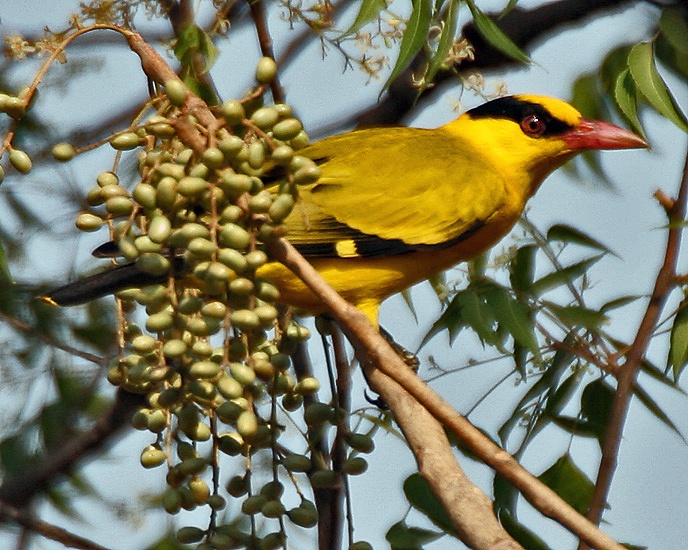
Identifying the Sphecothera grisea in the field is facilitated by its bright yellow body contrasted with a striking black nape, a feature from which its common name, the Black-naped Oriole, is derived. Adult birds possess a distinctive black mask extending from the nape across the eyes, enhancing their vivid appearance. The wings display a subtle olive tone, with black primary feathers providing a sharp contrast.
Juvenile birds, while similar in overall coloration, have more subdued tones and lack the fully developed black nape characteristic of adults. Their plumage may appear somewhat mottled until they mature. Males and females are generally similar in appearance, though females may exhibit slightly duller hues.
When considering similar species, the Sphecothera grisea can be confused with other orioles, particularly in overlapping ranges. However, its unique nape marking and the specific combination of yellow and black in its plumage help distinguish it. In flight, its silhouette is sleek, with a slightly rounded tail. When perched, it adopts a confident posture, often found in the upper canopy of trees.
Having trouble telling birds apart? Upload a photo to our bird identification tool for an instant species match.
Sphecothera grisea Habitat and Range
Preferred Habitat
The Sphecothera grisea primarily inhabits dense tropical forests, both in lowland and montane regions. These birds thrive in evergreen and semi-evergreen forests, where they can find abundant food sources and nesting sites. They are typically found at elevations ranging from sea level to about 1,500 meters.
In addition to primary forests, the Black-naped Oriole can adapt to secondary growth and edge habitats, provided these areas retain adequate tree cover. They are less commonly found in urban environments but may occasionally visit gardens and parks, particularly those with mature trees.
Seasonal habitat shifts are minimal, as the species is largely sedentary. However, some local movement may occur in response to changes in food availability or during breeding seasons. The presence of fruiting trees and the availability of nesting sites are crucial factors influencing their habitat preferences.
Geographic Range
The range of the Sphecothera grisea covers a significant portion of Southeast Asia. Its breeding and resident range includes countries such as Thailand, Malaysia, Singapore, Indonesia, and the Philippines. Within these regions, it occupies a range of forested habitats, from coastal areas to mountainous regions.
The Black-naped Oriole is generally considered a resident species, with limited migratory behavior. However, local movements can occur in response to environmental changes or food scarcity. These movements are typically short-distance, within the same region or neighboring areas.
Population density hotspots are often found in undisturbed habitats where food resources are plentiful, and human disturbance is minimal. Conservation areas and national parks in these regions often serve as strongholds for the species, supporting stable populations.
Want to know which birds visit your area? Browse our backyard birds by location guides for region-specific species lists.
What Does the Sphecothera grisea Eat?
The diet of the Sphecothera grisea is diverse, primarily consisting of fruits, insects, and small vertebrates. Fruits form a significant portion of their diet, with a preference for figs and other soft-fleshed varieties. This fruit-eating habit aids in seed dispersal, contributing to forest regeneration.
In addition to fruits, the Black-naped Oriole consumes a variety of insects, including beetles, caterpillars, and grasshoppers. This insectivorous behavior helps control pest populations within their habitats. During certain seasons, particularly when insects are abundant, they may adjust their diet to include more protein-rich prey.
The bird employs a mix of gleaning and aerial feeding techniques, often observed foraging in the canopy or sallying from perches to catch flying insects. Feeding usually occurs throughout the day, with peak activity in the early morning and late afternoon when temperatures are cooler and prey more active.
Sphecothera grisea Behavior and Social Structure
The Sphecothera grisea is known for its social structure, often found in pairs or small family groups outside of the breeding season. During breeding, they exhibit territorial behavior, with pairs defending their nesting sites from intruders. Courtship involves elaborate displays, including song and visual signals, to strengthen pair bonds.
Flocking patterns show that the Black-naped Oriole sometimes joins mixed-species flocks, which can enhance foraging efficiency and predator detection. This behavior is particularly common outside of the breeding season when they are less territorial.
In response to predators, they are vigilant and quick to issue alarm calls, alerting other birds in the vicinity. Their daily activity patterns include periods of active foraging interspersed with rest during the hottest parts of the day. They are primarily diurnal, with heightened activity during the cooler hours of dawn and dusk.
Sphecothera grisea Nesting and Reproduction
Sphecothera grisea builds its nests high in the canopy, often selecting the fork of a branch in a tall tree. The nest is a neat cup constructed from plant fibers, twigs, and leaves, bound together with spider silk for added strength. This choice of nesting site offers protection from ground predators and a vantage point for monitoring the surroundings.
The typical clutch size ranges from two to three eggs, which are incubated by both parents. The incubation period lasts approximately 14-16 days, with both male and female participating in feeding the hatchlings.
Fledging occurs about 14-17 days after hatching, with young birds remaining under parental care for several weeks post-fledging. The Black-naped Oriole usually raises one brood per year, though in optimal conditions, a second brood is possible.
Sphecothera grisea Sounds and Vocalizations
The primary song of Sphecothera grisea is a melodious series of fluty whistles, often described as rich and liquid. The rhythm is varied, with phrases repeated at intervals, creating a musical quality that resonates through the forests. Their call notes include a sharp, descending whistle used in communication between mates or family groups.
Alarm calls are more abrupt and harsh, serving as warnings to other birds when potential threats are nearby. During the dawn chorus, the Black-naped Oriole's song is prominent, adding to the tapestry of sounds in tropical forests.
These vocalizations play a critical role in territory defense and mate attraction, with males often singing from exposed perches to broadcast their presence.
Interesting Facts About the Sphecothera grisea
- 1The Black-naped Oriole can mimic the calls of other bird species, showcasing its vocal versatility.
- 2Despite its vibrant yellow plumage, the Sphecothera grisea blends effectively into the canopy, evading predators.
- 3Their nests are so well camouflaged that they often go unnoticed by both predators and birdwatchers alike.
- 4Black-naped Orioles play a vital role in controlling locust populations, feeding extensively on these insects.
- 5The species is known to form symbiotic relationships with certain tree species, aiding in their seed dispersal.
Sphecothera grisea Conservation Status
Currently, the Sphecothera grisea maintains a status of Least Concern on the IUCN Red List. The population trend is considered stable, although localized declines occur due to habitat destruction and fragmentation. Primary threats to the species include deforestation for agriculture and urban development, which reduce available habitats. Conservation efforts focus on habitat protection and restoration, particularly in regions where the species is most affected by human activities. Historically, the Black-naped Oriole has demonstrated resilience in adapting to secondary forests, but its reliance on mature trees for nesting highlights the importance of preserving primary forest habitats.
Other Oriolidae Species


Birds Similar to the Sphecothera grisea
These species are often confused with the Sphecothera grisea due to similar appearance or overlapping range.