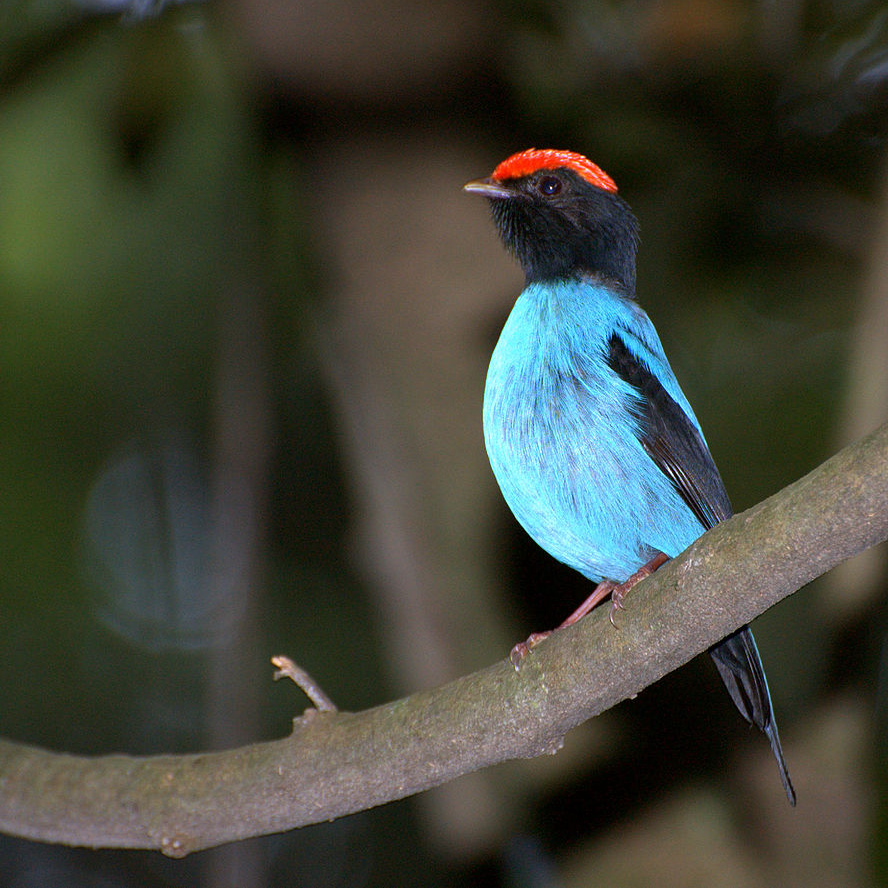
Sulphur-bellied Tyrant-Manakin
Neopelma sulphureiventer
Order: Passeriformes / Family: Pipridae

Wikimedia Commons
About the Sulphur-bellied Tyrant-Manakin
The Sulphur-bellied Tyrant-Manakin, scientifically known as Neopelma sulphureiventer, is a unique and captivating member of the family Pipridae. This small passerine bird is predominantly found in the humid lowland forests of South America, particularly thriving in the dense underbrush of the Amazon Basin. Its distinctive sulfur-yellow belly provides a vibrant contrast to its otherwise olive-green and brown plumage, making it a striking sight for birdwatchers and ornithologists alike.
The ecological role of the Sulphur-bellied Tyrant-Manakin is significant within its habitat. As a frugivore, it plays a crucial part in seed dispersal, aiding the propagation of various plant species throughout the forest. This mutualistic relationship highlights the bird's importance in maintaining the ecological balance of its native environment. Additionally, its foraging behavior, which often involves gleaning insects from foliage, helps control insect populations, further contributing to the ecosystem.
In terms of behavior, the Sulphur-bellied Tyrant-Manakin is known for its elaborate courtship displays, which occur primarily during the breeding season. Males engage in intricate dances and vocalizations to attract potential mates, a spectacle that underscores the bird's vibrant social dynamics. These displays are not only a testament to their complex social structure but also provide insights into their mating strategies and reproductive success.
Seasonally, the Sulphur-bellied Tyrant-Manakin may exhibit minor shifts in behavior and habitat use, although it generally remains a resident species without significant migratory patterns. Its presence throughout the year in rainforests across countries like Brazil, Peru, and Colombia underscores its adaptability to the tropical climate. Despite its relatively stable habitat preferences, the ongoing threat of deforestation poses a significant challenge to its long-term survival, emphasizing the need for continued conservation efforts.
The Sulphur-bellied Tyrant-Manakin belongs to the family Pipridae, within the order Passeriformes. These birds typically live typically around 6 years, with some living up to 9 years in optimal conditions..
How to Identify a Sulphur-bellied Tyrant-Manakin
Identifying the Sulphur-bellied Tyrant-Manakin involves noting its distinctive coloration and size. Adult birds typically measure around 10-12 cm in length, characterized by their vivid sulfur-yellow belly, which starkly contrasts with their olive-green back and brown wings. The head displays a subtle grayish hue, with the throat and breast being a lighter, more muted yellow.
Juvenile Sulphur-bellied Tyrant-Manakins are generally less vibrant than adults, displaying a paler yellow on the belly and more brownish tones on the wings and back. This coloration helps them blend into their forest surroundings, providing some protection from predators during their vulnerable early life stages. Males and females are similar in appearance, though males may exhibit slightly brighter plumage during the breeding season.
This species could potentially be confused with other small birds in the Pipridae family, such as the Cinnamon Tyrant-Manakin, but the distinctive yellow belly of Neopelma sulphureiventer offers a reliable differentiating characteristic. Additionally, its flight silhouette, with rapid wingbeats and swift, agile movements, can aid in its identification, especially when observed during active foraging sessions.
Having trouble telling birds apart? Upload a photo to our bird identification tool for an instant species match.
Sulphur-bellied Tyrant-Manakin Habitat and Range
Preferred Habitat
The Sulphur-bellied Tyrant-Manakin predominantly inhabits tropical lowland forests, favoring dense, humid environments that provide ample foraging opportunities. It thrives in the understory of the Amazon rainforest, where the thick foliage offers both food resources and protection from predators.
Typically found at elevations ranging from sea level to about 1000 meters, this bird is well-adapted to the humid conditions of its habitat. While it is primarily associated with pristine forest environments, the Sulphur-bellied Tyrant-Manakin can also be observed in secondary growth forests, indicating a degree of adaptability to habitat changes. However, it remains largely absent from urban areas, preferring the secluded and complex ecosystems of its native rainforest.
During different seasons, the bird may adjust its specific habitat preferences slightly, though it generally remains within the same geographical area throughout the year. This lack of substantial habitat shift highlights its strong reliance on the tropical forest ecosystems of South America.
Geographic Range
The geographic range of the Sulphur-bellied Tyrant-Manakin is primarily confined to the tropical regions of South America. It is predominantly found throughout the expansive Amazon Basin, with its presence recorded in countries such as Brazil, Peru, Colombia, and parts of Bolivia.
This bird's breeding range does not differ significantly from its overall range, as it tends to be a year-round resident within these regions. Unlike many other bird species, the Sulphur-bellied Tyrant-Manakin does not engage in long-distance migrations, instead relying on the stable climate and abundant resources of its rainforest habitat to sustain it throughout the year.
Population density tends to be higher in undisturbed, primary forest areas where there is less human activity and deforestation. These dense populations are crucial for maintaining the species' genetic diversity and ensuring its continued survival in the face of environmental changes.
Want to know which birds visit your area? Browse our backyard birds by location guides for region-specific species lists.
What Does the Sulphur-bellied Tyrant-Manakin Eat?
The diet of the Sulphur-bellied Tyrant-Manakin primarily consists of fruits, making it an essential frugivore in its ecosystem. It favors small, fleshy fruits and berries, which it gleans from the understory foliage. This diet plays a crucial role in seed dispersal, contributing to the regeneration of its forest habitat.
In addition to fruits, the bird supplements its diet with insects and other small arthropods. This secondary food source is particularly important during the breeding season, when the nutritional demands are higher. The bird employs a gleaning technique, carefully picking insects from leaves and branches with precision.
Seasonal changes in food availability can influence the bird's diet, though the abundant biodiversity of the Amazon rainforest generally ensures a consistent supply of food throughout the year. The Sulphur-bellied Tyrant-Manakin's feeding schedule is diurnal, with peak activity occurring during the cooler hours of the early morning and late afternoon.
Sulphur-bellied Tyrant-Manakin Behavior and Social Structure
The Sulphur-bellied Tyrant-Manakin exhibits a range of intriguing behaviors, particularly during the breeding season. This period is marked by the males' elaborate courtship displays, which are a combination of acrobatic flights and distinctive vocalizations aimed at attracting females. These displays are not only visually captivating but also serve to establish and maintain territories.
Socially, the Sulphur-bellied Tyrant-Manakin is generally solitary or found in pairs, especially during the breeding season. Outside of this period, they may join mixed-species foraging flocks, which can enhance their feeding efficiency and provide some protection from predators. This social flexibility is an adaptation to the diverse and dynamic rainforest environment.
The bird's response to predators involves swift and agile flight, often retreating into dense foliage to evade capture. Its daily activity pattern is mostly diurnal, with peak activity during the early morning and late afternoon, aligning with cooler temperatures and increased insect activity.
Sulphur-bellied Tyrant-Manakin Nesting and Reproduction
Nesting behavior in the Sulphur-bellied Tyrant-Manakin is characterized by its preference for concealed sites within dense foliage. The nests are typically cup-shaped and constructed from fine plant materials such as leaves, moss, and spider silk, providing camouflage and structural integrity.
These nests are usually located at moderate heights, ranging from 1 to 3 meters above ground, often in shrubs or small trees. This placement offers protection from ground predators while maintaining accessibility for the birds.
Clutch size generally ranges from two to three eggs, with an incubation period of approximately 15 to 17 days. Both parents participate in the care of the young, though the female primarily undertakes incubation duties. Fledging occurs about 18 to 20 days after hatching, at which point the chicks become more independent. The Sulphur-bellied Tyrant-Manakin often raises one to two broods per year, depending on environmental conditions and resource availability.
Sulphur-bellied Tyrant-Manakin Sounds and Vocalizations
The Sulphur-bellied Tyrant-Manakin is known for its distinctive vocal repertoire, which includes a primary song characterized by a series of high-pitched, melodious notes delivered in rapid succession. This song is often used in courtship displays and territorial defense, echoing through the dense rainforest.
In addition to its primary song, the bird emits various call notes that are sharp and quick, serving as communication signals between individuals, especially during foraging. Alarm calls are more abrupt and harsh, effectively alerting others to potential threats.
During the dawn chorus, the Sulphur-bellied Tyrant-Manakin's song stands out due to its clarity and rhythmic quality, contributing to the symphony of sounds in the rainforest. This vocal activity not only facilitates social interactions but also plays a crucial role in maintaining territory boundaries.
Interesting Facts About the Sulphur-bellied Tyrant-Manakin
- 1The Sulphur-bellied Tyrant-Manakin's courtship displays are among the most complex in the bird world, involving both song and dance.
- 2This bird's diet includes over 50 different fruit species, highlighting its role as a key seed disperser in the Amazon.
- 3Despite its small size, the Sulphur-bellied Tyrant-Manakin can dominate larger bird species in mixed-species flocks.
- 4Its nest construction incorporates unique materials like spider silk, providing strength and flexibility.
- 5The Sulphur-bellied Tyrant-Manakin is capable of producing over 20 distinct vocalizations, each serving a different purpose.
- 6First described in the mid-19th century, this species has fascinated ornithologists with its vibrant appearance and behaviors.
- 7Its name, 'sulphureiventer', is derived from Latin, meaning 'sulfur-bellied', a direct reference to its striking yellow belly.
Sulphur-bellied Tyrant-Manakin Conservation Status
According to the IUCN Red List, the Sulphur-bellied Tyrant-Manakin is currently classified as a species of Least Concern. However, its population trends are closely monitored due to the ongoing threat of habitat loss from deforestation and land-use changes in the Amazon Basin. Primary threats to this species include deforestation for agriculture and logging, which result in significant habitat fragmentation. Despite these challenges, some conservation efforts focus on habitat protection and sustainable land-use practices to curb further destruction of its natural environment. Historically, the population of the Sulphur-bellied Tyrant-Manakin has remained relatively stable, though localized declines have been observed in heavily deforested areas. Continued conservation attention is essential to ensure the species does not become more threatened in the future.