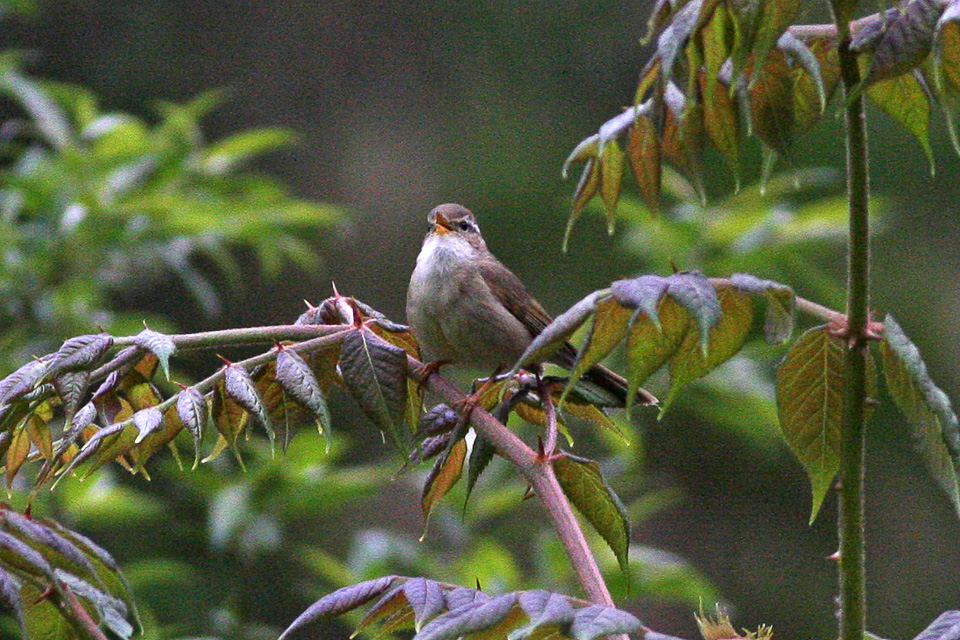
Sulphur-bellied Warbler
Phylloscopus griseolus
Order: Passeriformes / Family: Phylloscopidae

Wikimedia Commons
About the Sulphur-bellied Warbler
The Sulphur-bellied Warbler (Phylloscopus griseolus) is a small, agile songbird belonging to the family Phylloscopidae. This species is primarily found in the mountainous regions of Central and South Asia, where its presence is a vital component of the local ecosystem. The bird is commonly observed in countries such as Afghanistan, Pakistan, India, and Nepal, favoring altitudes ranging from 2,000 to 4,000 meters. Its significance extends beyond its role as an insect predator, as it also serves as a bio-indicator of environmental health in these high-altitude habitats.
The Sulphur-bellied Warbler is often seen flitting through scrublands and open woodlands, searching for its insect prey among the foliage. This activity not only aids in pest control but also supports the intricate food web of these areas by acting as prey for larger avian predators. During the breeding season, the warbler's vibrant plumage and distinctive vocalizations become more pronounced, helping it to defend its territory and attract mates.
This species is an adept migrant, moving between breeding and wintering grounds with changes in weather and food availability. In winter, it descends to lower altitudes, seeking refuge in the subtropical forests and grasslands where temperatures are milder and food is abundant. The Sulphur-bellied Warbler's adaptability to different altitudes and habitats underscores its ecological resilience and importance within its range.
The Sulphur-bellied Warbler belongs to the family Phylloscopidae, within the order Passeriformes. These birds typically live average 5 years with a max recorded of 7 years..
How to Identify a Sulphur-bellied Warbler
The Sulphur-bellied Warbler is easily recognized by its bright yellow underparts, which contrast sharply with its olive-green upperparts. Adults typically measure around 12 centimeters in length and weigh approximately 8-9 grams. The bird's crown and nape are characterized by a subtle grayish hue, while its wings and tail feature faint barring that aids in identification.
Juvenile warblers resemble adults but have slightly duller plumage, lacking the full vibrancy of the mature birds. Males and females appear similar, making sex differentiation challenging without close observation of behavior, particularly during the breeding season when males are more vocal and active.
The Sulphur-bellied Warbler can sometimes be confused with other Phylloscopus species, especially within their overlapping ranges. However, its distinct yellow belly and the specific song pattern help distinguish it. In flight, it exhibits a swift, darting motion, while its perching posture is typically upright and alert, often observed in open positions within its preferred habitat.
Having trouble telling birds apart? Upload a photo to our bird identification tool for an instant species match.
Sulphur-bellied Warbler Habitat and Range
Preferred Habitat
Sulphur-bellied Warblers thrive in mountainous regions, predominantly within elevations of 2,000 to 4,000 meters. They favor open woodlands, scrublands, and areas with scattered shrubs and trees. These habitats are often found in the foothills and lower slopes of the Himalayas and other high-altitude ranges in Central and South Asia.
During the breeding season, they are mostly found in alpine meadows and open forests with a sparse canopy, providing both shelter and ample foraging opportunities. As winter approaches, they migrate to lower altitudes, inhabiting subtropical forests and grasslands where they find a more temperate climate and consistent food supply.
The Sulphur-bellied Warbler shows little affinity for urban environments, preferring the undisturbed natural habitats where it can effectively hunt for insects. This preference highlights the bird's reliance on pristine habitats for its survival and successful reproduction.
Geographic Range
The Sulphur-bellied Warbler's breeding range is primarily concentrated in the mountainous regions of Central and South Asia. It is notably present in Afghanistan, Pakistan, northern India, Nepal, and parts of Tibet. The bird's preference for high-altitude environments dictates its breeding grounds, with dense populations often found along the Himalayan range.
During winter, the warbler migrates to lower elevations, descending into the subtropical zones of the Indian subcontinent. This seasonal migration helps it escape the harsh winter conditions of its breeding habitats while still finding suitable environments for survival and feeding.
Migration corridors for the Sulphur-bellied Warbler typically follow the natural valleys and lower passes of the mountainous regions, facilitating its movement between the different altitudinal zones. Despite its migratory nature, the species is considered widespread and common within its range, benefiting from a relatively stable population across its favored habitats.
Want to know which birds visit your area? Browse our backyard birds by location guides for region-specific species lists.
What Does the Sulphur-bellied Warbler Eat?
The Sulphur-bellied Warbler's diet is primarily insectivorous, focusing on small insects and their larvae. This includes a diverse array of prey such as caterpillars, beetles, and aphids, which it actively gleans from foliage and bark. During the breeding season, the abundance of insects at high altitudes provides ample feeding opportunities, allowing the warbler to maintain its energy levels for nesting and rearing young.
In the non-breeding season, as it migrates to lower altitudes, the bird's diet remains largely unchanged, although it may incorporate small quantities of plant material, such as seeds and berries, when insect availability decreases.
The Sulphur-bellied Warbler employs a variety of foraging techniques, including hovering and sallying, to capture its prey efficiently. Its feeding schedule is predominantly diurnal, with peak activity occurring during the early morning and late afternoon when insect activity is highest.
Sulphur-bellied Warbler Behavior and Social Structure
The Sulphur-bellied Warbler is generally a solitary bird, especially outside the breeding season, when it actively defends its territory against intruders. During the breeding season, however, it becomes more social, engaging in elaborate courtship displays that include song and acrobatics to attract a mate.
Aggressive behavior is commonly observed when males encounter rivals, with territorial disputes often resolved through vocal confrontations and short chases. Despite their solitary nature, these warblers may occasionally join mixed-species foraging flocks, which can enhance their feeding efficiency and offer protection against predators.
The daily activity of the Sulphur-bellied Warbler is primarily diurnal, with peak periods of activity in the cooler hours of morning and late afternoon. When faced with predators, such as birds of prey, they exhibit evasive maneuvers, retreating into dense foliage to avoid capture.
Sulphur-bellied Warbler Nesting and Reproduction
Sulphur-bellied Warblers construct their nests in dense shrubs or low trees, typically at elevations between 2,000 and 4,000 meters. The nest, a cup-like structure, is meticulously built using grass, moss, and fine twigs, with an inner lining of softer materials like feathers and hair.
The typical clutch size ranges from 3 to 5 eggs, which are incubated by the female for about 12 to 14 days. During this period, the male may assist by bringing food to the incubating female, though his primary role is to defend the territory and deter predators.
Once hatched, the chicks are altricial, requiring constant care and feeding from both parents. The fledging period lasts approximately two weeks, after which the young birds become independent. The Sulphur-bellied Warbler generally raises one brood per year, with breeding activities closely tied to the seasonal abundance of food and favorable weather conditions in their high-altitude habitats.
Sulphur-bellied Warbler Sounds and Vocalizations
The primary song of the Sulphur-bellied Warbler is a series of high-pitched, melodious trills that can be heard echoing through its mountainous habitat. The rhythm is fast-paced, with a clear, bright quality that makes it easily distinguishable from other species.
Its call notes are sharp and abrupt, often used as alarm signals when predators are near or when defending territory. These calls are usually single notes repeated in rapid succession, providing an effective means of communication among individuals.
During the dawn chorus, the Sulphur-bellied Warbler's song plays a prominent role, contributing to the rich tapestry of sounds that define its habitat. Birders often compare its song to that of the Chiffchaff, although it is generally more vibrant and varied.
Interesting Facts About the Sulphur-bellied Warbler
- 1Sulphur-bellied Warblers can migrate over 1,000 kilometers between breeding and wintering grounds.
- 2This species is known for its acrobatic foraging, often seen hanging upside-down from branches.
- 3Despite their small size, they have a remarkably loud and complex song, audible over long distances.
- 4The Sulphur-bellied Warbler's yellow belly is a unique trait among Phylloscopus warblers in its range.
- 5These warblers are highly territorial, with males engaging in song duels to establish dominance.
Sulphur-bellied Warbler Conservation Status
The Sulphur-bellied Warbler is currently classified as Least Concern by the IUCN, with its population considered stable. However, ongoing habitat loss due to deforestation and agricultural expansion poses potential threats to its preferred environments. Conservation efforts focus on protecting the high-altitude habitats where it breeds and ensuring the integrity of its migratory corridors. These measures are crucial for maintaining the bird's population and the ecosystems it inhabits. Historically, the population of this species has remained relatively stable, with little evidence of significant declines. Continued monitoring and habitat preservation are essential to safeguard its future.