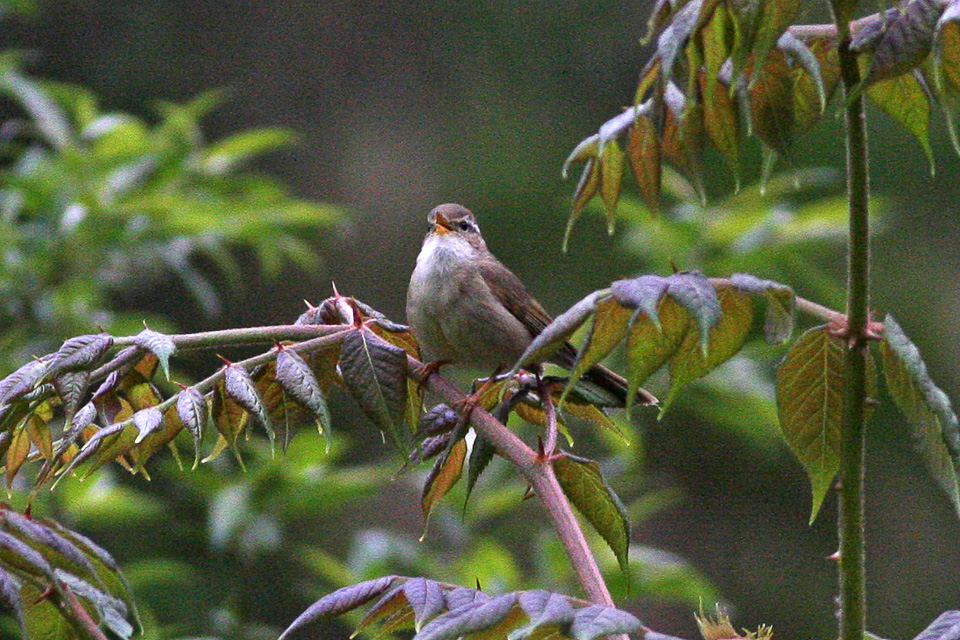
Sulphur-breasted Warbler
Phylloscopus ricketti
Order: Passeriformes / Family: Phylloscopidae

Wikimedia Commons
About the Sulphur-breasted Warbler
The Sulphur-breasted Warbler (Phylloscopus ricketti) is a captivating member of the Phylloscopidae family, primarily inhabiting the subtropical and temperate forests of Southeast Asia. This small passerine bird is a remarkable example of adaptability and survival, showcasing its resilience in a variety of wooded habitats. Its striking yellow breast and olive-green upperparts make it a distinctive presence among the foliage.
Geographically, the Sulphur-breasted Warbler is often found across regions such as Vietnam, southern China, and Thailand. These areas provide the dense canopy and rich understory that form the warbler's preferred environment. In terms of ecological significance, the Sulphur-breasted Warbler plays a vital role in controlling insect populations, as it feeds primarily on a variety of insects and spiders. This diet not only supports the warbler's nutritional needs but also contributes to maintaining the ecological balance within its habitat.
Seasonal behaviors of the Sulphur-breasted Warbler are quite fascinating. During the breeding season, males become highly territorial, often seen singing from elevated perches to establish dominance and attract mates. Outside the breeding season, these birds tend to be more elusive, blending into the forest canopy as they forage for food. Their migratory patterns, although not extensively documented, suggest some level of altitudinal movement, particularly in response to changes in food availability and climate conditions.
The Sulphur-breasted Warbler's ability to thrive in a variety of forest habitats makes it an important species for study, offering insights into the dynamics of Southeast Asian forest ecosystems. As a resident bird in many parts of its range, it provides opportunities for year-round observation, enhancing our understanding of its behavioral ecology and its role within these complex environments.
The Sulphur-breasted Warbler belongs to the family Phylloscopidae, within the order Passeriformes. These birds typically live average 4-6 years, with a maximum recorded of 7 years..
How to Identify a Sulphur-breasted Warbler
Identifying the Sulphur-breasted Warbler can be a rewarding experience for birders due to its distinctive features. Adult birds exhibit a vibrant yellow underpart that contrasts with their olive-green upperparts. This coloration is most prominent during the breeding season when their plumage is most vibrant. The bird also has a pale supercilium, or eyebrow stripe, which can help in distinguishing it from similar species.
Juvenile Sulphur-breasted Warblers tend to have a duller plumage compared to adults, lacking the intense yellow of mature birds. Males and females are generally similar in appearance, although males may display slightly brighter colors during the breeding season.
In flight, the Sulphur-breasted Warbler presents a streamlined silhouette typical of warblers, with rapid, fluttering wing beats. When perched, it often assumes a horizontal stance, balancing skillfully on thin branches as it scans for insects. While it can be confused with other Phylloscopus warblers, its combination of yellow underparts and olive-green upperparts helps to distinguish it from other similar species within its range.
Having trouble telling birds apart? Upload a photo to our bird identification tool for an instant species match.
Sulphur-breasted Warbler Habitat and Range
Preferred Habitat
The Sulphur-breasted Warbler is typically found in subtropical and temperate forests, preferring areas with dense canopy cover and a rich understory. These habitats provide the necessary resources for foraging and nesting. The bird can often be spotted in forested areas at elevations ranging from lowland regions to montane forests, up to 2,000 meters.
Seasonal habitat shifts are noted, with possible altitudinal migrations in response to climatic conditions and food availability. While primarily a forest dweller, the Sulphur-breasted Warbler can adapt to secondary growth and edge habitats, showing some resilience to habitat alterations.
Urban presence is rare, as the bird generally avoids heavily populated areas. However, it may occasionally venture into rural gardens or parks that offer sufficient tree cover and isolation from heavy human activity.
Geographic Range
The breeding range of the Sulphur-breasted Warbler includes parts of southern China, particularly in provinces like Yunnan and Guangxi. It also extends into northern Vietnam and parts of Thailand. During the non-breeding season, the warbler may undertake altitudinal migrations, moving to lower elevations within its range.
While not known to engage in long-distance migrations, the Sulphur-breasted Warbler might disperse to nearby regions with suitable habitats during seasonal changes. Areas such as Laos and Myanmar may also host transient populations, particularly during periods of food scarcity in primary habitats.
Population density hotspots are primarily located in well-preserved forest areas, where the combination of abundant food resources and suitable nesting sites supports stable populations. Specific local studies are limited, but the bird's presence is relatively consistent within its known geographic range.
Want to know which birds visit your area? Browse our backyard birds by location guides for region-specific species lists.
What Does the Sulphur-breasted Warbler Eat?
The Sulphur-breasted Warbler primarily feeds on insects and spiders, making it an insectivorous species with a diet that plays a crucial role in forest pest control. Its feeding strategy involves gleaning from leaves and branches, showcasing agility and precision in capturing prey.
During the breeding season, the warbler's diet may expand to include caterpillars, which provide essential nutrients for nestlings. Seasonal diet changes are common, with a greater reliance on certain insect species during peak abundance periods.
The bird typically forages alone or in pairs, maintaining a strict feeding schedule that coincides with peak insect activity in the early morning and late afternoon. Prey size is generally small, with the warbler focusing on insects that can be easily handled and consumed on the spot.
Sulphur-breasted Warbler Behavior and Social Structure
The Sulphur-breasted Warbler exhibits a range of fascinating behaviors that reflect its adaptability and ecological niche. Socially, it tends to be solitary or found in pairs, particularly during the breeding season when males establish and defend territories with vigorous song displays.
Courtship involves a combination of vocalizations and flight displays, with males showcasing their plumage to attract females. Once paired, both sexes contribute to nest building and rearing the young, although specific roles may vary.
Flocking behavior is more common outside the breeding season, with small groups occasionally forming to exploit abundant food resources. In response to predators, the Sulphur-breasted Warbler relies on its cryptic coloration and evasive flight patterns to avoid detection.
Daily activity patterns are diurnal, with peak activity observed during the cooler parts of the day. The warbler is known for its energetic foraging style, continuously moving through the forest canopy in search of food.
Sulphur-breasted Warbler Nesting and Reproduction
The nesting habits of the Sulphur-breasted Warbler involve constructing cup-shaped nests, often built in low shrubs or small trees, utilizing materials such as leaves, grass, and spider webs for binding. These nests are strategically placed to offer concealment from predators and to provide shelter from adverse weather.
Clutch size typically ranges from 3 to 5 eggs, with an incubation period of approximately 12 to 14 days. Both parents participate in incubation, although the female may take the lead role.
Fledging occurs around 10 to 12 days post-hatching, with both parents actively involved in feeding and protecting the young. The species generally produces one brood per year, although in favorable conditions, a second brood may be possible.
Sulphur-breasted Warbler Sounds and Vocalizations
The vocalizations of the Sulphur-breasted Warbler are an integral part of its behavioral repertoire. Its primary song is a melodious series of high-pitched notes, delivered in a rapid and rhythmic sequence, often described as a sweet, warbling trill. This song is most frequently heard during the breeding season, serving both territorial and courtship functions.
Call notes are softer and more subdued, used for communication between mates and within small flocks. Alarm calls are sharper and more insistent, alerting nearby birds to potential threats.
During the dawn chorus, the warbler's song stands out for its clarity and persistence, a captivating element of the forest soundscape. The song's quality is sometimes compared to the tinkling of a small bell, a fitting description for this diminutive yet vocally expressive bird.
Interesting Facts About the Sulphur-breasted Warbler
- 1Despite its small size, the Sulphur-breasted Warbler undertakes altitudinal migrations, showcasing adaptability to different elevations.
- 2The species' melodious song, described as a warbling trill, plays a key role in territorial and courtship displays.
- 3The Sulphur-breasted Warbler's diet primarily consists of insects and spiders, contributing to natural pest control in forest ecosystems.
- 4Breeding pairs often engage in duet singing, strengthening pair bonds and coordinating nesting activities.
- 5The bird's olive-green and yellow plumage provides excellent camouflage in its forest habitat, reducing predation risk.
- 6Sulphur-breasted Warblers are known for their agile foraging techniques, gleaning insects from leaves and branches with precision.
- 7Their nests, constructed with leaves and spider webs, exemplify the use of natural materials for structural stability.
Sulphur-breasted Warbler Conservation Status
The Sulphur-breasted Warbler is currently listed as Least Concern by the IUCN, with stable population trends in most of its range. However, habitat loss due to deforestation and land conversion poses a significant threat to its long-term survival. Conservation efforts focus on preserving large tracts of forest habitat and promoting sustainable forestry practices. Local conservation programs aim to mitigate habitat degradation and enhance biodiversity through community engagement and reforestation projects. Historically, population changes have been linked to fluctuations in habitat quality, underscoring the need for ongoing monitoring and habitat protection. Collaboration between conservation organizations and government bodies is essential to ensure the continued presence of the Sulphur-breasted Warbler across its native range.