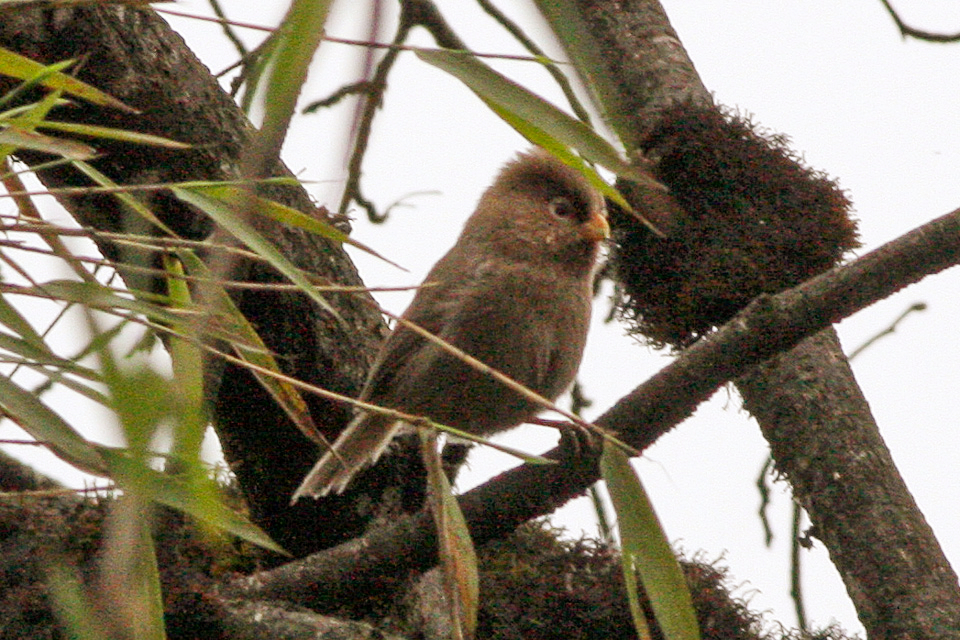
Sylvia aequinoctialis
Sylvia aequinoctialis
Order: Passeriformes / Family: Sylviidae

Wikimedia Commons
About the Sylvia aequinoctialis
The Equinox Warbler, scientifically known as Sylvia aequinoctialis, is a captivating bird with a vibrant presence in the diverse and expansive landscapes of Africa. As a member of the family Sylviidae, this species exhibits a remarkable adaptability, thriving in a variety of ecosystems ranging from deciduous woodlands to semi-arid regions. Its presence is particularly noted in countries such as Kenya, Tanzania, and Uganda, where it plays a vital role in the local ecology. The Equinox Warbler contributes significantly to seed dispersal and insect population control, thus maintaining the ecological balance in its habitats.
This warbler's seasonal behaviors are equally intriguing. During the breeding season, which typically spans from May to August, the Equinox Warbler displays heightened activity, embarking on elaborate courtship rituals. These behaviors are particularly pronounced in the riparian areas and montane forests, where the birds find ample food resources and suitable nesting sites. The Equinox Warbler's ability to adapt to seasonal changes is exemplified by its altitudinal migration patterns, moving to lower elevations during adverse weather conditions to ensure its survival.
Ecologically, the Sylvia aequinoctialis serves as both a predator and prey, forming a crucial link within the food web. Its diet consists mainly of insects and small invertebrates, which it gleans from foliage and bark. This feeding habit helps control pest populations, contributing to the health of the ecosystems it inhabits. Furthermore, its presence attracts various avian predators, thereby supporting a diverse range of bird species. The Equinox Warbler's adaptability and ecological interactions highlight its significance within the African avifauna.
The Sylvia aequinoctialis belongs to the family Sylviidae, within the order Passeriformes. These birds typically live up to 5 years, with some living longer in optimal conditions..
How to Identify a Sylvia aequinoctialis
The Equinox Warbler is a medium-sized bird, typically measuring around 14 cm in length, with a wingspan of approximately 20 cm. Its plumage is a striking combination of olive-green upperparts and pale underparts, often with a subtle yellowish wash on the breast. The adult male displays a darker cap and more pronounced contrast between its back and belly, while females and juveniles exhibit a more muted coloration, providing them with better camouflage.
Juvenile Equinox Warblers are generally duller in appearance, lacking the distinctive markings of their adult counterparts. This difference aids in their survival, as their less conspicuous plumage offers protection against predators. The species is often confused with the Garden Warbler due to their similar size and coloration. However, the Equinox Warbler can be distinguished by its more vibrant olive tones and distinctive vocalizations.
In flight, the Sylvia aequinoctialis exhibits a characteristic flitting motion, with rapid wingbeats followed by short glides. When perched, it maintains an upright posture, often flicking its tail. These behaviors, along with its vocalizations, are key identifiers for birdwatchers seeking to spot this elusive species.
Having trouble telling birds apart? Upload a photo to our bird identification tool for an instant species match.
Sylvia aequinoctialis Habitat and Range
Preferred Habitat
The Equinox Warbler inhabits a range of environments, showcasing its remarkable adaptability. It thrives in deciduous woodlands, riparian zones, and montane forests, often found at elevations between 1,000 to 3,000 meters. This adaptability allows it to occupy both rural and urban landscapes, although it prefers areas with dense vegetation and ample water sources.
During the wet season, the Equinox Warbler frequents lush, verdant areas where insect availability is high. Conversely, in the dry season, it may be observed in more arid habitats, taking advantage of the sparse vegetation to forage for food. Its presence in urban gardens and parks is not uncommon, where it benefits from the diverse plant species and human-planted food sources.
This species demonstrates a notable habitat shift in response to seasonal changes, moving to lower elevations during adverse weather conditions. This altitudinal migration ensures access to food and suitable microhabitats year-round, highlighting its ecological flexibility.
Geographic Range
The Sylvia aequinoctialis boasts a broad breeding range across eastern Africa, with significant populations in Kenya, Tanzania, and Uganda. Its distribution extends southwards through Zambia and into parts of Zimbabwe, displaying a preference for countries with diverse and rich ecological landscapes. During the breeding season, these warblers concentrate in regions where food availability and nesting sites are optimal.
In the non-breeding season, the Equinox Warbler exhibits some altitudinal migration, descending from montane and highland areas to lower, more temperate zones. This movement is not extensive but serves to mitigate the challenges posed by seasonal climatic changes.
Population density hotspots are often located in riparian and montane forest areas, where the warbler's preferred habitats are abundant. Its presence in these regions underscores the importance of conservation efforts to preserve these critical ecosystems.
Want to know which birds visit your area? Browse our backyard birds by location guides for region-specific species lists.
What Does the Sylvia aequinoctialis Eat?
The Equinox Warbler's diet primarily consists of insects and small invertebrates, which it actively forages from the foliage and branches of trees. Its foraging technique involves agile movements and keen eyesight, allowing it to capture prey with precision. The warbler's diet plays a crucial role in controlling insect populations, thereby benefiting its ecosystem.
Seasonal changes influence its diet, with a shift towards fruit consumption during periods when insect availability declines. The Equinox Warbler is adept at exploiting the seasonal abundance of berries and seeds, supplementing its diet to meet its nutritional needs.
The size of its prey typically ranges from small caterpillars to larger beetles, with feeding schedules aligning with peak insect activity during dawn and dusk. This diurnal feeding pattern maximizes its efficiency in capturing prey while minimizing exposure to predators.
Sylvia aequinoctialis Behavior and Social Structure
The Equinox Warbler exhibits a complex social structure characterized by territorial behavior and intricate courtship displays. During the breeding season, males establish territories through vocalizations and physical displays, often engaging in aerial chases to deter rivals. These behaviors are critical for securing mating opportunities and ensuring reproductive success.
Courtship displays involve both visual and auditory components, with males showcasing their plumage and vocal prowess to attract females. The warbler's song plays a significant role in these displays, serving as both a lure for mates and a deterrent for competitors.
Outside the breeding season, the Sylvia aequinoctialis becomes more solitary, although it may form small flocks during migration or in response to food availability. Its response to predators involves a combination of vocal alarms and evasive maneuvers, often seeking refuge in dense vegetation. The warbler's daily activity patterns include active foraging during the early morning and late afternoon, with periods of rest and preening in between.
Sylvia aequinoctialis Nesting and Reproduction
The Equinox Warbler constructs cup-shaped nests strategically hidden within dense foliage, usually at heights ranging from 1 to 3 meters above the ground. These nests consist of twigs, grasses, and spider silk, providing a stable structure that blends seamlessly with the surrounding environment.
Clutch size typically ranges from 3 to 5 eggs, with both parents involved in incubation duties, which last approximately 12 to 14 days. The fledging timeline is relatively rapid, with young warblers leaving the nest about two weeks after hatching.
Both parents participate in feeding and caring for the chicks, ensuring a high survival rate. The species typically raises one brood per year, although favorable conditions may allow for a second brood. This reproductive strategy enables the Sylvia aequinoctialis to maintain stable population numbers even in variable environmental conditions.
Sylvia aequinoctialis Sounds and Vocalizations
The primary song of the Equinox Warbler is a melodious series of whistles and trills, characterized by a rhythmic and repetitive pattern. Its pitch varies between mid to high, with a quality reminiscent of a soft flute, making it easily distinguishable from other species.
Call notes include sharp, single syllables used for communication between mates or as alarm calls to warn of nearby predators. These calls are instrumental in maintaining social bonds and ensuring the safety of the group.
During the dawn chorus, the Sylvia aequinoctialis is particularly vocal, contributing to the symphony of sounds that herald the start of a new day. Its song, while complex, is not as loud as some of its relatives, offering a subtle backdrop to the more dominant avian vocalists in its habitat.
Interesting Facts About the Sylvia aequinoctialis
- 1The Equinox Warbler's song repertoire can include up to 30 different song variations, showcasing its vocal versatility.
- 2Despite its vibrant appearance, the Equinox Warbler is surprisingly adept at camouflage, blending seamlessly into its environment.
- 3The Sylvia aequinoctialis is known to participate in mixed-species flocks, benefiting from the increased foraging efficiency and predator detection.
- 4Equinox Warblers have been observed using spider silk not only in nest construction but also to anchor nests in windy conditions.
- 5During courtship, males often present small insects or berries to females as part of their mating rituals.
- 6Research indicates that Equinox Warblers can adapt their diet based on regional insect availability, showcasing dietary flexibility.
- 7The species exhibits strong site fidelity, often returning to the same breeding territories year after year.
Sylvia aequinoctialis Conservation Status
Currently, the IUCN lists the Equinox Warbler as a species of Least Concern, with stable population trends across its range. However, habitat loss due to deforestation and agricultural expansion poses a significant threat to its long-term viability. Conservation efforts focus on preserving key habitats such as riparian zones and montane forests, which are crucial for its survival. Protected areas and community-based conservation initiatives play a vital role in safeguarding these environments. Historically, the Sylvia aequinoctialis population has remained relatively stable, but ongoing environmental changes necessitate continued monitoring. Conservationists emphasize the importance of habitat connectivity and sustainable land management practices to ensure this species' future.