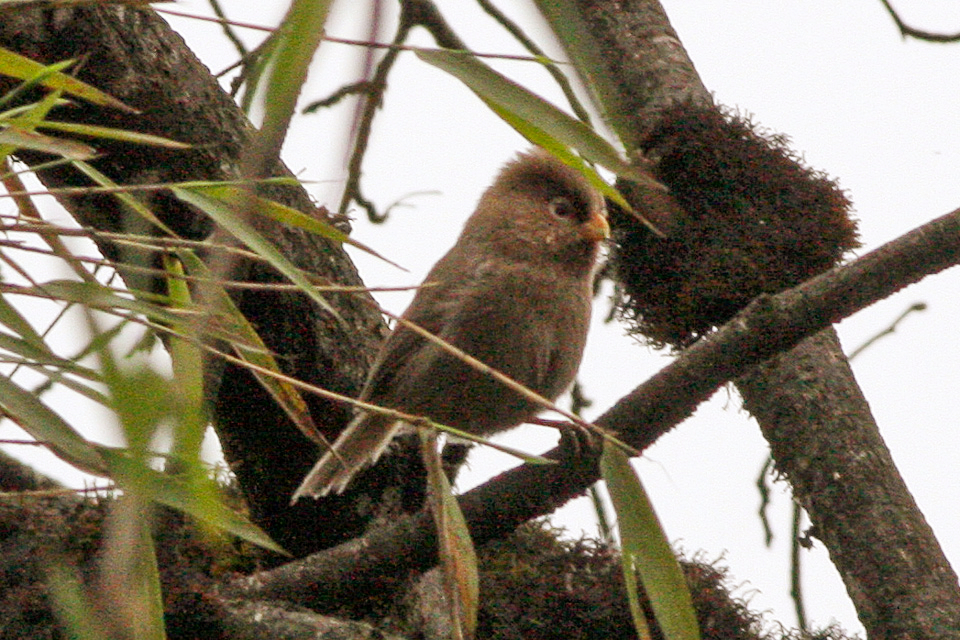
Sylvia baboecala
Sylvia baboecala
Order: Passeriformes / Family: Sylviidae

Wikimedia Commons
About the Sylvia baboecala
The Sylvia baboecala, a member of the Sylviidae family, plays a significant role in the ecosystems it inhabits across several continents. This small songbird is renowned for its adaptability, thriving in diverse habitats from open grasslands to dense woodlands. Its presence is an indicator of healthy environmental conditions, as it relies on a variety of insects and plants that form its primary diet. Found in significant numbers across Africa and parts of Southern Europe, the Sylvia baboecala migrates seasonally, seeking optimal breeding and feeding conditions. During spring and summer, it occupies temperate regions, while in winter, it moves to more tropical climates. This seasonal shift is crucial for its survival, allowing it to exploit different ecological niches throughout the year. As an insectivore, the Sylvia baboecala helps control insect populations, thus maintaining a balance within its habitat. Its feeding habits also contribute to seed dispersal, particularly when it consumes fruit, aiding in plant diversity and regeneration. The bird's melodious song is not only a delight to human listeners but also serves as a means of communication among its species, marking territories and attracting mates. Its adaptability and broad range make it a species of interest to ornithologists and conservationists alike, as it provides insights into the effects of climate change and habitat degradation on migratory birds. The Sylvia baboecala's role extends beyond its ecological contributions, as it is also a cultural symbol in various regions, representing the changing seasons and the interconnectedness of life.
The Sylvia baboecala belongs to the family Sylviidae, within the order Passeriformes. These birds typically live typically 2-4 years, but can live longer in stable conditions..
How to Identify a Sylvia baboecala
Identifying the Sylvia baboecala involves observing its distinct plumage and behavior. Adult Sylvia baboecala typically displays a subtle yet elegant blend of brown and gray on its back, with lighter underparts. A notable feature is its eye ring, which can appear whitish, contrasting with its dark eyes. Males and females look similar, though males may exhibit slightly brighter plumage, particularly during the breeding season. Juveniles are generally duller, lacking the defined markings of adults. In terms of size, this species is small, measuring approximately 12-14 cm in length with a wingspan of about 18-20 cm. When observing its flight, look for its quick, agile movements and slightly rounded wings. The Sylvia baboecala's perching posture is upright, often seen flitting between branches as it searches for food. It can be confused with other Sylvia warblers, but its distinct song and habitat preference can aid in correct identification. In flight, its silhouette is marked by rapid wingbeats and short glides, a characteristic feature of many Sylvia species.
Having trouble telling birds apart? Upload a photo to our bird identification tool for an instant species match.
Sylvia baboecala Habitat and Range
Preferred Habitat
The Sylvia baboecala thrives in a variety of habitats, from the open savannas and grasslands of sub-Saharan Africa to the mixed woodlands and scrublands of Southern Europe. They are commonly found at elevations up to 2000 meters, adapting well to the available environment. During the breeding season, they prefer areas with dense undergrowth, providing protection and ample food sources. In winter, they may move to lower elevations or more open areas where food is plentiful. While they can occasionally be found in suburban gardens and parks, they are more prevalent in rural settings where natural vegetation is abundant. The Sylvia baboecala's adaptability to different environments allows it to exploit a wide range of ecological niches, making it a resilient species in the face of changing landscapes.
Geographic Range
The Sylvia baboecala has a broad range that includes large parts of sub-Saharan Africa and extends into Southern Europe. During the breeding season, they are primarily found in Mediterranean regions, particularly in countries like Italy, Greece, and parts of the Balkans. As temperatures drop in the northern hemisphere, these birds migrate south to overwinter in Africa, with populations spread across countries such as Kenya, Tanzania, and South Africa. Migration corridors are generally through the eastern Mediterranean, with some populations taking a western route through Spain and Morocco. Within these regions, the density of Sylvia baboecala populations varies, with hotspots typically occurring in areas with abundant food supplies and suitable nesting sites. While generally common, local population densities can fluctuate based on environmental conditions and food availability.
Want to know which birds visit your area? Browse our backyard birds by location guides for region-specific species lists.
What Does the Sylvia baboecala Eat?
The Sylvia baboecala primarily feeds on insects, particularly during the breeding season when protein demand is high. It targets small invertebrates such as caterpillars, beetles, and spiders, which it gleans from foliage. Insects are typically captured through quick, darting movements as the bird flits from branch to branch. During the non-breeding season, its diet broadens to include more plant materials, such as berries and seeds, allowing it to exploit different food sources when insects are less abundant. This seasonal dietary shift not only aids in its survival but also plays a role in seed dispersal. The Sylvia baboecala generally forages during daylight hours, with peak feeding activity occurring in the early morning and late afternoon when its insect prey is most active.
Sylvia baboecala Behavior and Social Structure
The Sylvia baboecala exhibits a fascinating array of behaviors, many of which are key to its survival and reproductive success. These birds are generally solitary outside of the breeding season, though they may form loose flocks during migration. Males are known for their territorial displays, often singing from prominent perches to assert dominance and attract mates. During courtship, males perform elaborate displays that include wing-fluttering and tail-spreading to impress females. Once paired, both sexes are involved in defending their territory from intruders. The Sylvia baboecala is diurnal, with peak activity periods in the early morning and late afternoon. Their response to predators is typically to retreat into dense foliage, where their cryptic coloration provides camouflage. Vigilance is a constant trait, as they often pause to check their surroundings while feeding or singing.
Sylvia baboecala Nesting and Reproduction
Sylvia baboecala constructs cup-shaped nests, which are typically built in shrubs or low trees, concealed by dense foliage. The nest is made from grasses, twigs, and leaves, bound together with spider silk for added strength. A typical clutch consists of 3-5 eggs, which are incubated primarily by the female over a period of 12-14 days. During incubation, the male assists by bringing food to the female. Once hatched, both parents participate in feeding the chicks. The fledging period lasts about 10-14 days, after which young birds begin to explore their surroundings but remain dependent on their parents for food for a short time. Sylvia baboecala can produce two broods per year, depending on environmental conditions and food availability.
Sylvia baboecala Sounds and Vocalizations
The Sylvia baboecala is noted for its melodious song, a series of rich, warbling notes delivered in a rapid succession. The song often begins with a few slow, clear whistles, building into a complex sequence that can last several seconds. This song serves to establish territory and attract mates. In addition to its primary song, the Sylvia baboecala emits a variety of call notes, including a sharp 'chak' used as an alarm call when potential threats are nearby. During the dawn chorus, males are particularly active, contributing to the symphony of bird sounds that greet the morning. These vocalizations are a hallmark of the species, providing both communication and auditory beauty within their habitats.
Interesting Facts About the Sylvia baboecala
- 1Sylvia baboecala can fly up to 30 km/h during migration, showcasing its agility and endurance.
- 2Despite its small size, the Sylvia baboecala's song can be heard over 100 meters away in open habitats.
- 3The Sylvia baboecala's eye ring is more pronounced during the breeding season, aiding in mate attraction.
- 4This species participates in mixed-species flocks during migration, increasing foraging efficiency and predator vigilance.
- 5Sylvia baboecala can adjust its breeding timing based on food availability, a trait that helps ensure chick survival.
- 6The nest of the Sylvia baboecala is so well camouflaged that it often goes unnoticed by many predators.
- 7Young Sylvia baboecala start singing rudimentary songs as early as three months old, learning from adult males.
Sylvia baboecala Conservation Status
The Sylvia baboecala is currently classified as Least Concern by the IUCN, with stable population trends in most regions. However, habitat loss due to agricultural expansion and urban development poses a threat to localized populations. Conservation efforts focus on preserving key habitats, particularly breeding and wintering grounds. Monitoring programs help track population changes and assess the impact of environmental changes. Historically, the species has shown resilience to moderate habitat changes, but ongoing efforts aim to ensure this bird continues to thrive amid growing ecological pressures.