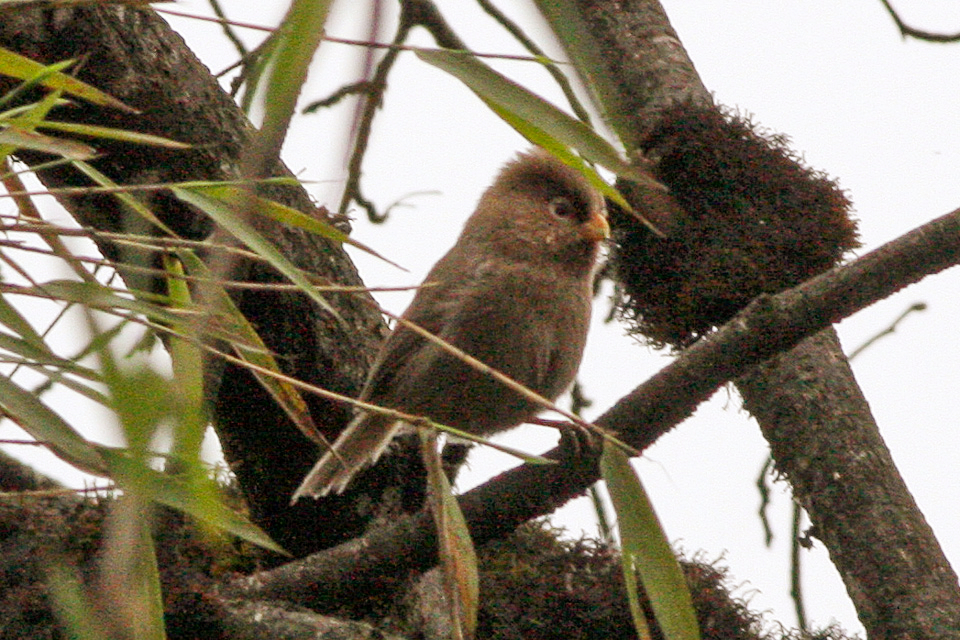
Black-headed Warbler
Sylvia baeticata
Order: Passeriformes / Family: Sylviidae

Wikimedia Commons
About the Black-headed Warbler
The Black-headed Warbler, scientifically known as Sylvia baeticata, is a captivating bird found primarily in the Mediterranean region. This warbler is part of the Sylviidae family and is distinguished by its distinct black head and lighter body. Its presence is particularly notable in southern Spain and parts of North Africa, where it plays a significant role in the local ecosystem. As a small passerine, it contributes to insect population control, which in turn supports the balance of its habitat.
This species thrives in Mediterranean scrubland, often favoring maquis and garrigue landscapes. These habitats provide ample food sources and nesting opportunities. The Black-headed Warbler is an insectivore, predominantly feeding on caterpillars, beetles, and other small invertebrates. During the breeding season, it becomes particularly active, showcasing its vocal prowess through a series of melodious and complex songs that serve both as a mating call and a territorial signal.
Ecologically, the Black-headed Warbler plays a vital role in seed dispersal and pollination, though its primary contribution remains in pest control. Its seasonal behaviors are closely tied to the Mediterranean climate. In spring and early summer, its breeding season coincides with the peak availability of food resources, ensuring the successful rearing of its young. As autumn approaches, the warbler’s focus shifts to preparing for winter, during which it may either migrate short distances or adjust its foraging strategies to cope with reduced food availability.
The significance of the Black-headed Warbler extends beyond its ecological contributions. It is a species of interest for birdwatchers and researchers alike, offering insights into the effects of climate change on migratory patterns and habitat use. Understanding the behaviors and needs of Sylvia baeticata can aid in conservation efforts, ensuring that this charismatic songbird continues to thrive amidst changing environmental conditions.
The Black-headed Warbler belongs to the family Sylviidae, within the order Passeriformes. These birds typically live average 5 years with a maximum recorded of 8 years..
How to Identify a Black-headed Warbler
The Black-headed Warbler is a small bird, measuring approximately 13-14 cm in length with a wingspan of 20-23 cm. It exhibits a striking plumage that aids in its identification. Adults display a glossy black head, contrasting starkly with their pale gray to whitish underparts and olive-brown back. Males and females look remarkably similar, though females may have slightly duller plumage.
Juveniles, on the other hand, are more subdued in color, lacking the distinctive black head of the adults. Instead, they possess a brownish cap and overall more muted tones, which can lead to confusion with other Sylvia species, such as the Common Whitethroat. However, the Black-headed Warbler's unique combination of size and subtle plumage differences, such as the warmer brown tones, help in distinguishing it from similar species.
In flight, the Black-headed Warbler presents a compact silhouette with rapid wingbeats. Its perching posture is upright, often seen flitting among branches as it searches for insects. This warbler’s characteristic behavior of flicking its wings and tail adds to its distinctiveness in the field, helping observers spot it even in dense vegetation.
Having trouble telling birds apart? Upload a photo to our bird identification tool for an instant species match.
Black-headed Warbler Habitat and Range
Preferred Habitat
The Black-headed Warbler primarily inhabits Mediterranean scrubland, including maquis and garrigue environments. These areas are characterized by dense, low-lying vegetation, which provides ample cover and a rich supply of insects. Typically found at elevations ranging from sea level to about 1500 meters, this bird is well-adapted to the varied terrain of its preferred habitats.
During the breeding season, the warbler seeks out areas with abundant shrubs and thickets, which offer both nesting sites and protection from predators. In winter, it may shift its habitat slightly, moving to more sheltered areas if necessary. Urban presence is limited, as the species prefers natural landscapes over human-altered environments.
While the Black-headed Warbler is not strictly migratory, it may undergo short-distance movements in response to seasonal changes in food availability. This adaptability ensures that it can exploit different habitats throughout the year, though it remains predominantly tied to the Mediterranean region.
Geographic Range
The Black-headed Warbler's range is primarily confined to the Mediterranean basin, with breeding populations concentrated in southern Spain and parts of North Africa. In Spain, it is particularly common in the Andalusian region, thriving in the diverse habitats offered by this area.
During the non-breeding season, some populations may exhibit slight migratory behavior, moving southward to more temperate areas within North Africa. However, many individuals maintain residency within their breeding range year-round, taking advantage of the relative mildness of the Mediterranean climate.
Migration corridors, though not extensive for this species, do exist and facilitate movements between breeding and wintering grounds. Population density tends to be highest in regions where the preferred scrubland habitat is prevalent, such as along the coastal areas of Andalusia and the northern reaches of Morocco. These hotspots provide optimal conditions for breeding and foraging, supporting robust local populations.
Want to know which birds visit your area? Browse our backyard birds by location guides for region-specific species lists.
What Does the Black-headed Warbler Eat?
The Black-headed Warbler's diet primarily consists of insects, making it an important player in controlling pest populations within its habitat. Caterpillars, beetles, and various other small invertebrates form the bulk of its diet, particularly during the breeding season when nutritional needs are heightened.
Seasonal changes influence its foraging behavior, with the bird adjusting its diet based on availability. In spring and summer, it actively seeks out caterpillars and other soft-bodied insects, which provide essential nourishment for both adults and nestlings. As autumn approaches, the warbler expands its diet to include seeds and berries, supplementing its energy reserves in preparation for winter.
Foraging techniques of the Black-headed Warbler are agile and dynamic, often involving rapid movements through dense vegetation. The bird employs a combination of gleaning and hovering to capture prey, demonstrating impressive dexterity and precision. Feeding typically occurs during daylight hours, with peak activity in the early morning and late afternoon when insect activity is highest.
Black-headed Warbler Behavior and Social Structure
The Black-headed Warbler exhibits a range of behaviors that highlight its adaptability and social nature. While generally solitary or found in pairs during the breeding season, it may form small flocks outside of this period, particularly during migration or in winter.
Territorial behavior is pronounced during the breeding season, with males defending their chosen area through song and display. The warbler's courtship displays are subtle yet effective, involving a combination of vocalizations and wing flicking to attract mates. Once paired, the birds work together to rear their young, with both parents sharing feeding duties.
In response to predators, the Black-headed Warbler employs a mix of stealth and agility, often retreating into dense cover or using its rapid flight to evade capture. Daily activity patterns include a high level of foraging activity during cooler parts of the day, with periods of rest during midday heat.
Social interactions among Black-headed Warblers are generally peaceful, though territorial disputes can arise during the breeding season. These disputes are typically resolved through vocal displays rather than physical confrontations, showcasing the bird's reliance on its song as a primary communication tool.
Black-headed Warbler Nesting and Reproduction
The nesting habits of the Black-headed Warbler are closely tied to its preferred habitat. Nests are typically constructed in dense shrubs or low trees, providing ample cover from predators. The nest itself is a delicate structure, woven from grasses, twigs, and plant fibers, with a lining of softer materials such as feathers or hair.
Clutch size ranges from three to five eggs, with both parents involved in incubation, which lasts approximately 12-14 days. The fledging timeline is relatively swift, with chicks leaving the nest around 10-12 days after hatching. Both parents continue to feed and protect the fledglings for several weeks post-fledging, ensuring their survival.
The Black-headed Warbler typically raises one brood per year, though in areas with abundant resources, a second brood may occasionally be attempted. This flexibility in breeding strategy allows the species to adapt to varying environmental conditions, enhancing its reproductive success.
Black-headed Warbler Sounds and Vocalizations
The Black-headed Warbler is renowned for its melodious and complex song, which plays a crucial role in both mating and territorial defense. The primary song consists of a series of rapid, high-pitched notes interspersed with trills and whistles, creating a musical quality that is both varied and distinctive.
Call notes are simpler and serve as communication between individuals, often consisting of short, sharp chirps. Alarm calls are more urgent and are used to alert others of potential threats, characterized by a rapid, repeated sequence of harsh notes.
During the dawn chorus, the Black-headed Warbler contributes its song to the symphony of the Mediterranean landscape, its notes carrying through the air as the sun rises. This vocal behavior not only asserts territory but also attracts potential mates, showcasing the warbler's vocal prowess.
Interesting Facts About the Black-headed Warbler
- 1The Black-headed Warbler can weigh as little as 8 grams, making it one of the lighter members of the Sylviidae family.
- 2Despite its small size, the Black-headed Warbler can cover considerable distances, traveling up to 500 kilometers during short migrations.
- 3Sylvia baeticata is known for its adaptability, thriving in both wet and arid Mediterranean scrubland environments.
- 4The warbler's song repertoire can include up to 50 different phrases, each serving a unique communicative purpose.
- 5Black-headed Warblers have a lifespan of about 5 years in the wild, though some individuals have been known to live longer.
- 6The species is a vital part of the Mediterranean ecosystem, contributing to both pest control and seed dispersal.
- 7The Black-headed Warbler was first described scientifically in the 19th century, highlighting its long-standing recognition among ornithologists.
Black-headed Warbler Conservation Status
The Black-headed Warbler is currently listed as Least Concern by the IUCN, with populations considered stable across its range. However, habitat loss due to agricultural expansion and urban development poses ongoing threats, particularly in areas of high human activity. Conservation efforts focus on preserving and restoring Mediterranean scrubland habitats, which are essential for the warbler's survival. Protected areas and habitat management programs are in place in parts of its range, particularly in Spain and North Africa, to mitigate the impacts of habitat degradation. Historically, the population of the Black-headed Warbler has remained relatively stable, though localized declines have been noted in areas of intense land use change. Continued monitoring and habitat conservation are essential to ensure the long-term health of this species.