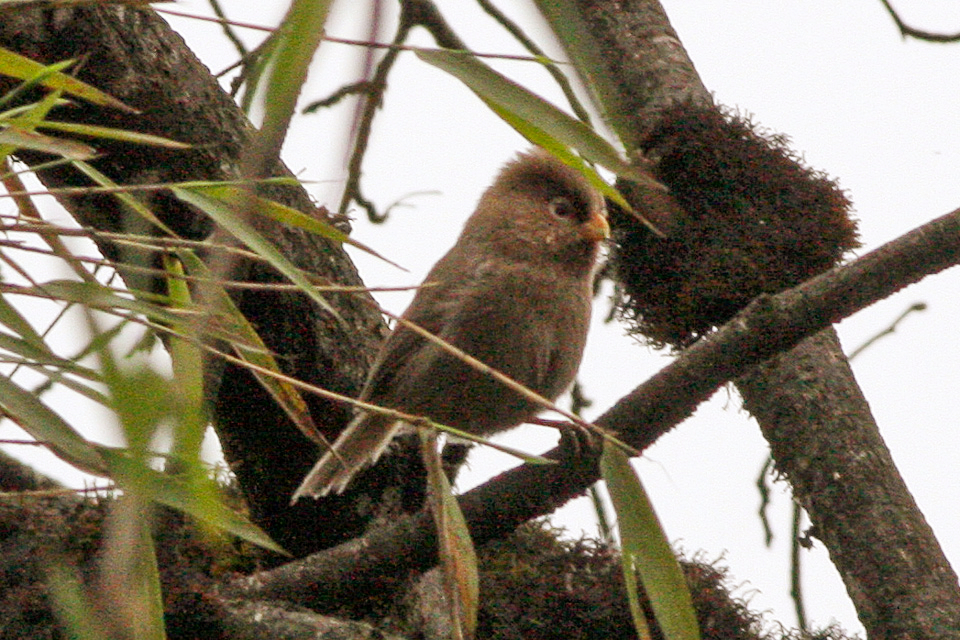
Short-tailed Warbler
Sylvia brachyura
Order: Passeriformes / Family: Sylviidae

Wikimedia Commons
About the Short-tailed Warbler
The Short-tailed Warbler, Sylvia brachyura, is a predominantly elusive member of the Sylviidae family, known for its compact build and energetic behavior. This small passerine bird is primarily found in dense undergrowth and forested areas, usually in regions where moisture and thick canopy cover provide ample shelter and feeding opportunities. It occupies a significant ecological niche by contributing to insect control, as it predominantly feeds on small insects and arthropods, thus playing a crucial role in maintaining the ecological balance of its habitat.
Its presence is chiefly noted in the subtropical and tropical regions of Africa, particularly in countries such as Uganda, Rwanda, and the Democratic Republic of Congo. Here, it inhabits montane forests and can be seen flitting through the dense foliage, often remaining hidden from view. The bird’s preference for such habitats is driven by its need for a humid environment and abundant food supply, which are essential for its survival and reproductive success.
During the breeding season, the Short-tailed Warbler becomes more vocal, using its song to establish territory and attract mates. The song is a melodious series of whistles and trills, often heard before the bird is seen, as it remains well-camouflaged among the leaves. Outside the breeding season, it is relatively quiet and can be challenging to locate. The warbler's ability to adapt to seasonal changes, particularly by varying its feeding habits, allows it to survive in environments where food availability fluctuates.
This species' ecological role extends beyond pest control. It acts as a bioindicator, helping scientists understand the health of forest ecosystems. Changes in its population numbers can signal shifts in habitat quality, prompting conservation actions to protect these critical environments. By studying the Short-tailed Warbler, researchers gain insights into broader ecological processes and the impacts of climate change on forest ecosystems.
The Short-tailed Warbler belongs to the family Sylviidae, within the order Passeriformes. These birds typically live average 4 years with a maximum recorded of 6 years..
How to Identify a Short-tailed Warbler
The Short-tailed Warbler is a small, compact bird, with an overall length of approximately 12 centimeters. Its most distinguishing feature, as the name suggests, is its short tail, which is noticeably truncated compared to other warblers. The plumage is predominantly gray with subtle brown hues, providing excellent camouflage in its dense forest habitat. The upperparts are a muted gray-brown, while the underparts are paler, and the flanks have a slightly warmer tone.
Adult males and females appear similar in plumage, making sex differentiation challenging without observation of behavior during the breeding season. Juveniles resemble adults but may exhibit a slightly duller plumage and a more pronounced buff wash on the underparts. The bird's eyes are dark, and its beak is short and pointed, well-suited for its insectivorous diet.
In flight, the Short-tailed Warbler displays a rapid, fluttering motion with frequent short glides, a pattern that helps distinguish it from similar species. When perched, it often adopts a horizontal posture, maintaining a low profile among the leaves. Its subdued coloration and secretive nature can lead to confusion with other small, drab forest birds, but its short tail and distinctive song aid in identification.
Having trouble telling birds apart? Upload a photo to our bird identification tool for an instant species match.
Short-tailed Warbler Habitat and Range
Preferred Habitat
The Short-tailed Warbler thrives in montane forests, particularly those with dense undergrowth and high humidity levels. It prefers elevations ranging from 1,000 to 3,000 meters above sea level, where the climate remains relatively stable throughout the year. These forests, found in countries like Uganda and Rwanda, offer the bird ample cover and abundant food resources.
While the warbler is primarily associated with forested environments, it can occasionally be found in secondary growth or forest edges, especially during periods of habitat disturbance. It rarely ventures into urban areas or open landscapes, preferring the seclusion and protection that dense foliage provides. Seasonal shifts in habitat use are minimal, as the warbler remains relatively sedentary, with any movement driven by local food availability rather than migratory behavior.
Geographic Range
The Short-tailed Warbler's range is primarily confined to the montane forests of central and eastern Africa. It is a resident breeder in countries such as Uganda, Rwanda, and the Democratic Republic of Congo, where it occupies suitable forested habitats year-round. Unlike many other warbler species, Sylvia brachyura does not undertake long-distance migrations.
The bird's presence is most concentrated in areas where montane forests remain intact and undisturbed. Population densities tend to be higher in protected areas like national parks and reserves, where conservation efforts have helped preserve critical habitat. Outside these hotspots, the warbler may be less common due to habitat loss and fragmentation caused by human activities such as logging and agriculture.
Want to know which birds visit your area? Browse our backyard birds by location guides for region-specific species lists.
What Does the Short-tailed Warbler Eat?
The Short-tailed Warbler is primarily insectivorous, feeding extensively on small insects and arthropods. Its diet includes ants, beetles, caterpillars, and spiders, which it gleans from the foliage and bark of trees. The bird employs a methodical foraging technique, moving through the undergrowth with agility and precision.
During the breeding season, the warbler's dietary needs increase, prompting it to expand its search for food to include a wider variety of insects. This seasonal dietary change ensures adequate nutrition for successful reproduction and chick rearing. The bird typically forages alone or in pairs, focusing its efforts during the cooler morning and late afternoon hours when insects are most active.
In times of scarcity, the Short-tailed Warbler may also consume small amounts of fruit or seeds, although these are not primary food sources. This dietary flexibility aids in its survival when insect availability declines due to environmental factors or seasonal changes.
Short-tailed Warbler Behavior and Social Structure
The Short-tailed Warbler exhibits a solitary lifestyle, spending much of its time foraging alone or in pairs. It is a territorial bird, especially during the breeding season when it actively defends its chosen area from intruders. Males use their melodious song to establish and maintain territory boundaries, as well as to attract potential mates.
Courtship displays involve a combination of song and visual cues, with males often performing a series of flights and postures to impress females. Once paired, the birds remain together for the duration of the breeding season, working cooperatively to raise their young.
Outside the breeding season, the warbler's social behavior shifts slightly, with individuals becoming less vocal and more focused on foraging. The bird demonstrates a keen awareness of its surroundings, responding swiftly to potential threats with alarm calls or evasive maneuvers. It is most active during daylight hours, with a peak in activity during the early morning and late afternoon when insect prey is abundant.
Short-tailed Warbler Nesting and Reproduction
The nesting habits of the Short-tailed Warbler are adapted to its forest habitat. It constructs a small, cup-shaped nest using materials such as grass, leaves, and moss, often bound together with spider silk for added strength. Nests are typically situated low to the ground, well-concealed within dense undergrowth or shrubbery, providing protection from predators.
The female lays a clutch of 2-4 eggs, which are incubated for approximately 12-14 days. Both parents share incubation duties, although the female may spend more time at the nest. Once hatched, the chicks are altricial, requiring constant care and feeding from both parents. The fledging period lasts about 10-14 days, during which time the young birds grow rapidly and develop the skills necessary for independence.
The Short-tailed Warbler generally raises one brood per year, although in favorable conditions, a second brood may be attempted. Parental care extends beyond fledging, with adults continuing to feed and protect their offspring for several weeks as they learn to forage on their own.
Short-tailed Warbler Sounds and Vocalizations
The Short-tailed Warbler's song is a distinctive series of melodious whistles and trills, delivered with a clear, ringing quality. The rhythmic pattern and varied pitch make it easily recognizable, often heard echoing through the forest before the bird is seen. This song serves multiple purposes, including territory establishment and mate attraction.
In addition to its primary song, the warbler produces a range of call notes, used for communication between mates and alerting others to potential threats. Alarm calls are sharp and quick, designed to warn of approaching predators. During the dawn chorus, the warbler's song contributes to the symphony of sounds that herald the start of a new day in the forest.
Interesting Facts About the Short-tailed Warbler
- 1The Short-tailed Warbler's song can carry up to 100 meters through dense forest, making it an effective territorial signal.
- 2Unlike many warbler species, the Short-tailed Warbler is non-migratory, residing year-round in central Africa's montane forests.
- 3The warbler's nest is often lined with soft materials like feathers, offering insulation and comfort for the eggs and chicks.
- 4Its diet is primarily insectivorous, but the warbler occasionally supplements its food intake with small fruits during scarce periods.
- 5The Short-tailed Warbler is adept at canopy foraging, often seen darting through branches in search of prey, a behavior vital for insect control.
- 6This warbler contributes to seed dispersal by occasionally consuming and excreting small seeds, aiding in forest regeneration.
- 7Despite its elusive nature, the warbler's robust song is a key tool for ornithologists to survey and study its population in dense habitats.
Short-tailed Warbler Conservation Status
The Short-tailed Warbler is currently classified as Least Concern by the IUCN, with a stable population trend. However, habitat loss due to deforestation and human encroachment poses a significant threat to its future stability. Conservation efforts focus on preserving montane forest habitats, particularly in protected areas like national parks. Historical population changes have been relatively minor, thanks to the bird's limited range and habitat specialization. Nonetheless, ongoing habitat protection and restoration are crucial to ensure its continued survival. Active monitoring and research help track population dynamics and inform conservation strategies.