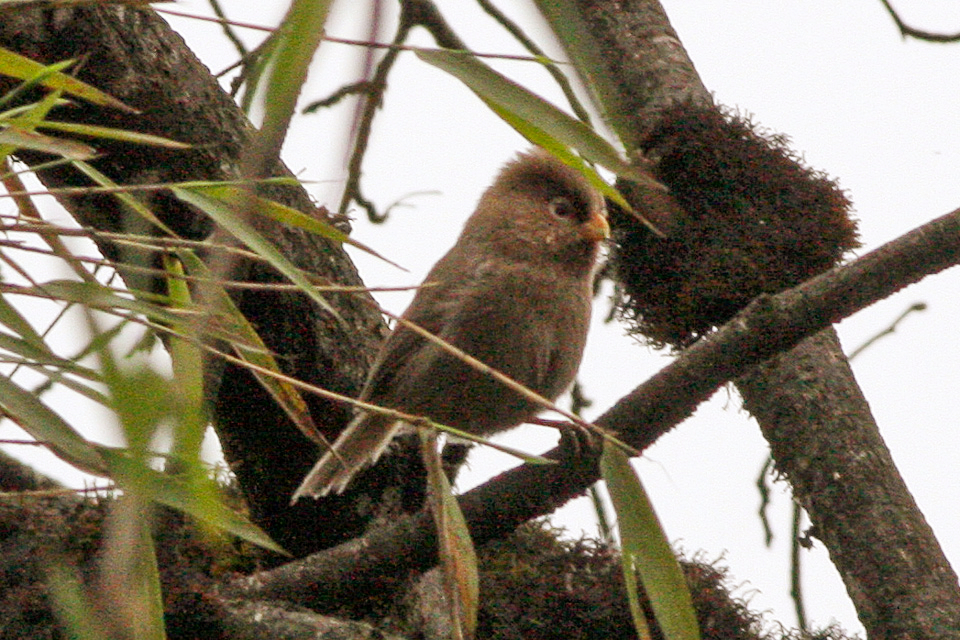
Sylvia coryphoeus
Sylvia coryphoeus
Order: Passeriformes / Family: Sylviidae
About the Sylvia coryphoeus
The Sylvia coryphoeus, commonly known as the Spectacled Warbler, is a small passerine bird belonging to the Sylviidae family. This species thrives in Mediterranean scrublands, a habitat characterized by dense, low vegetation that offers both cover and abundant foraging opportunities. Spectacled Warblers play a vital ecological role, acting as both predator and prey within their ecosystem. They feed primarily on insects, contributing to pest control, and in turn, they serve as prey for larger avian predators. These warblers demonstrate remarkable adaptability, occupying various habitats, including open woodlands, coastal dunes, and even semi-arid regions. During the breeding season, which occurs from April to June, they exhibit territorial behaviors, establishing and defending nesting sites vigorously. Their territories are typically located in regions with abundant shrub cover, providing protection and food resources. Outside the breeding season, Spectacled Warblers often form small flocks, showcasing a more social side. The Sylvia coryphoeus is particularly significant in southern Europe and northern Africa, where its population density is highest. Notably, this species exhibits partial migratory behavior, with some populations in the northern parts of its range migrating southward in winter. In regions like Spain, Italy, and Morocco, the Spectacled Warbler is a familiar sight, especially in areas with undisturbed natural vegetation. Their role in these ecosystems underscores the importance of preserving native scrublands, not only for the warblers themselves but for the myriad of species that share their habitat. The Spectacled Warbler's adaptability and resilience highlight its ecological importance, acting as an indicator of habitat health and biodiversity.
The Sylvia coryphoeus belongs to the family Sylviidae, within the order Passeriformes. These birds typically live typically 2-3 years, with some living up to 5 years..
How to Identify a Sylvia coryphoeus
Spectacled Warblers are small, measuring approximately 11-13 cm in length, with a wingspan of 13-18 cm. Their most distinctive field mark is the white eye-ring, giving them their 'spectacled' appearance. Adults have a grayish head, contrasting with their brown back and wings. Males exhibit a more pronounced gray, whereas females and juveniles tend to have a browner hue overall. Juveniles lack the eye-ring in their first year, which can cause confusion with similar warblers, such as the Subalpine Warbler. In flight, they display a characteristic bouncing motion, with wings tucked in briefly between beats. Perched, they often appear restless, twitching their tails and moving through the scrub with agility. Their calls and songs are crucial for identification, offering melodic and varied sequences that distinguish them from other warblers.
Having trouble telling birds apart? Upload a photo to our bird identification tool for an instant species match.
Sylvia coryphoeus Habitat and Range
Preferred Habitat
Spectacled Warblers predominantly inhabit Mediterranean scrubland, known for its dense shrubs and open spaces. They are often found at elevations up to 1500 meters, though they prefer lower altitudes where vegetation is thicker. During winter, some populations shift to slightly more open habitats, such as coastal dunes and semi-arid areas. While primarily associated with natural habitats, Spectacled Warblers occasionally venture into rural landscapes that mimic their native scrubland, including overgrown fields and hedgerows. Unlike many birds, they rarely appear in urban settings, relying instead on undisturbed natural areas for breeding and feeding. This preference underscores the importance of conserving their native habitats.
Geographic Range
The Spectacled Warbler's breeding range extends across southern Europe, including Spain, Portugal, and Italy, and into northern Africa, encompassing Morocco, Algeria, and Tunisia. They are also found on several Mediterranean islands, such as Sardinia and Corsica. During winter, northern populations migrate to southern parts of their range, reaching as far as the Sahel region. Regions with high population densities include the Iberian Peninsula and the northern coast of Africa, where suitable habitats are abundant. Migration corridors are primarily oriented north-south, following the coastline and avoiding mountainous regions. Their presence in these areas is crucial for maintaining the ecological balance of Mediterranean ecosystems.
Want to know which birds visit your area? Browse our backyard birds by location guides for region-specific species lists.
What Does the Sylvia coryphoeus Eat?
Spectacled Warblers have a predominantly insectivorous diet, feeding on a variety of small invertebrates. Their primary food sources include beetles, caterpillars, and spiders, which they forage for within the dense scrub. They employ a methodical foraging technique, meticulously searching leaves and branches for prey. During the breeding season, their diet shifts slightly to include more protein-rich insects, which are crucial for chick development. In winter, they may also consume small seeds and berries, supplementing their diet when insect availability decreases. This adaptability in diet allows them to thrive across varied environments and seasonal conditions.
Sylvia coryphoeus Behavior and Social Structure
Spectacled Warblers exhibit a mix of solitary and social behaviors. During the breeding season, males establish territories of about 0.5 to 1 hectare, which they defend vigorously through song and display. Courtship involves males performing aerial displays, accompanied by singing to attract females. Once paired, they remain largely monogamous for the season. Outside the breeding period, these warblers form small flocks, often joining mixed-species groups. They are diurnal, with peak activity in the early morning and late afternoon. When threatened by predators, such as shrikes or hawks, they emit sharp alarm calls and dive into thick vegetation for cover. Their resilience and adaptability in social structure contribute to their survival across diverse habitats.
Sylvia coryphoeus Nesting and Reproduction
Spectacled Warblers build cup-shaped nests, carefully constructed from grass, leaves, and spider webs, usually placed in low shrubs or bushes. Preferred nesting locations are dense, providing concealment from predators. The typical clutch consists of 3-5 eggs, which are incubated by the female for approximately 12-13 days. Both parents participate in feeding the hatchlings, which fledge after about 10-11 days. The species is capable of raising two broods per year, depending on environmental conditions. Parental roles are well-defined, with males often guarding the territory while females focus on nurturing the young. Their nesting success is highly dependent on habitat quality and availability.
Sylvia coryphoeus Sounds and Vocalizations
The song of the Spectacled Warbler is a melodic, fast-paced warble, often described as a series of liquid notes that can vary in pitch and tempo. This song serves both to attract mates and defend territory. Their call notes are sharp and brief, used in communication within flocks or as alarm signals when predators approach. During the dawn chorus, males sing prominently, establishing their presence in the territory. The song's quality has been likened to that of other Sylvia species, though it maintains a distinct, hurried rhythm that sets it apart.
Interesting Facts About the Sylvia coryphoeus
- 1Spectacled Warblers often share their scrubland habitat with the Sardinian Warbler, leading to interesting interspecies interactions.
- 2Despite their small size, Spectacled Warblers can travel significant distances during partial migrations, showcasing impressive endurance.
- 3Their nests, intricately woven with spider webs, demonstrate remarkable structural integrity and flexibility.
- 4The Spectacled Warbler's song is highly variable, with individual males often having unique repertoires that distinguish them from neighbors.
- 5Females primarily choose mates based on song quality and territory, highlighting the importance of vocal performance in breeding success.
- 6During the breeding season, males sing up to 600 times a day, emphasizing their territorial presence and mating readiness.
- 7In regions with high predator presence, Spectacled Warblers adjust their nesting height and location to minimize risks.
Sylvia coryphoeus Conservation Status
The Spectacled Warbler is currently classified as Least Concern by the IUCN, with populations considered stable across most of its range. However, habitat loss due to agricultural expansion and urban development poses a long-term threat. Conservation efforts focus on preserving scrubland habitats and promoting sustainable land-use practices. Historical data suggests that population fluctuations have occurred in response to environmental changes, underscoring the need for ongoing monitoring and habitat protection to ensure the species' continued stability.