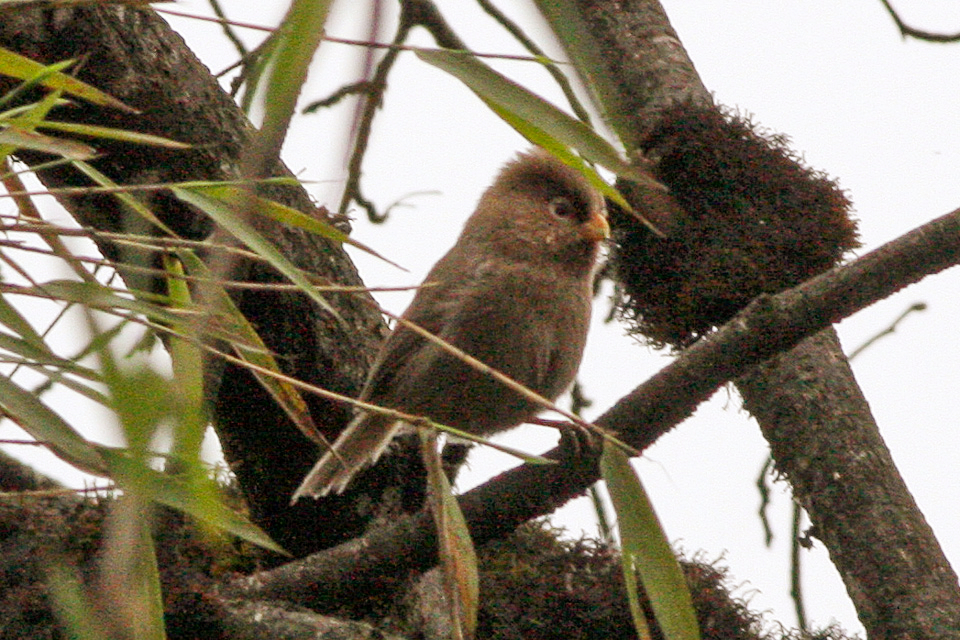
Sylvia familiaris
Sylvia familiaris
Order: Passeriformes / Family: Sylviidae

Wikimedia Commons
About the Sylvia familiaris
Sylvia familiaris, commonly referred to as the Familiar Warbler, is a captivating member of the Sylviidae family, celebrated for its rich vocal repertoire and distinctive appearance. This bird finds its niche across varied habitats, ranging from dense woodlands to open grasslands, thriving particularly in the temperate regions of Europe and parts of Asia. Its adaptability to different environments signifies its ecological importance, playing a vital role in insect population control, which benefits local vegetation by reducing pest numbers.
The Familiar Warbler exhibits notable seasonal behaviors, migrating between breeding and wintering grounds to optimize survival and reproductive success. During the spring and summer, it occupies northern territories, including parts of Scandinavia and the British Isles, where it breeds and raises its young. As autumn approaches, it embarks on a southward journey to milder climates in southern Europe and North Africa, avoiding harsh winters and ensuring continuous access to food sources.
Ecologically, Sylvia familiaris contributes significantly to the balance of ecosystems. It serves as both predator and prey, feeding on a variety of insects and in turn, becoming a food source for larger birds of prey. This intricate web of interactions underscores its role in maintaining biodiversity. The Familiar Warbler's presence is also a positive indicator of healthy environments, as it thrives in areas with abundant insect life and suitable nesting sites.
The species' significance extends beyond its ecological contributions, as it holds a cherished place in the hearts of birdwatchers and nature enthusiasts. Its vivid plumage, characterized by striking hues of green and subtle brown, combined with its melodic song, makes it a favorite subject for observation and study. The Familiar Warbler's presence in a habitat often signals a thriving ecosystem, highlighting the interconnectedness of species and their shared reliance on the environment.
The Sylvia familiaris belongs to the family Sylviidae, within the order Passeriformes. These birds typically live average 2-4 years with max recorded 5 years.
How to Identify a Sylvia familiaris
The Familiar Warbler, or Sylvia familiaris, is easily identifiable through its striking plumage and distinctive features. Adult males display a vibrant blend of green and brown feathers, with a conspicuous white eye-ring that adds a touch of elegance. Their underparts are generally lighter, with subtle shades of gray and white, creating a striking contrast. Females, while similar in appearance, exhibit slightly duller colors, providing them with an advantage in camouflage during nesting periods.
Juveniles differ noticeably from adults, presenting a more subdued coloration that gradually brightens as they mature. The young birds often lack the prominent eye-ring found in adults, making them somewhat challenging to distinguish at first glance. However, as they age, their plumage becomes more vibrant and distinct, easing identification.
When comparing the Familiar Warbler to similar species, such as the Blackcap or Garden Warbler, its unique combination of green and brown tones, along with the white eye-ring, serves as a reliable differentiator. In flight, Sylvia familiaris exhibits a rapid, agile wingbeat, characteristic of small passerines, and its perching posture is upright and alert, often with a slight tilt of the head as it scans its surroundings.
Having trouble telling birds apart? Upload a photo to our bird identification tool for an instant species match.
Sylvia familiaris Habitat and Range
Preferred Habitat
Sylvia familiaris occupies a diverse range of habitats, showcasing its adaptability and resilience. This species thrives in temperate woodlands, where dense foliage offers ample cover and nesting opportunities. It is also commonly found in open grasslands, where it benefits from an abundance of insects, its primary food source.
In terms of elevation, the Familiar Warbler typically resides at altitudes ranging from sea level to approximately 1,500 meters, depending on the region and availability of suitable habitat. During the breeding season, it prefers more secluded areas with dense vegetation, while in winter, it may move to slightly more open environments where food remains accessible.
The species' presence in urban areas is limited, as it favors natural settings over heavily populated regions. However, it can occasionally be spotted in suburban gardens and parks, particularly in regions where natural habitats are closely interwoven with urban developments. Seasonal habitat shifts occur as Sylvia familiaris migrates, seeking optimal conditions for feeding and breeding across different times of the year.
Geographic Range
The breeding range of Sylvia familiaris spans across northern Europe, from the northern parts of the United Kingdom and Ireland to the expansive forests of Scandinavia. The species establishes nesting territories in these regions during the spring and summer months, capitalizing on the long daylight hours and abundant insect life.
As the seasons change, the Familiar Warbler embarks on a migratory journey to its wintering grounds in southern Europe and North Africa. This migration typically follows established corridors through Central Europe, using natural landmarks such as river valleys and mountain ranges to guide its path. The species is known to frequent countries like Spain, Italy, and Morocco during the winter, where milder climates ensure continued food availability.
Population density hotspots for Sylvia familiaris are observed in regions with a wealth of deciduous and mixed forests, where suitable habitat conditions allow the species to thrive. While its range is extensive, local populations may vary in density depending on environmental factors and availability of resources.
Want to know which birds visit your area? Browse our backyard birds by location guides for region-specific species lists.
What Does the Sylvia familiaris Eat?
Sylvia familiaris primarily relies on a diet of insects, playing a crucial role in controlling pest populations within its habitat. During the breeding season, it actively forages for caterpillars, beetles, and other invertebrates, which provide the necessary protein for raising its young. The bird's foraging technique involves a combination of gleaning and sallying, as it meticulously picks insects off leaves and branches or captures them mid-flight.
Seasonal changes influence the diet of the Familiar Warbler. In spring and summer, it consumes a higher proportion of insects, while in autumn and winter, its diet may include more seeds and berries as insect availability decreases. This dietary flexibility enables the species to adapt to varying food resources throughout the year.
The warbler's preference for smaller prey, typically measuring less than 10 millimeters, allows it to exploit a wide range of insect species. Feeding typically occurs during daylight hours, with peak activity in the early morning and late afternoon, coinciding with times when insect activity is at its highest.
Sylvia familiaris Behavior and Social Structure
Sylvia familiaris exhibits distinct social and territorial behaviors, particularly during the breeding season. Males establish and defend territories through song, using their melodic calls to announce their presence and ward off potential rivals. The song serves as a powerful tool for attracting mates and reinforcing pair bonds, with males often engaging in complex duets with females.
Courtship displays are a notable aspect of the Familiar Warbler's behavior. Males perform aerial acrobatics and sing vibrantly to capture the attention of potential mates. Once paired, these birds are generally monogamous, maintaining strong pair bonds throughout the breeding season.
Outside the breeding season, the Familiar Warbler exhibits more social tendencies, often joining mixed-species flocks during migration. This behavior provides increased protection against predators, as multiple eyes increase vigilance. The species typically remains active during daylight hours, with a daily routine that includes foraging, preening, and social interactions. In response to predators, the warbler relies on a combination of alarm calls and evasive flight, demonstrating its agility and quick reflexes.
Sylvia familiaris Nesting and Reproduction
The Familiar Warbler constructs its nest in dense vegetation, favoring shrubs and low trees that offer ample cover and protection. The nest is a cup-shaped structure, meticulously woven from grass, twigs, and other plant materials, providing a secure environment for its eggs.
Typically, the warbler lays a clutch of 4 to 6 eggs, with both parents participating in incubation duties. The incubation period lasts approximately 11 to 13 days, during which time the adults take turns keeping the eggs warm while the other forages for food.
Upon hatching, the chicks remain in the nest for about 10 to 12 days before fledging. Both parents share feeding responsibilities, ensuring a steady supply of insects for their rapidly growing young. The warbler may produce two broods per year, depending on environmental conditions and food availability, allowing it to maximize reproductive success.
Sylvia familiaris Sounds and Vocalizations
The primary song of Sylvia familiaris is a melodious series of clear, flute-like notes delivered in quick succession. The rhythm and pitch vary, but the song typically lasts between 2 to 4 seconds, often repeated multiple times in a row. The Familiar Warbler's song serves as an essential tool for communication, particularly during the breeding season when males use it to attract mates and establish territories.
Aside from its primary song, the warbler emits a range of call notes, including soft "chit" and "tuck" sounds that facilitate interaction with conspecifics. Alarm calls are characterized by sharp, high-pitched notes that signal danger and alert other birds to the presence of predators.
During the dawn chorus, Sylvia familiaris contributes to the symphony of bird songs that fill the early morning air, its voice blending with those of other songbirds to create a rich tapestry of sound. Comparatively, its song is reminiscent of the Blackcap, yet distinguishable by subtle differences in tone and delivery.
Interesting Facts About the Sylvia familiaris
- 1Sylvia familiaris can travel up to 3,000 kilometers during its migratory journey between breeding and wintering grounds.
- 2The warbler's song can be heard up to 200 meters away, making it an effective tool for territory establishment.
- 3Familiar Warblers can consume over 500 insects per day during the breeding season, aiding in pest control.
- 4The species' nests are often lined with feathers, providing extra insulation and comfort for the eggs and chicks.
- 5The oldest recorded Sylvia familiaris lived to be 11 years old, a testament to its survival skills.
- 6Familiar Warblers are known to join mixed-species flocks outside the breeding season, increasing their foraging efficiency.
- 7During migration, these birds can cover up to 200 kilometers in a single day, showcasing their endurance and navigational skills.
Sylvia familiaris Conservation Status
The IUCN currently classifies Sylvia familiaris as a species of Least Concern, reflecting its relatively stable population. However, localized population trends indicate slight declines in certain areas, primarily due to habitat loss and fragmentation. Primary threats to the Familiar Warbler include deforestation, agricultural expansion, and urban development, which reduce the availability of suitable nesting and foraging habitats. Climate change also poses a potential threat, as shifts in temperature and precipitation patterns could impact the species' migratory and breeding cycles. Conservation efforts focus on habitat preservation and restoration, with initiatives aimed at protecting and reconnecting fragmented landscapes. Historically, the species has demonstrated resilience, maintaining stable numbers despite environmental pressures. Ongoing monitoring and habitat management are crucial to ensure the continued survival of Sylvia familiaris across its range.