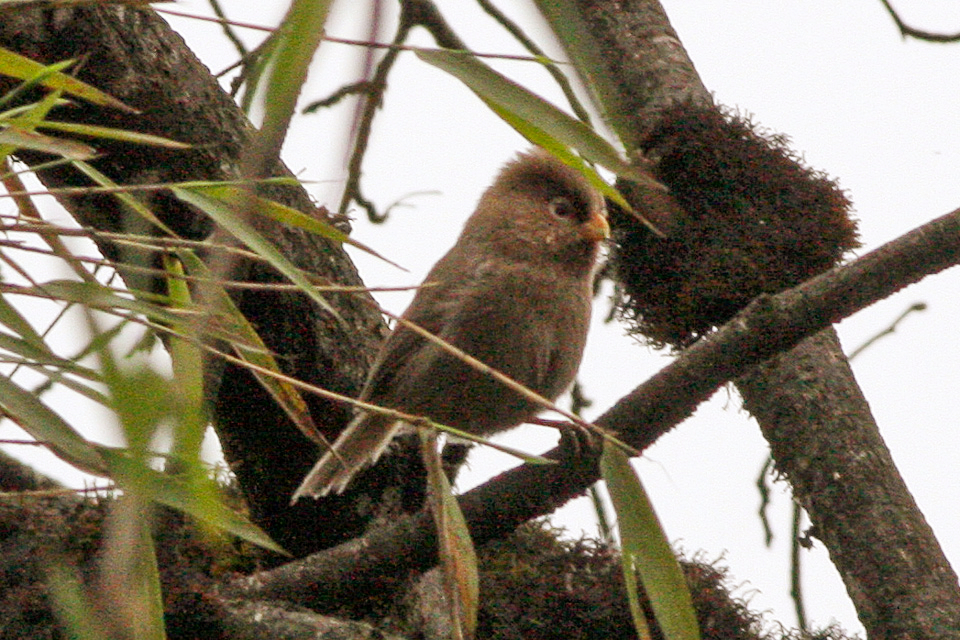
Gray Sylvia
Sylvia guzurata
Order: Passeriformes / Family: Sylviidae

Wikimedia Commons
About the Gray Sylvia
The Gray Sylvia, scientifically known as Sylvia guzurata, is a captivating small songbird that belongs to the family Sylviidae. Renowned for its soft gray plumage, this bird is a sight to behold in its natural habitat. Primarily found in temperate forests, this species has a significant ecological role as an insectivore, helping control insect populations. The Gray Sylvia's presence across various regions highlights its adaptability and ecological significance. It thrives in mixed woodlands where deciduous and coniferous trees provide ample foraging opportunities. This bird plays a vital role in the ecosystem by participating in seed dispersal and pollination events, which maintain the health and diversity of its habitat. The species is particularly active during the breeding season, which typically occurs from April to July, depending on the geographic location. During this period, the male Gray Sylvia becomes more vocal and territorial, marking its presence with a series of melodic and complex songs. These vocal displays serve both to attract mates and to deter rivals. The Gray Sylvia also engages in a fascinating vertical migration pattern, moving to lower elevations during the winter months to access more abundant food resources. Its adaptability to different altitudes and climates makes it a resilient species, capable of surviving in a range of environmental conditions. In addition to its ecological contributions, the Gray Sylvia holds cultural significance in various regions. Birdwatchers and naturalists admire its song, often describing it as a symbol of wilderness and tranquility. The bird's melodic calls have inspired poets and musicians, further cementing its place in the cultural fabric of the regions it inhabits. Despite its relatively common status, the Gray Sylvia faces challenges such as habitat loss due to deforestation and urban expansion. Conservation efforts focus on preserving its natural habitats and ensuring sustainable land management practices. Efforts to raise awareness about the importance of this species continue to be crucial in maintaining its populations across its range.
The Gray Sylvia belongs to the family Sylviidae, within the order Passeriformes. These birds typically live average 3-4 years, with a maximum recorded lifespan of 6 years..
How to Identify a Gray Sylvia
The Gray Sylvia exhibits a subtle yet striking appearance characterized by its uniform gray plumage. Adult males and females are similar in coloration, though males may display slightly more vibrant tones during the breeding season. Their plumage is a soft gray with a lighter underbelly, providing an understated elegance. Juveniles tend to have a more muted coloration, with a brownish tinge that fades as they mature. The bird's small, rounded body and short, slender bill are key field marks for identification. In flight, the Gray Sylvia's silhouette is compact, with rapid wingbeats and short glides. Its wings are relatively short and rounded, contributing to its agile maneuvering through dense foliage. When perched, the bird often adopts an upright posture, occasionally flicking its tail in rhythmic motions. This behavior is useful for signaling its presence to other birds. The Gray Sylvia can sometimes be confused with other gray songbirds, such as the Lesser Whitethroat. However, its distinctive song and habitat preferences help differentiate it from similar species. Observers should note the bird's unique vocalizations and behavior to confirm identification.
Having trouble telling birds apart? Upload a photo to our bird identification tool for an instant species match.
Gray Sylvia Habitat and Range
Preferred Habitat
The Gray Sylvia inhabits a variety of woodland environments, most commonly found in temperate forests. It thrives in mixed woodlands where both deciduous and coniferous trees provide shelter and food. This bird is adaptable, also occupying scrublands, hedgerows, and gardens when necessary. Typically found at elevations ranging from 200 to 1,500 meters, the Gray Sylvia adjusts to different altitudinal zones based on seasonal food availability. During winter, it often descends to lower elevations, seeking out milder climates and more abundant insect populations. In urban settings, the Gray Sylvia may inhabit parks and gardens, provided there is sufficient vegetation to support its foraging needs. The presence of dense underbrush and layered canopy is crucial for nesting and protection from predators.
Geographic Range
The Gray Sylvia's range extends across various regions, with its breeding grounds primarily in Europe, particularly in countries such as France, Spain, and Italy. It also breeds in parts of the Middle East, including Turkey and Lebanon. During the non-breeding season, the Gray Sylvia migrates southward, wintering in the northern regions of Africa such as Morocco and Algeria. Migration corridors often include crossings over the Mediterranean Sea, showcasing the bird's endurance and adaptability to long-distance travel. Population densities tend to be higher in its preferred woodland habitats, with hotspots observed in the Iberian Peninsula and southeastern Europe. While the Gray Sylvia is more common in its core range, its presence in less frequented areas highlights its capacity to adapt to various environmental conditions.
Want to know which birds visit your area? Browse our backyard birds by location guides for region-specific species lists.
What Does the Gray Sylvia Eat?
The Gray Sylvia primarily feeds on insects, making it an essential player in controlling pest populations. Its diet includes a wide variety of arthropods, such as beetles, caterpillars, and spiders. During the breeding season, the demand for protein-rich food increases, prompting the bird to forage more actively. In addition to insects, the Gray Sylvia occasionally consumes berries and other fruits, particularly in the autumn when insect availability decreases. Foraging typically occurs in the early morning and late afternoon when insect activity is at its peak. The bird employs a methodical approach, gleaning insects from leaves and branches with precision. Although primarily an insectivore, the Gray Sylvia's dietary flexibility allows it to adapt to changes in food availability throughout the year.
Gray Sylvia Behavior and Social Structure
The Gray Sylvia is a socially structured bird, often seen alone or in pairs during the breeding season. Its territorial nature becomes prominent during this period, with males vigorously defending their territory through song and physical displays. The bird's courtship rituals involve a combination of vocalizations and aerial displays, where the male showcases its agility and vocal prowess. Outside of the breeding season, the Gray Sylvia may join mixed-species flocks, benefiting from the collective vigilance against predators. This behavior is particularly common during migration and winter, when food resources are scarcer. The bird's response to predators includes alarm calls and evasive flight patterns, designed to confuse and deter potential threats. Daily activity patterns involve a balance between foraging and resting, with peak activity in the early morning and late afternoon.
Gray Sylvia Nesting and Reproduction
The Gray Sylvia constructs its nest in shrubs or low trees, preferring sites that offer dense foliage for concealment. The nest is cup-shaped, crafted from twigs, grasses, and lined with feathers for insulation. The female typically lays 3 to 5 eggs per clutch, with an incubation period of approximately 11 to 13 days. Both parents share incubation duties, ensuring the eggs remain at a constant temperature. After hatching, the chicks are altricial, requiring extensive parental care. The fledging period lasts about 10 to 14 days, during which both parents actively feed and protect the young. The Gray Sylvia usually raises one brood per year, though in favorable conditions, a second brood may occur.
Gray Sylvia Sounds and Vocalizations
The Gray Sylvia's primary song is a melodious series of warbling notes, delivered with a fluid rhythm and varying pitch. This song is often heard during the breeding season, serving as both a territorial marker and a courtship display. In addition to its primary song, the Gray Sylvia produces a variety of call notes, including sharp 'tuk-tuk' sounds used for communication between mates and as an alarm signal. The bird's dawn chorus is particularly notable, with males singing vigorously at first light to assert territory and attract mates. Its song's complexity and clarity make it a favorite among bird enthusiasts, often compared to the Nightingale for its musicality.
Interesting Facts About the Gray Sylvia
- 1The Gray Sylvia can mimic the songs of other birds, showcasing its vocal versatility.
- 2During migration, the Gray Sylvia can travel over 1,500 kilometers to reach its wintering grounds.
- 3This bird's nest is often lined with soft materials like feathers, providing insulation for the eggs.
- 4The Gray Sylvia's song repertoire can include over 20 distinct phrases.
- 5Historically, the Gray Sylvia was a symbol of spring in several European cultures.
- 6The species' ability to adapt to urban environments highlights its resilience.
- 7Despite its small size, the Gray Sylvia plays a crucial role in controlling insect populations.
Gray Sylvia Conservation Status
Currently, the Gray Sylvia is listed as Least Concern by the IUCN, with populations considered stable. However, habitat loss due to deforestation and urban expansion presents ongoing threats. Conservation efforts focus on preserving natural habitats and promoting sustainable land use practices. Organizations are working to maintain protected areas and raise awareness about the ecological importance of this species. Historically, the Gray Sylvia's range and population size have fluctuated with environmental changes, but its resilience and adaptability have enabled it to persist.