Plain Sylvia
Sylvia inornata
Order: Passeriformes / Family: Sylviidae

Wikimedia Commons
About the Plain Sylvia
The Plain Sylvia, scientifically known as Sylvia inornata, belongs to the Sylviidae family and is a small, unobtrusive songbird that displays a remarkable ability to blend into its surroundings. This bird can be found throughout the southwestern regions of Europe and into parts of North Africa. Its habitat often includes scrublands, open woodlands, and areas with dense undergrowth, particularly in regions such as Spain, Portugal, and Morocco. As a species, the Plain Sylvia plays a critical role in its ecosystem, acting as both a predator of small insects and a prey species for larger birds. During the breeding season, which typically occurs from April to July, the Plain Sylvia becomes more vocal and is often heard singing from prominent perches. Its song, a series of melodic and varied warbles, serves as a territorial proclamation and a mating call. In winter months, many populations of Sylvia inornata migrate southward, although some remain in milder regions year-round. The bird's adaptability to different habitats and its ability to remain inconspicuous are key factors in its ecological success. The Plain Sylvia's diet consists mainly of insects and other small invertebrates during the breeding season. In the non-breeding season, it shifts to a more varied diet, including berries and seeds. This dietary flexibility allows the Plain Sylvia to thrive in various environments and contributes to its widespread presence in suitable habitats. Its ecological role as an insect predator helps control pest populations, while its fruit-eating habits assist in seed dispersion, promoting plant diversity. Although not considered endangered, the Plain Sylvia faces threats from habitat destruction and climate change. Conservation efforts are important to ensure the continued survival of this species, particularly in areas where urban development encroaches on natural habitats. Understanding the Plain Sylvia's behaviors, migratory patterns, and ecological significance is crucial for devising effective conservation strategies.
The Plain Sylvia belongs to the family Sylviidae, within the order Passeriformes. These birds typically live average 3-4 years, with a maximum recorded lifespan of 6 years..
How to Identify a Plain Sylvia
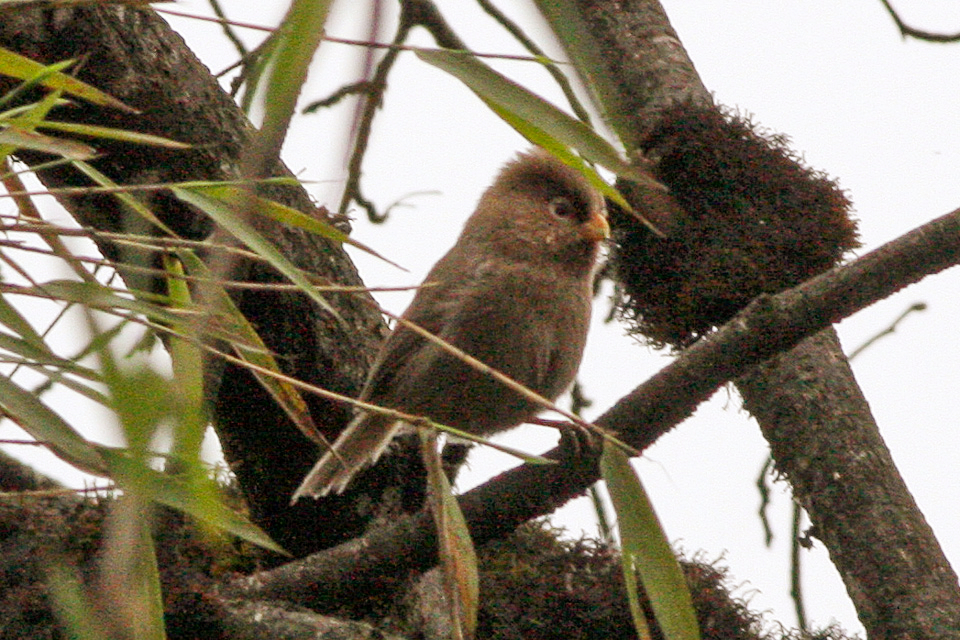
The Plain Sylvia is a small songbird with a length of about 13 centimeters and a wingspan of approximately 18 centimeters. Its plumage is predominantly soft brown, with subtle variations that can make field identification challenging. The upperparts are a uniform brown, while the underparts are a lighter, buffy hue. The bird's head features a slightly darker crown and a faint eye ring that adds to its understated appearance. Males and females look similar, although males may display slightly brighter plumage during the breeding season. Juvenile Plain Sylvias resemble adults but often have a more diffuse and less distinct plumage pattern. Compared to similar species, the Plain Sylvia lacks the vibrant markings that characterize some other members of the Sylviidae family, such as the Sardinian Warbler. Its flight silhouette is compact, with rounded wings and a relatively short tail, and its perching posture is typically upright, often with a slight forward tilt. Experienced birders can distinguish the Plain Sylvia from other warblers by its modest coloration and distinctive song.
Having trouble telling birds apart? Upload a photo to our bird identification tool for an instant species match.
Plain Sylvia Habitat and Range
Preferred Habitat
The Plain Sylvia inhabits a variety of landscapes, favoring areas with dense scrub and open woodlands. It is commonly found in Mediterranean regions, including the Iberian Peninsula and North Africa. In these areas, it prefers elevations ranging from sea level to around 1,500 meters. The bird shows a preference for habitats that provide ample cover, such as thickets and shrublands, where it can forage for insects and take refuge from predators. Although primarily a rural species, the Plain Sylvia can occasionally be found in urban green spaces, particularly in parks and gardens that offer suitable vegetation. During the winter months, some populations migrate to lower elevations or coastal regions with milder climates, although many remain in their breeding territories if conditions are favorable. The adaptability of the Plain Sylvia to different habitats contributes to its widespread distribution across suitable areas.
Geographic Range
The breeding range of the Plain Sylvia spans the southwestern regions of Europe, with significant populations in Spain and Portugal. Its range extends into North Africa, particularly in Morocco and Algeria. During the winter, some populations migrate southward to more temperate regions, although many birds remain in their breeding areas if the climate is mild enough. Migration corridors often follow the western Mediterranean coast, providing access to suitable winter habitats. The Plain Sylvia is most densely populated in areas where scrub and open woodlands dominate the landscape, such as the Iberian Peninsula. In these regions, the bird is a common sight during the breeding season, though its presence can be more sporadic in less suitable habitats. Population densities tend to be higher in areas that offer abundant food sources and protection from predators.
Want to know which birds visit your area? Browse our backyard birds by location guides for region-specific species lists.
What Does the Plain Sylvia Eat?
The diet of the Plain Sylvia is primarily insectivorous, with a strong preference for small insects and larvae during the breeding season. Its foraging behavior involves gleaning insects from leaves and branches, often in the lower to mid-levels of vegetation. The bird also employs a technique known as 'hover-gleaning', where it hovers briefly to pick insects from the undersides of leaves. In the non-breeding season, the Plain Sylvia's diet becomes more varied, incorporating berries and seeds as insects become less abundant. This dietary shift is essential for its survival during the winter months when insect availability decreases. The inclusion of fruits such as elderberries and figs in its diet helps maintain energy levels and provides the necessary nutrients for migration and winter survival. The bird typically forages throughout the day, with peak activity occurring in the early morning and late afternoon when insects are most active.
Plain Sylvia Behavior and Social Structure
The social structure of the Plain Sylvia is primarily solitary or paired, particularly during the breeding season when territorial behavior becomes pronounced. Males establish and defend territories through song, using vocal displays to deter rivals and attract mates. Courtship displays include a combination of singing and wing-flicking, often performed from a prominent perch. Outside the breeding season, the Plain Sylvia may form loose associations or small flocks, especially during migration. While generally inconspicuous, the bird exhibits heightened alertness and evasive behavior in response to predators, such as shrikes and larger birds of prey. Daily activity patterns involve active foraging interspersed with periods of rest and grooming. The Plain Sylvia is diurnal, with most activities occurring during daylight hours. Its behavior is characterized by agility and quick movements, particularly when navigating through dense vegetation.
Plain Sylvia Nesting and Reproduction
The nesting habits of the Plain Sylvia involve constructing a small, cup-shaped nest made from grasses, twigs, and plant fibers. These nests are typically situated in dense shrubs or low trees, providing concealment from predators. The female selects the nest site and undertakes most of the construction, although the male may assist by gathering materials. Clutch size ranges from 3 to 5 eggs, with both parents sharing incubation duties over a period of 11 to 13 days. Once the chicks hatch, both parents participate in feeding and caring for the young, which fledge approximately 10 to 12 days after hatching. The Plain Sylvia usually raises one or two broods per year, depending on environmental conditions and food availability. Parental roles are well-defined, with the male primarily responsible for territory defense and the female focusing on nurturing the young.
Plain Sylvia Sounds and Vocalizations
The primary song of the Plain Sylvia is a melodious series of warbling notes, characterized by a fluid, rhythmic quality. The song often includes trills and soft whistles, delivered with a clear and sweet tone. These vocalizations play a crucial role in territory establishment and mate attraction. The bird's call notes are short and sharp, often described as a 'churr' sound, used to communicate with mates or alert others to potential threats. Alarm calls are more urgent and harsh, signaling the presence of predators. During the dawn chorus, the Plain Sylvia's song is particularly prominent, adding to the symphony of avian sounds that greet the day. The song's quality and structure can be likened to that of other warblers, but with a unique cadence that helps distinguish it from similar species.
Interesting Facts About the Plain Sylvia
- 1The Plain Sylvia, despite its nondescript appearance, has an impressive vocal range that includes over 20 distinct song variations.
- 2During the breeding season, a male Plain Sylvia can sing for up to ten minutes without pause to establish territory and attract a mate.
- 3In Spain, the Plain Sylvia is sometimes known as 'curruca inornata', highlighting its unadorned plumage compared to other warblers.
- 4The bird's ability to forage in dense undergrowth makes it adept at locating hidden insect prey that other birds might miss.
- 5Plain Sylvia fledglings leave the nest after just 10 to 12 days, a relatively short period compared to some other passerines.
- 6Studies show that the Plain Sylvia can adapt quickly to environmental changes, making it resilient to certain habitat disruptions.
- 7The species' name, 'inornata', translates to 'unadorned', a nod to its plain plumage that sets it apart from more colorful relatives.
Plain Sylvia Conservation Status
The Plain Sylvia is currently listed as a species of Least Concern by the IUCN, with stable population trends. However, habitat loss due to agricultural expansion and urban development poses significant threats to its natural environments. Conservation efforts focus on preserving key habitats, such as Mediterranean scrublands and woodlands, which are crucial for the bird's survival. Programs aimed at maintaining ecological health in these areas are vital, as are initiatives to monitor population changes and potential impacts of climate change. Historically, the Plain Sylvia has maintained stable numbers, but continued vigilance is necessary to ensure that future generations can enjoy the presence of this unobtrusive yet ecologically important bird.