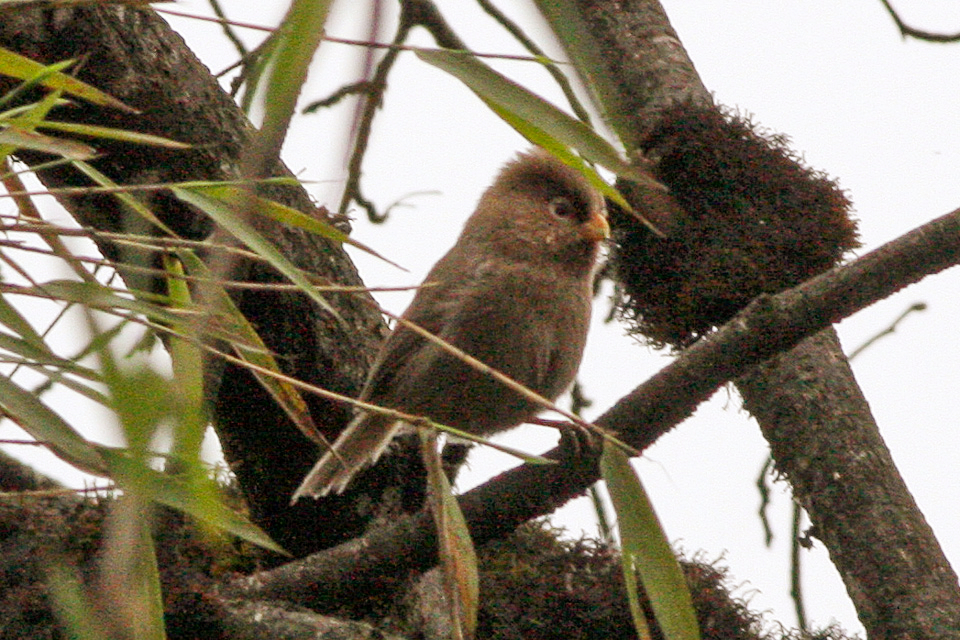
Sylvia ludoviciana
Sylvia ludoviciana
Order: Passeriformes / Family: Sylviidae
About the Sylvia ludoviciana
The Sylvia ludoviciana, commonly known as the Blackthorn Warbler, is a captivating songbird within the family Sylviidae. Known for its melodic tunes and striking plumage, this species thrives in diverse habitats ranging from dense thickets to mature woodlands. The Blackthorn Warbler is particularly significant for its role in controlling insect populations. By adeptly foraging through foliage, it helps maintain the ecological balance within its habitat. This bird is primarily found across parts of Europe and Asia, with populations concentrated in regions such as the Iberian Peninsula and the temperate forests of Eastern Europe. These areas provide the dense undergrowth and mixed forests that the Blackthorn Warbler favors, particularly during the breeding season. During the winter months, it migrates to warmer climates, often settling in the scrublands of Southern Europe or Northern Africa, where it can continue to find ample food and shelter.
The Blackthorn Warbler is a medium-sized passerine, typically measuring around 13 centimeters in length with a wingspan reaching up to 20 centimeters. Its striking appearance is characterized by a predominantly olive-green plumage accented with streaks of black and white. The bird’s underparts are typically a soft gray, providing a contrast to the more vivid colors of its upper body. In the spring and summer, the male’s plumage becomes especially vibrant, a trait used to attract mates during the breeding season. The Blackthorn Warbler's melodious song, a series of trills and whistles, plays a crucial role in territory establishment and mate attraction.
Ecologically, the Blackthorn Warbler plays an essential role in seed dispersal, as well as in controlling insect populations. By consuming a variety of insects and spiders, the bird aids in regulating the numbers of potential pest species. Its presence is often a good indicator of a healthy and balanced ecosystem. This warbler is also noted for its adaptability, able to adjust to different environments during its migratory journey. It demonstrates remarkable resilience, thriving in both rural and suburban settings, provided there is sufficient vegetation to support its dietary and nesting needs.
The Blackthorn Warbler's seasonal behaviors are a fascinating aspect of its life cycle. During the breeding season, it exhibits strong territorial instincts, with males establishing and defending areas through song. As autumn approaches, the warblers begin their migration to warmer regions, traversing vast distances to reach their wintering grounds. This cyclical pattern of movement not only ensures their survival but also contributes to the genetic diversity of the species, as individuals from different populations occasionally intermingle during migration or in shared wintering habitats.
The Sylvia ludoviciana belongs to the family Sylviidae, within the order Passeriformes. These birds typically live Unknown, with limited data available..
How to Identify a Sylvia ludoviciana
The Blackthorn Warbler is easily recognizable by its olive-green upperparts and contrasting gray underparts. Adult males often display brighter plumage during the breeding season, with more pronounced black streaks on their wings and tail. Females and juveniles tend to have duller coloration, lacking the bold contrast seen in males. Juveniles may also display more brownish hues, which help them blend into their surroundings.
In terms of size, the Blackthorn Warbler measures approximately 13 centimeters in length, with a wingspan that can extend up to 20 centimeters. When perched, it often displays a curious posture, tilting its head to survey its surroundings. In flight, the warbler's silhouette is compact yet agile, with quick, direct movements that allow it to navigate through dense foliage.
Confusion with similar species can occur, particularly with other warblers such as the Common Whitethroat. However, the Blackthorn Warbler's distinct olive-green and gray coloration, combined with its specific vocalizations, provide reliable identification markers. Its song, a complex series of trills and whistles, is unique and can often be used to distinguish it from other species when visual identification is challenging.
Having trouble telling birds apart? Upload a photo to our bird identification tool for an instant species match.
Sylvia ludoviciana Habitat and Range
Preferred Habitat
The Blackthorn Warbler predominantly inhabits dense thickets, mixed deciduous woodlands, and scrublands. It prefers areas with abundant undergrowth, which provide both food and shelter. This species is commonly found at elevations ranging from sea level to about 1,500 meters, depending on the region. During the breeding season, it is often spotted in mature woodlands with a rich understory, ideal for nesting.
In winter, the Blackthorn Warbler migrates to warmer climates, often settling in Mediterranean scrublands or open woodlands in Northern Africa. It shows a marked preference for regions that provide dense vegetation, even during winter, allowing it to continue its insectivorous diet.
While it is primarily found in rural and forested areas, the Blackthorn Warbler can also adapt to suburban environments, provided there is sufficient greenery. Its ability to occupy a range of habitats highlights its adaptability and resilience, making it a relatively common sight across its range.
Geographic Range
The Blackthorn Warbler's breeding range extends across much of Europe and into parts of Western Asia. Key regions include the Iberian Peninsula, France, and Eastern European countries like Hungary and Romania. During the breeding season, it occupies a variety of forested landscapes where it can find ample resources for nesting and feeding.
In winter, the Blackthorn Warbler migrates southwards, primarily to the Mediterranean regions of Southern Europe and Northern Africa. Countries such as Spain, Portugal, and Morocco serve as important wintering grounds, offering milder climates and abundant food sources.
Migration corridors for this species often follow traditional flyways across the European continent, with notable stopover sites in countries like Italy and Greece. These areas provide crucial resting and refueling spots during the long journey between breeding and wintering grounds. Population densities are highest in regions with mixed deciduous forests, particularly during the breeding season when suitable habitats are most abundant.
Want to know which birds visit your area? Browse our backyard birds by location guides for region-specific species lists.
What Does the Sylvia ludoviciana Eat?
The Blackthorn Warbler is primarily insectivorous, with a diet consisting mainly of insects and spiders. During the breeding season, it feeds on a variety of invertebrates, including caterpillars, beetles, and aphids, which are abundant in its forested habitat. This diet is crucial for providing the necessary energy for breeding and raising young.
In the winter months, the warbler's diet may shift slightly depending on the availability of food sources. It continues to feed on insects where possible, but may also consume small berries and seeds, particularly in scrubland habitats where these are more plentiful.
Foraging techniques include gleaning insects from leaves and branches, as well as occasional hawking for flying insects. The Blackthorn Warbler's feeding schedule is generally diurnal, with peak activity in the early morning and late afternoon when insect activity is highest. Prey size varies, but it tends to focus on small to medium-sized invertebrates, which it can easily manage with its agile beak.
Sylvia ludoviciana Behavior and Social Structure
The Blackthorn Warbler exhibits a range of interesting behaviors, particularly concerning its social structure and territoriality. During the breeding season, males establish territories through song, vigorously defending them from intruders. These territories are essential for attracting mates and providing a secure environment for raising young.
Courtship displays often involve elaborate singing and aerial displays, with males showcasing their plumage and vocal prowess to potential mates. Once paired, Blackthorn Warblers typically form monogamous bonds for the duration of the breeding season, although instances of extra-pair copulations can occur.
Flocking behavior is more common outside the breeding season, particularly during migration. The Blackthorn Warbler joins mixed-species flocks, which provide safety in numbers and increased foraging opportunities. In response to predators, this species relies on quick, agile flight and alertness, often retreating into dense cover to evade threats.
Daily activity patterns vary with the seasons, but the Blackthorn Warbler generally remains active from dawn to dusk. Its peak periods of activity align with times of high insect availability, ensuring maximum foraging success.
Sylvia ludoviciana Nesting and Reproduction
The Blackthorn Warbler constructs cup-shaped nests, typically located in dense shrubs or low branches of trees. The nest is composed of grasses, twigs, and leaves, intricately woven to provide stability and camouflage. Preferred nesting locations include areas with thick undergrowth, which offer protection from predators and harsh weather.
Clutch size usually ranges from 3 to 5 eggs, with eggs being smooth and pale, often speckled with brown. The incubation period lasts approximately 12-14 days, during which the female primarily incubates the eggs, although the male may occasionally assist. After hatching, both parents share the responsibility of feeding the chicks, which fledge about 10-12 days after hatching.
The Blackthorn Warbler typically raises one brood per year, though in favorable conditions, a second brood may occur. Parental roles are well-defined, with both male and female contributing to the care and protection of their offspring. The fledging timeline is crucial, as young warblers must develop the skills necessary for survival before the onset of winter or migration.
Sylvia ludoviciana Sounds and Vocalizations
The primary song of the Blackthorn Warbler is a melodious series of trills and whistles, often described as sweet and complex. This song serves as both a territorial marker and an attractant for potential mates. The song is usually delivered from a prominent perch, ensuring it carries across the bird's territory.
Call notes are sharp and distinctive, often used for communication between mates or to signal alarm. In response to threats, the Blackthorn Warbler emits a rapid, chattering alarm call, alerting nearby birds to the presence of predators.
During the spring and summer, the Blackthorn Warbler participates in the dawn chorus, adding its voice to the symphony of other songbirds. Its song can be compared to that of the Common Whitethroat, though it is typically more varied and musical in quality.
Interesting Facts About the Sylvia ludoviciana
- 1The Blackthorn Warbler can travel over 3,000 kilometers during its migratory journey between breeding and wintering grounds.
- 2Despite its small size, the Blackthorn Warbler's song can be heard up to 100 meters away, making it a prominent feature of its habitat.
- 3Blackthorn Warblers are known to join mixed-species flocks during migration, enhancing their foraging efficiency and predator avoidance.
- 4A Blackthorn Warbler's nest is typically built within 1-3 meters of the ground, carefully concealed within dense foliage for protection.
- 5The Blackthorn Warbler's diet shifts significantly during migration, often incorporating more fruit and berries in winter months.
- 6This warbler exhibits strong site fidelity, often returning to the same breeding and wintering areas year after year.
- 7The Blackthorn Warbler's melodious song is one of the first to be heard in the dawn chorus, heralding the start of a new day.
Sylvia ludoviciana Conservation Status
The Blackthorn Warbler currently holds a conservation status of Least Concern according to the IUCN. Its population trend appears stable, with fluctuations largely attributed to habitat availability. Primary threats include habitat destruction and climate change, which may alter the distribution of suitable nesting and foraging areas. Conservation efforts focus on habitat preservation, particularly in key breeding and wintering regions. Initiatives include the protection of forested areas and the maintenance of traditional agricultural practices that support biodiversity. Historically, the Blackthorn Warbler's population has remained relatively stable, benefiting from its adaptability to different environments. Continued monitoring and conservation action are essential to ensure that this species continues to thrive in its natural habitats.