
Poicilotis Warbler
Sylvia poicilotis
Order: Passeriformes / Family: Sylviidae
About the Poicilotis Warbler
The Poicilotis Warbler, scientifically known as Sylvia poicilotis, is a captivating songbird belonging to the family Sylviidae. This species is notable for its vibrant coloring and melodious song, making it a favorite among birdwatchers and ornithologists alike. Found primarily in Europe, the Poicilotis Warbler thrives in a range of habitats, from dense woodlands to open shrubberies. Its adaptability to various environments is a testament to its ecological significance. This warbler plays a crucial role in controlling insect populations, as it predominantly feeds on a variety of insects and arthropods. During the breeding season, which typically spans from late spring to early summer, the Poicilotis Warbler establishes territories in deciduous and mixed woodlands. These areas provide abundant food supply and suitable nesting sites, essential for raising their young. In winter, some populations migrate to milder southern regions, although many remain resident in areas with less harsh climates. The Poicilotis Warbler's presence in both rural and suburban settings highlights its adaptability, though it predominantly favors natural environments over urban settings. This warbler's ability to inhabit diverse regions across Europe is indicative of its ecological resilience and importance in maintaining the balance of its native ecosystems. Whether observed flitting through the underbrush or heard singing from a treetop perch, the Poicilotis Warbler remains an integral part of the avian community, contributing to the biodiversity that defines its habitat.
The Poicilotis Warbler belongs to the family Sylviidae, within the order Passeriformes. These birds typically live average 4-6 years with records up to 9 years..
How to Identify a Poicilotis Warbler
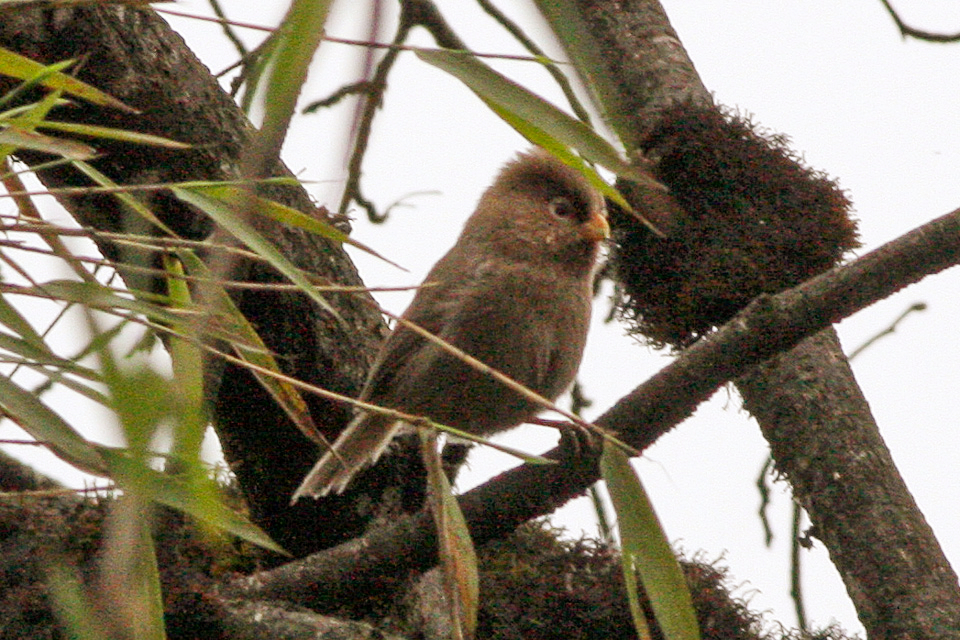
The Poicilotis Warbler can be identified by its striking coloration and distinctive markings. Adult Poicilotis Warblers typically display a combination of olive-green and gray plumage on their upperparts, while their underparts are paler, often showing a subtle yellow or white hue. The bird's crown and nape are a soft gray, contrasting with a white throat and eye-ring that make its eyes appear more prominent. Males and females are similar in appearance, though males may exhibit slightly brighter plumage during the breeding season. Juvenile Poicilotis Warblers are generally duller than adults, lacking the defined eye-ring and exhibiting a more muted overall color palette. In terms of size, this species falls into the small category, measuring approximately 12-13 cm in length with a wingspan of about 18-20 cm. Its flight silhouette is characterized by rapid wing beats and a slightly undulating trajectory, common to many warbler species. While perched, the Poicilotis Warbler often adopts an upright posture, frequently flicking its tail. In the field, it can be confused with other warblers, especially those with similar habitat preferences. However, the Poicilotis Warbler's unique coloration and vocalizations assist in differentiating it from other species.
Having trouble telling birds apart? Upload a photo to our bird identification tool for an instant species match.
Poicilotis Warbler Habitat and Range
Preferred Habitat
The Poicilotis Warbler inhabits a variety of ecosystems across Europe, showcasing its adaptability. It primarily resides in deciduous and mixed woodlands, where it can find ample cover and food sources. These woodlands offer a rich tapestry of trees and shrubs, essential for nesting and foraging. The warbler is also found in scrublands and thickets, particularly during the breeding season when it seeks out dense vegetation for nesting. While it prefers natural habitats, the Poicilotis Warbler can also be observed in managed landscapes such as parks and gardens, especially those with abundant shrubbery. Elevation-wise, it is not restricted to lowland areas and can be found at altitudes up to 1500 meters, though it is more common in lower elevations. Seasonal shifts in habitat do occur, with some populations moving to more sheltered areas during winter, particularly in regions where harsh weather conditions prevail. Despite its presence in semi-urban areas, it tends to avoid heavily urbanized environments, thriving instead in locations where natural elements are predominant.
Geographic Range
The Poicilotis Warbler's range extends across much of Europe, with its breeding grounds concentrated in central and southern regions. Countries such as France, Spain, Italy, and Greece host significant breeding populations, capitalizing on the warm, temperate climate that these areas provide. During the winter months, some populations migrate southward to regions with milder climates, including parts of North Africa and the Mediterranean Basin. However, a substantial number of populations remain resident in their breeding territories year-round, particularly in coastal and lowland areas where winter conditions are less severe. Migration corridors typically follow major river valleys and coastal routes, providing the birds with necessary resources during their journeys. Population density tends to be highest in areas where suitable habitat is abundant, such as the Mediterranean forests and mixed woodlands of the Iberian Peninsula and southern France. The Poicilotis Warbler's range is stable, with no significant contractions or expansions reported in recent years.
Want to know which birds visit your area? Browse our backyard birds by location guides for region-specific species lists.
What Does the Poicilotis Warbler Eat?
The Poicilotis Warbler primarily consumes insects and other small invertebrates, making it an effective natural pest control agent within its ecosystem. Its diet includes a variety of caterpillars, beetles, spiders, and aphids, which it gleans from foliage and branches. During the breeding season, the warbler's diet shifts slightly to accommodate the increased nutritional needs of its chicks, incorporating a higher proportion of protein-rich prey. In autumn and winter, when insect availability decreases, the Poicilotis Warbler supplements its diet with berries and small fruits, such as elderberries and blackberries, ensuring a continuous food supply. The warbler employs a variety of foraging techniques, including hover-gleaning and sallying from perches to capture prey, demonstrating its adaptability in different foraging conditions. Despite its small size, the Poicilotis Warbler is an active forager, spending much of its day searching for food among the leaves and branches of its habitat.
Poicilotis Warbler Behavior and Social Structure
The Poicilotis Warbler exhibits a range of behaviors that reflect its adaptability and survival strategies. Socially, the warbler is primarily solitary or found in pairs, particularly during the breeding season when territoriality is pronounced. Males establish and defend territories through song, using their vocalizations to ward off rivals and attract mates. Courtship displays are subtle, involving song and short flights, often accompanied by raised crest feathers and tail fanning. While the warbler is generally non-aggressive, it will engage in brief skirmishes to defend its territory from intruders. Outside the breeding season, the Poicilotis Warbler may join mixed-species flocks, especially during migration or in winter, which provides safety in numbers and increases foraging efficiency. The bird is diurnal, with peak activity occurring in the early morning and late afternoon when it is most active in foraging and singing. In response to predators, such as raptors and cats, the warbler employs alarm calls and rapid, evasive flights to avoid capture. Its behavior reflects a balance between the need for territorial defense and the demands of foraging and reproduction.
Poicilotis Warbler Nesting and Reproduction
The nesting habits of the Poicilotis Warbler are adapted to maximize reproductive success within its woodland environments. The warbler constructs cup-shaped nests, predominantly using grasses, twigs, and leaves, lined with softer materials like feathers and animal hair. Preferred nesting sites are generally low shrubs or small trees, usually between 1 to 3 meters above the ground, which provide concealment from predators and shelter from adverse weather. The typical clutch size ranges from three to five eggs, which are incubated solely by the female for about 12-14 days. During this period, the male plays a crucial role in defending the territory and providing food for the incubating female. Once hatched, the chicks remain in the nest for approximately 10-12 days before fledging. Both parents participate in feeding the young and continue to care for them even after they leave the nest. The Poicilotis Warbler often raises two broods per season, taking advantage of the extended breeding season in its temperate habitats.
Poicilotis Warbler Sounds and Vocalizations
The Poicilotis Warbler is renowned for its rich and varied song, a key feature of its territorial and mating behavior. The primary song consists of a series of melodious phrases that are both clear and complex, often interspersed with trills and whistles. These vocalizations are delivered from a prominent perch, allowing the sound to carry across the warbler's territory. In addition to its song, the warbler produces a variety of call notes, including a distinctive 'tchik' sound used in communication between mates or to signal alarm. The dawn chorus, a particularly vibrant time for vocalizations, sees the Poicilotis Warbler participating actively, contributing to the cacophony with its full repertoire. Alarm calls are sharper and more urgent in tone, designed to alert both mate and offspring to the presence of threats. The warbler's vocalizations are a primary tool in its social and reproductive interactions, underscoring its role as an active participant in its habitat's soundscape.
Interesting Facts About the Poicilotis Warbler
- 1The Poicilotis Warbler's song can include over 30 different syllable types.
- 2During migration, Poicilotis Warblers can travel up to 1,500 kilometers to reach their wintering grounds.
- 3Poicilotis Warblers have been observed using 'anting,' a behavior where they use ants to clean their feathers.
- 4The oldest recorded Poicilotis Warbler lived to be over 8 years old in the wild.
- 5Their nests are often parasitized by cuckoos, leading to a fascinating evolutionary arms race between the two species.
- 6Despite their small size, Poicilotis Warblers can consume over 1,000 insects in a single day.
- 7The Poicilotis Warbler's preferred nesting areas are often shared with the Eurasian Blackcap, another member of the Sylviidae family.
Poicilotis Warbler Conservation Status
The Poicilotis Warbler currently holds a status of Least Concern on the IUCN Red List, reflecting a stable population trend across its range. However, like many woodland species, it faces ongoing threats from habitat loss and fragmentation due to agricultural expansion and urban development. Conservation efforts focus on protecting and restoring critical woodland habitats, as well as promoting sustainable land-use practices that support biodiversity. Historical data indicates that the warbler's population has remained relatively stable over the past few decades, although localized declines have occurred in areas with significant habitat alteration. Conservation organizations emphasize the importance of continued monitoring and habitat conservation to ensure this species remains a thriving component of Europe's avian diversity.
Other Sylviidae Species



Birds Similar to the Poicilotis Warbler
These species are often confused with the Poicilotis Warbler due to similar appearance or overlapping range.
