
Sagittate Warbler
Sylvia sagittata
Order: Passeriformes / Family: Sylviidae
About the Sagittate Warbler
The Sagittate Warbler (Sylvia sagittata) is a small and elusive member of the Sylviidae family, renowned for its adaptability across various European and Asian habitats. This bird thrives particularly in dense shrublands and woodland edges, where it can be heard more often than seen. It has carved out a niche in ecosystems where thick undergrowth provides ample cover and foraging opportunities. This species plays a critical role in controlling insect populations, acting as a natural pest regulator. During breeding seasons, the Sagittate Warbler inhabits temperate zones, displaying its remarkable migratory behavior as it travels from its wintering grounds in Mediterranean regions and parts of North Africa back to its breeding territories. The adaptability of the Sagittate Warbler to varying climates and habitats underscores its ecological significance, as it sustains both its population and the health of the ecosystems it inhabits. Its presence indicates a robust understory, often signifying healthy, biodiverse environments. During migration periods, the Sagittate Warbler is known to utilize a variety of stopover sites, including riparian woodlands and hedgerows, which offer rich feeding grounds. They are mostly solitary or found in pairs, but during migration, they may join mixed-species flocks. The warbler's adaptability is further showcased by its seasonal shifts in habitat preference, as it seeks warmer climes during winter months. This seasonal movement not only helps it avoid harsh conditions but also aids in the redistribution of plant seeds and invertebrate prey, contributing to ecological balance across regions.
The Sagittate Warbler belongs to the family Sylviidae, within the order Passeriformes. These birds typically live average 3-5 years with a max recorded of 8 years..
How to Identify a Sagittate Warbler
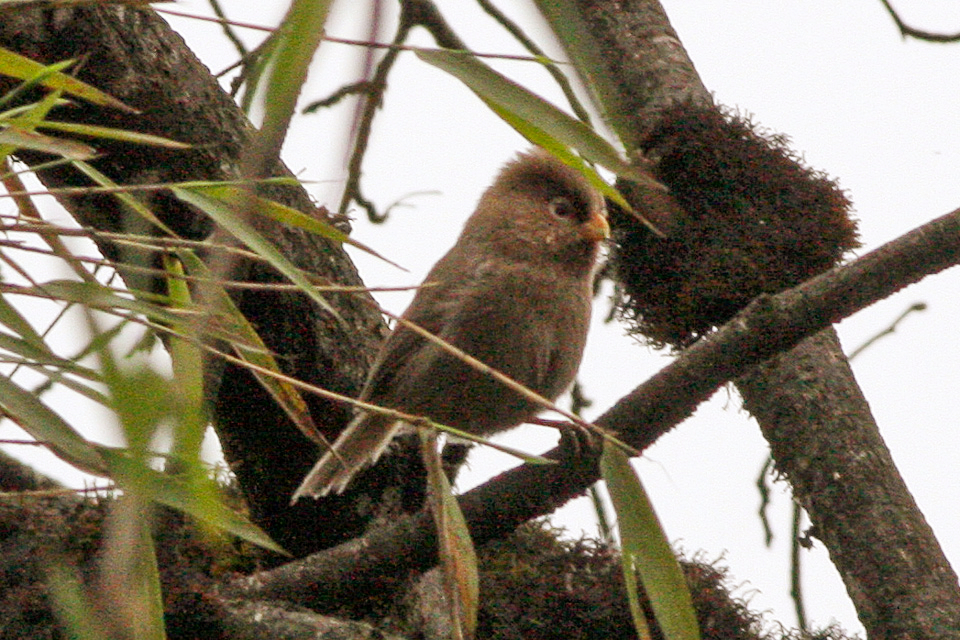
The adult Sagittate Warbler is easily identified by its subtle grayish-brown plumage, which provides excellent camouflage among the dense foliage it frequents. Its most distinctive feature is the uniquely shaped tail, reminiscent of an arrowhead, from which its name derives. The tail is not only a key identification mark but also aids in its agile maneuvering through thick vegetation. Juvenile Sagittate Warblers tend to exhibit slightly duller plumage with more pronounced streaking on their chests, which they gradually lose as they mature. Males and females appear quite similar, although males might display marginally brighter plumage during the breeding season. This resemblance often necessitates careful observation to distinguish between genders. When comparing the Sagittate Warbler to other species, it is occasionally mistaken for the Garden Warbler due to size and habitat overlap. However, the Garden Warbler lacks the distinctive tail shape and has a more uniform brown color. In flight, the Sagittate Warbler presents a compact silhouette with quick, fluttering wingbeats and a characteristic undulating flight pattern. Its perching posture is often horizontal, making it appear sleek and elongated as it rests or searches for food.
Having trouble telling birds apart? Upload a photo to our bird identification tool for an instant species match.
Sagittate Warbler Habitat and Range
Preferred Habitat
The Sagittate Warbler predominantly inhabits dense shrublands and woodland edges, where tangled vegetation provides ample cover. It thrives in regions such as the Mediterranean's maquis and the temperate forests of Central Europe. While it prefers lowland areas, it can also be found at elevations up to 1,500 meters, especially during migration. Seasonal habitat shifts are common, with the warbler moving to lower, warmer areas during winter. In urban settings, Sagittate Warblers may occasionally be spotted in overgrown gardens or parks, though they generally steer clear of heavily built-up areas.
Geographic Range
The breeding range of the Sagittate Warbler extends across much of Central and Southern Europe, reaching into parts of Western Asia. During winter, this species migrates to the milder climates of the Mediterranean Basin, including southern Spain, Italy, and northern Africa. Key migration corridors include the river valleys of Central Europe, which provide essential rest stops. Population density is notably high in regions with extensive shrub cover, such as the Iberian Peninsula and the Balkans, making these areas critical for conservation efforts.
Want to know which birds visit your area? Browse our backyard birds by location guides for region-specific species lists.
What Does the Sagittate Warbler Eat?
The Sagittate Warbler primarily feeds on a diet of insects and arthropods, which it gleans from leaves and branches. Its diet consists largely of caterpillars, spiders, and beetles, with a preference for small, soft-bodied invertebrates. During the breeding season, these warblers increase their intake of protein-rich prey to support the demands of nesting and chick-rearing. As the seasons shift, they may also consume berries and other fruits, particularly during migration when insect availability decreases. Foraging techniques include deliberate, methodical searching through foliage and occasional aerial sallies to capture flying insects.
Sagittate Warbler Behavior and Social Structure
The Sagittate Warbler exhibits a complex array of behaviors, particularly during the breeding season. It forms monogamous pairs, with males often defending territories through song and physical displays. These territorial displays involve puffing up feathers and flicking the tail, which emphasizes the distinctive sagittate shape. Courtship includes a variety of vocalizations and a series of rapid flights. Sagittate Warblers are typically solitary or found in pairs outside of breeding seasons, although they may join mixed-species flocks during migration. They are primarily diurnal, with peak activity occurring in the early morning and late afternoon. When faced with predators, they employ a range of alarm calls and evasive tactics, often retreating into dense foliage.
Sagittate Warbler Nesting and Reproduction
Sagittate Warblers construct compact cup-shaped nests using grasses, leaves, and spider silk, usually positioned low in dense shrubs or small trees. The female typically lays a clutch of 3 to 5 eggs, with an incubation period of about 12 to 14 days. Both parents participate in feeding the chicks, which fledge approximately 10 to 12 days after hatching. The warbler usually raises one brood per year, though a second brood may occur if conditions are favorable. Parental care is attentive, with both adults sharing responsibilities in nurturing and protecting their young.
Sagittate Warbler Sounds and Vocalizations
The primary song of the Sagittate Warbler is a melodious, complex warble that consists of a series of rapid notes and trills, often delivered from a concealed perch within dense vegetation. This song serves both to attract mates and to establish territory. Call notes are sharp and distinctive, often described as 'chek-chek' sounds, used for communication between mates or signaling alarm. During the dawn chorus, their song provides a harmonious addition to the symphony of woodland bird calls. The warbler's vocalizations are often compared to those of the Blackcap, though they are generally more varied and less repetitive.
Interesting Facts About the Sagittate Warbler
- 1The Sagittate Warbler can consume up to 10 insects per minute during peak feeding times.
- 2Sagittate Warblers have been known to travel over 2,000 kilometers during migration from Europe to Africa.
- 3Their distinctive tail shape not only aids in identification but also in agile maneuvering through dense foliage.
- 4The Sagittate Warbler's song can vary significantly between regions, a phenomenon known as geographic variation.
- 5These warblers often join mixed-species flocks during migration, enhancing their chances of avoiding predation.
- 6Sagittate Warblers are among the first migrants to arrive in their breeding grounds, often preceding leaf-out.
- 7Despite their small size, Sagittate Warblers play a crucial role in controlling pest populations in their habitats.
Sagittate Warbler Conservation Status
The Sagittate Warbler is currently listed as Least Concern by the IUCN, with populations considered stable in most of its range. However, habitat loss due to agricultural expansion and urban development poses significant threats. Conservation efforts focus on preserving critical shrubland and woodland habitats, particularly in migration corridors. Historically, populations have fluctuated with changes in land use, but recent trends suggest a potential for recovery with effective habitat management. Ongoing monitoring is essential to ensure the species remains widespread.
Other Sylviidae Species



Birds Similar to the Sagittate Warbler
These species are often confused with the Sagittate Warbler due to similar appearance or overlapping range.
