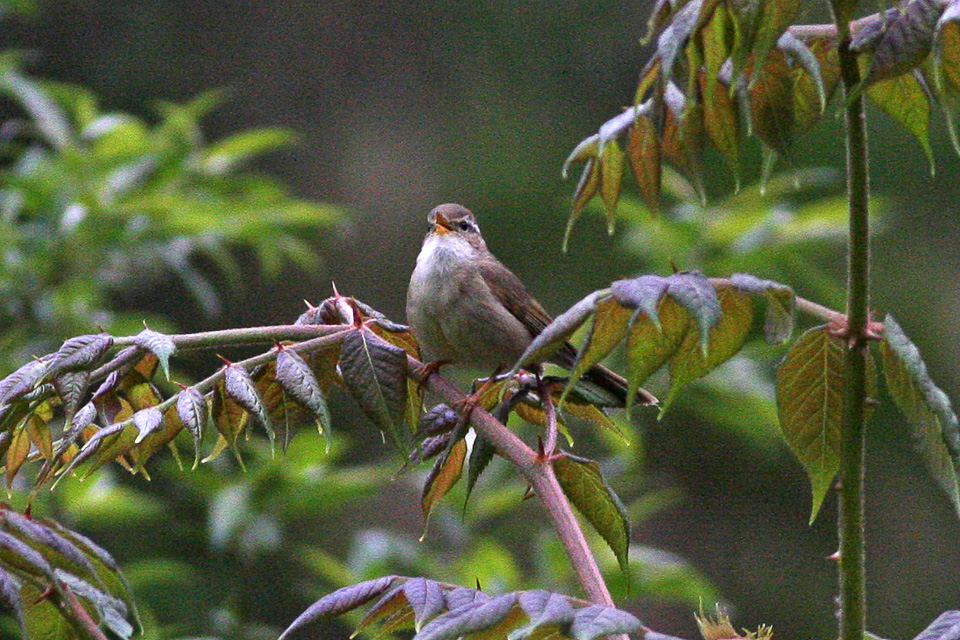
Taliabu Leaf-Warbler
Phylloscopus emilsalimi
Order: Passeriformes / Family: Phylloscopidae

Wikimedia Commons
About the Taliabu Leaf-Warbler
The Taliabu Leaf-Warbler, scientifically designated as Phylloscopus emilsalimi, inhabits the dense forests of Taliabu Island in Indonesia. This species was only recently described in 2013, highlighting the ongoing discoveries in ornithology. Its presence is a key indicator of the health of its limited habitat as it thrives in primary and secondary montane forests. The bird plays a vital role in its ecosystem by controlling insect populations, thus maintaining a balance that supports forest health.
Endemic to Taliabu Island in the Sula Islands, the Taliabu Leaf-Warbler is a testament to the island's unique biodiversity. Its reliance on the forest environment makes it particularly sensitive to habitat alterations. The bird is active primarily during daylight, frequently foraging in the mid to upper canopy layers. This habitat specialization underscores its ecological significance, as it contributes to pest control and pollination within its limited range.
The Taliabu Leaf-Warbler exhibits seasonal behaviors largely driven by its breeding cycle. During the breeding season, it becomes more vocal and territorial, asserting its presence through song. Outside the breeding months, it may join mixed-species foraging flocks, thereby enhancing its feeding efficiency while reducing predation risk. Such behaviors highlight the adaptability of the Taliabu Leaf-Warbler to its challenging island environment.
Preserving the Taliabu Leaf-Warbler requires attention to the conservation of its habitat. As the forests of Taliabu face threats from logging and land conversion, understanding and protecting this bird's ecological role is crucial for maintaining the island's biodiversity. The bird's discovery emphasizes the need for continued research and conservation efforts in the region.
The Taliabu Leaf-Warbler belongs to the family Phylloscopidae, within the order Passeriformes. These birds typically live up to 5 years in the wild, with no specific maximum recorded..
How to Identify a Taliabu Leaf-Warbler
The Taliabu Leaf-Warbler can be identified by its olive-green upperparts and pale yellowish-white underparts. This small songbird, measuring around 10-12 cm in length, features a distinguishing supercilium, or eyebrow line, that is a lighter shade of yellow. The wings display faint dark barring, which becomes noticeable during flight.
Juvenile Taliabu Leaf-Warblers have a somewhat duller plumage compared to adults, lacking the vividness of the olive tones. Both males and females appear similar, making sexual dimorphism minimal in this species. However, during the breeding season, males may exhibit slightly more vibrant coloration, likely due to hormonal changes associated with mating displays.
Confusion may arise with other Phylloscopus species, but the Taliabu Leaf-Warbler's specific vocalizations and distinct range help distinguish it. In flight, it presents a compact silhouette with rapid wingbeats, typical of Phylloscopus warblers. When perched, this species often adopts an upright posture, accentuating the bright supercilium.
Having trouble telling birds apart? Upload a photo to our bird identification tool for an instant species match.
Taliabu Leaf-Warbler Habitat and Range
Preferred Habitat
The Taliabu Leaf-Warbler inhabits the montane forests of Taliabu Island, primarily within elevations ranging from 800 to 1,600 meters. It favors dense, humid forests where the canopy provides ample cover and food resources. The bird is particularly associated with areas that have a mix of primary and secondary growth, allowing it to exploit a variety of insect prey.
Seasonally, the Taliabu Leaf-Warbler may shift slightly within its elevation range, following food availability and breeding requirements. This species is not typically found in urban or heavily altered landscapes, reflecting its dependence on intact forest ecosystems. Its presence in rural settings is rare, and it is generally found far from human habitation, highlighting its sensitivity to habitat disturbance.
Geographic Range
The Taliabu Leaf-Warbler is endemic to Taliabu Island in the Sula Islands of Indonesia. Its range is confined to this single island, making it a species of particular conservation concern due to its limited distribution. The bird does not exhibit long-distance migration, remaining within its montane forest habitat throughout the year.
Population density is highest in regions where forest cover is dense and undisturbed. The bird is absent from lower elevations and coastal areas, which lack the appropriate forest habitat. Its restricted range on Taliabu Island emphasizes the importance of localized conservation efforts to ensure its survival.
Want to know which birds visit your area? Browse our backyard birds by location guides for region-specific species lists.
What Does the Taliabu Leaf-Warbler Eat?
The diet of the Taliabu Leaf-Warbler primarily consists of insects and other small invertebrates. It forages by gleaning these prey items from leaves and branches in the mid to upper canopy. During the breeding season, the abundance of insects increases, providing ample food for both adults and chicks.
This species employs a range of foraging techniques, including hovering briefly to snatch insects from the underside of leaves. The Taliabu Leaf-Warbler is typically active during daylight hours, with peak feeding occurring in the early morning and late afternoon. It targets prey of small to medium size, focusing on caterpillars, spiders, and beetles.
Seasonal variations in diet are minimal due to the consistent availability of food within its habitat. However, during periods of insect scarcity, the bird may extend its foraging range slightly, demonstrating its adaptability to fluctuating resource levels.
Taliabu Leaf-Warbler Behavior and Social Structure
The Taliabu Leaf-Warbler exhibits a solitary or pair-based social structure, particularly during the breeding season when pairs become territorial. Males establish territories through song, defending them vigorously from intruding males. Courtship involves complex displays, including song duets and synchronized movements.
Outside the breeding season, the Taliabu Leaf-Warbler may form loose associations with other insectivorous birds, participating in mixed-species flocks. This behavior reduces predation risk and enhances foraging efficiency as birds benefit from each other's vigilance.
The bird responds to predators with alarm calls and evasive flight. Daily activity peaks during early morning and late afternoon when it is most actively foraging. During midday heat, it tends to rest in shaded areas of the canopy, conserving energy.
Taliabu Leaf-Warbler Nesting and Reproduction
The Taliabu Leaf-Warbler constructs cup-shaped nests using moss, leaves, and fine grasses. Nests are typically located in dense foliage or low tree branches within its forest habitat, providing camouflage from predators.
Clutch size ranges from 2 to 4 eggs, with both parents involved in incubation, which lasts approximately 14 days. After hatching, chicks remain in the nest for about two weeks before fledging. The parents share responsibilities equally, including feeding and protecting the young.
This species generally raises one brood per year, although in optimal conditions, a second brood may be attempted. The timing of breeding coincides with the peak availability of insect prey, ensuring food abundance for the growing chicks.
Taliabu Leaf-Warbler Sounds and Vocalizations
The Taliabu Leaf-Warbler's song is a series of high-pitched, melodious whistles that rise and fall in pitch, creating a distinctive musical quality. Males sing frequently during the breeding season to attract mates and establish territory.
Its call notes are sharp and short, often used for communication between mates or to signal alarm. Alarm calls become more frequent in the presence of predators, serving to alert nearby individuals.
The dawn chorus of the Taliabu Leaf-Warbler is particularly notable, with males vocalizing vigorously to assert their presence at the start of the day. These vocalizations are a key tool for identification in the field.
Interesting Facts About the Taliabu Leaf-Warbler
- 1The Taliabu Leaf-Warbler was described as a new species only in 2013, highlighting its unique status in ornithology.
- 2This warbler is endemic to Taliabu Island and is not found anywhere else in the world, making it a true island specialist.
- 3Despite its small size, the Taliabu Leaf-Warbler plays a significant role in controlling insect populations in its forest habitat.
- 4The bird's song is one of the primary ways it establishes territory, with males singing prominently during the breeding season.
- 5The Taliabu Leaf-Warbler's habitat is restricted to elevations between 800 and 1,600 meters, emphasizing its specific ecological niche.
- 6Logging and habitat destruction are major threats to this species, underscoring the need for targeted conservation efforts.
- 7The bird's discovery is a reminder of the rich biodiversity yet to be fully explored on remote Indonesian islands.
Taliabu Leaf-Warbler Conservation Status
The Taliabu Leaf-Warbler is currently classified as Near Threatened by the IUCN due to its restricted range and habitat vulnerability. Population trends are not well-documented, but habitat loss from logging and agricultural expansion poses significant threats. Conservation efforts focus on habitat protection, including the establishment of reserves and sustainable forest management practices. Historical population data is limited, but ongoing research aims to monitor changes and implement effective conservation strategies. Protecting the forests of Taliabu Island remains crucial for the survival of this species. Efforts to raise awareness and engage local communities are vital in ensuring that conservation measures are successful.