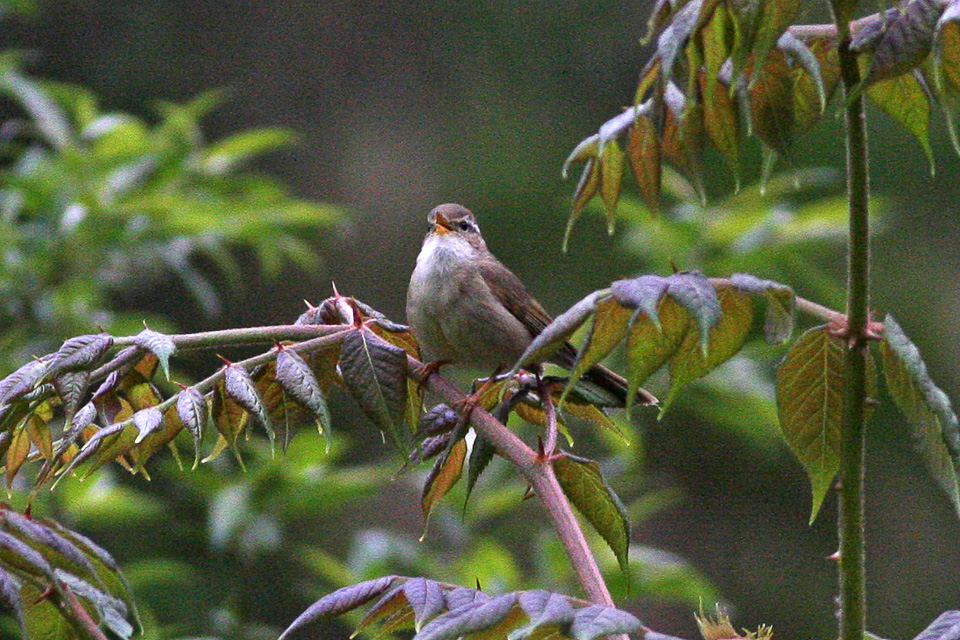
Western Crowned Warbler
Phylloscopus occipitalis
Order: Passeriformes / Family: Phylloscopidae

Wikimedia Commons
About the Western Crowned Warbler
The Western Crowned Warbler (Phylloscopus occipitalis) is a small, agile bird that inhabits the dense forests of the Western Himalayas and parts of Central Asia. As a member of the Phylloscopidae family, this warbler is known for its subtle yet distinctive crown stripe and its melodious song. Its ecological role is significant, as it assists in controlling insect populations, contributing to the health of forest ecosystems. These warblers are migratory, breeding in the higher altitudes of the Himalayas during the summer months and moving to lower altitudes in India and Southeast Asia for the winter. Their preferred habitats include mixed deciduous and coniferous forests, often at elevations ranging from 1,500 to 3,500 meters. In these environments, the Western Crowned Warbler plays a crucial role in the ecosystem, both as a predator of insects and as a prey species for larger birds and mammals. Seasonal behaviors of the Western Crowned Warbler are particularly interesting. During the breeding season, they are highly territorial, with males singing vigorously to establish and defend their territories. This period sees increased activity as they select mates and build nests. In the winter, they exhibit more social behavior, sometimes forming mixed-species foraging flocks, which help them locate food more efficiently. Their choice of habitat shifts slightly during this time, as they favor lower elevations where insect activity remains higher during the cooler months. The Western Crowned Warbler is also significant from a conservation perspective. Its presence in an area is often an indicator of a healthy forest ecosystem, as it relies on pristine environments relatively free of pollution and deforestation. Conservation efforts for this species focus on preserving these habitats, which are under threat from human activities such as logging and agriculture. Understanding the ecological needs and behaviors of the Western Crowned Warbler is essential for maintaining the biodiversity of the regions they inhabit.
The Western Crowned Warbler belongs to the family Phylloscopidae, within the order Passeriformes. These birds typically live average 6 years, with some living up to 8 years..
How to Identify a Western Crowned Warbler
Identifying the Western Crowned Warbler in the field can be a rewarding challenge for birders. Adult plumage is primarily olive-green on the upper parts, with a distinct, pale crown stripe running along the head, which is a key feature for identification. The underparts are generally whitish, with a tinge of yellow, especially around the throat and flanks. Juveniles appear similar to adults but may display slightly duller colors. There is little sexual dimorphism in this species, so males and females look alike. One might confuse the Western Crowned Warbler with other Phylloscopus species, such as the Greenish Warbler, but its crown stripe sets it apart. When in flight, the Western Crowned Warbler shows a quick, darting movement, often with rapid wing beats, typical of warblers. Its perching posture is upright, and it often flicks its tail, a behavior that aids in identification. Observing these field marks and behaviors can help differentiate it from similar species, especially in regions where multiple Phylloscopus species coexist.
Having trouble telling birds apart? Upload a photo to our bird identification tool for an instant species match.
Western Crowned Warbler Habitat and Range
Preferred Habitat
The Western Crowned Warbler predominantly occupies montane forests, thriving in the lush environments of the Western Himalayas. It favors mixed deciduous and coniferous forests, often at elevations ranging from 1,500 to 3,500 meters. During the breeding season, it seeks out dense understoreys and areas with abundant foliage, which provide ample insect prey and nesting sites. In the winter months, the warbler descends to lower altitudes, often inhabiting subtropical and tropical lowland forests. It is less frequently found in urban areas, preferring the seclusion and resources available in rural and forested environments. Seasonal habitat shifts are typical for this species, following food availability and climate changes.
Geographic Range
The breeding range of the Western Crowned Warbler extends across the Western Himalayas, from northern Pakistan through northern India to Nepal. During the non-breeding season, it migrates to lower altitudes and can be found in the foothills of the Himalayas, as well as in parts of northern India and Southeast Asia, including Bangladesh and Myanmar. It follows well-established migration corridors along river systems and forested valleys. Population density hotspots include the forests of Himachal Pradesh and Uttarakhand, where large numbers gather during the breeding season. Its migration is influenced by seasonal changes, moving to areas with plentiful food supply and milder climates during the winter.
Want to know which birds visit your area? Browse our backyard birds by location guides for region-specific species lists.
What Does the Western Crowned Warbler Eat?
The diet of the Western Crowned Warbler primarily consists of insects and other small invertebrates. It feeds on a variety of insects, including caterpillars, beetles, and spiders, which it gleans from leaves and branches. During the breeding season, the warbler's diet may shift to include more caterpillars, which are abundant and provide essential nutrients for raising young. In the non-breeding season, it may expand its diet to include some berries and seeds, although insects remain the primary food source. The warbler employs a foraging technique characterized by short, agile movements, often hanging upside down to reach insects hidden on the underside of leaves. Its feeding schedule is primarily diurnal, with peaks in activity during early morning and late afternoon when insect activity is highest.
Western Crowned Warbler Behavior and Social Structure
The Western Crowned Warbler exhibits a range of interesting behaviors, particularly in social and territorial contexts. During the breeding season, males establish territories and engage in vigorous singing to attract females and ward off rivals. The song is an important component of their courtship display, along with aerial chases and wing-fluttering displays. These warblers are generally solitary or found in pairs during the breeding season, but in the non-breeding season, they may join mixed-species foraging flocks, which enhance their foraging efficiency and provide protection from predators. In response to predators, the Western Crowned Warbler exhibits alarm calls and erratic flight behavior to evade capture. Its daily activity patterns are influenced by environmental factors, with increased activity during cooler parts of the day and reduced movement in extreme temperatures. These behaviors highlight the adaptability and ecological significance of the Western Crowned Warbler in its natural habitat.
Western Crowned Warbler Nesting and Reproduction
Nesting for the Western Crowned Warbler involves careful selection of site and materials. Nests are typically cup-shaped and constructed from grass, leaves, and other soft vegetation, often lined with feathers for insulation. They are usually placed low in shrubs or trees, offering protection from predators and the elements. The clutch size ranges from 3 to 5 eggs, with incubation lasting around 12 to 14 days. Both parents share in the incubation duties and in feeding the chicks once hatched. The fledging period lasts approximately 10 to 14 days, after which the young warblers continue to be fed by the parents until they are fully independent. In a favorable season, the Western Crowned Warbler may produce two broods, ensuring a higher survival rate for its offspring.
Western Crowned Warbler Sounds and Vocalizations
The Western Crowned Warbler's primary song is a series of high-pitched, melodic notes delivered with a rapid rhythm. This song, often likened to a musical trill, serves both to attract mates and to establish territory. In addition to its song, the warbler produces a variety of call notes, including sharp 'chit' sounds used for communication between individuals. Alarm calls are harsher and more urgent, serving as a warning to other birds of potential danger. During the dawn chorus, the warbler's song is particularly prominent, as males compete acoustically in the still morning air. These vocalizations are an integral part of the warbler's behavioral repertoire and are crucial for its survival and reproductive success.
Interesting Facts About the Western Crowned Warbler
- 1The Western Crowned Warbler can be quite elusive, despite being vocal, because it often forages in dense foliage.
- 2This warbler species is known to migrate over long distances, sometimes covering over 1,000 kilometers between breeding and wintering grounds.
- 3Western Crowned Warblers are adept at catching insects in mid-air, using their agility and speed to capture prey.
- 4During the breeding season, males can sing for several hours a day to establish and maintain their territory.
- 5The warbler's bright crown stripe is not only a key identification feature but also plays a role in species recognition and mate selection.
Western Crowned Warbler Conservation Status
The Western Crowned Warbler is currently classified as Least Concern by the IUCN, with populations considered stable. However, primary threats include habitat loss due to deforestation and agricultural expansion. Conservation efforts focus on habitat preservation and management, particularly in breeding areas where forest health is vital. Historical population changes have been minimal, but localized declines are possible in areas facing severe environmental pressures. Ongoing monitoring and conservation action are necessary to ensure that this species continues to thrive in its natural habitat.