
White-bellied Crested-Flycatcher
Elminia albiventris
Order: Passeriformes / Family: Stenostiridae

Wikimedia Commons
About the White-bellied Crested-Flycatcher
The White-bellied Crested-Flycatcher, scientifically named Elminia albiventris, is a small yet captivating member of the Stenostiridae family. This bird is primarily found in the montane forests of Central Africa, including countries like Uganda, Rwanda, and Burundi. Its presence is often noted in the lush forests that encircle the Rwenzori Mountains and the Albertine Rift. These regions, marked by their rich biodiversity, provide a perfect backdrop for the flycatcher's agile foraging and striking appearance. This species plays a significant ecological role as an insectivore, helping control insect populations and thus maintaining the ecological balance within its habitat. The White-bellied Crested-Flycatcher typically inhabits elevations ranging from 1,500 to 3,000 meters, where it frequents the understory and mid-canopy of dense forests. Throughout the year, these birds are non-migratory, which means they rely heavily on the stability of their montane forest habitats. Seasonal changes in insect populations influence their foraging behavior, especially during the wetter months when insect abundance peaks. During these times, the flycatcher becomes more active, capitalizing on the increased food supply to rear its young. The White-bellied Crested-Flycatcher is a delightful sight for bird enthusiasts and an integral component of its ecosystem, showcasing the intricate connections between avian species and their environments.
The White-bellied Crested-Flycatcher belongs to the family Stenostiridae, within the order Passeriformes. These birds typically live average 4-5 years with a maximum recorded of 7 years..
How to Identify a White-bellied Crested-Flycatcher
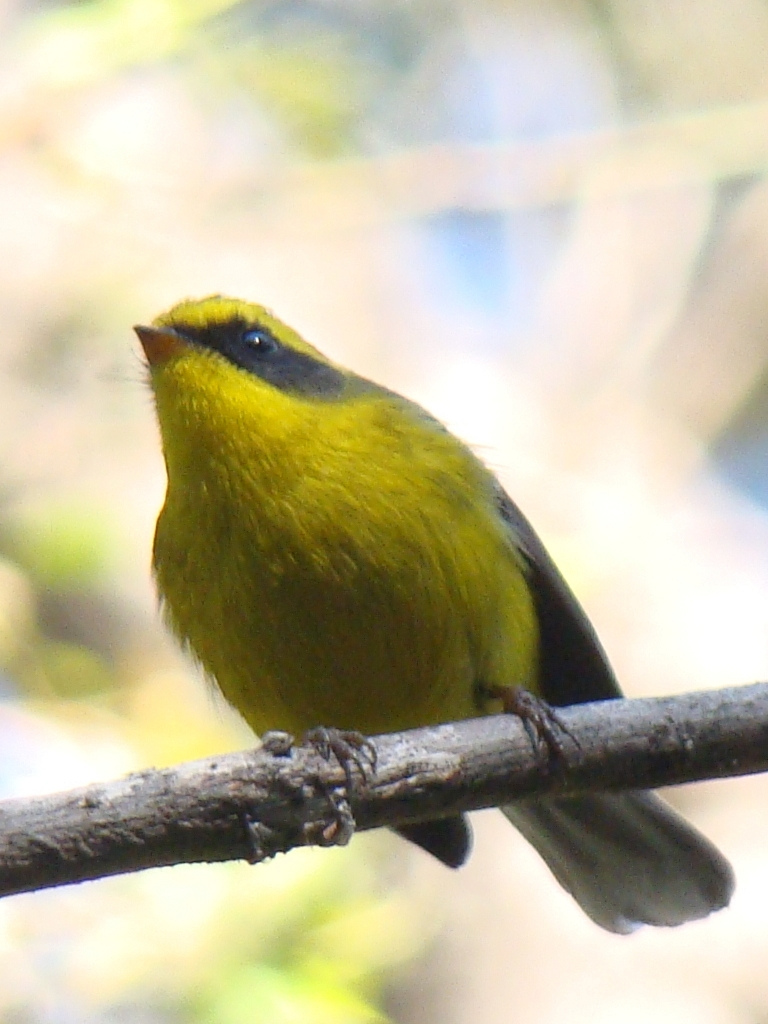
The White-bellied Crested-Flycatcher stands out with its vibrant plumage and distinctive physical features. Adults have a striking blue-gray upper body, contrasted sharply by a pure white belly and undertail. The crest, which gives the bird part of its name, is noticeable and often raised when the bird is alert or excited. Juveniles, while similar, may exhibit a slightly duller color palette, lacking the full vibrancy of the adults. Both males and females share similar plumage, making it difficult to distinguish between the sexes based solely on appearance. However, during the breeding season, males may exhibit more pronounced crests and engage more frequently in display behaviors. Compared to other crested flycatchers, the White-bellied Crested-Flycatcher can be confused with the Blue Crested-Flycatcher, but the latter lacks the white belly that is characteristic of Elminia albiventris. In flight, the White-bellied Crested-Flycatcher presents a rounded silhouette with short wings and a medium-length tail, which it often fans out during acrobatic maneuvers. Its perching posture is typically upright and alert, often accompanied by rapid movements as it scans for prey.
Having trouble telling birds apart? Upload a photo to our bird identification tool for an instant species match.
White-bellied Crested-Flycatcher Habitat and Range
Preferred Habitat
The White-bellied Crested-Flycatcher thrives in montane forests, preferring the dense foliage and varied vertical structure of these environments. It is commonly found in regions like the Rwenzori Mountains and along the Albertine Rift, which offer the ideal combination of altitude and forest density. These habitats provide ample opportunities for foraging and nesting, with a rich supply of insects drawn to the plentiful vegetation. The flycatcher can be seen at elevations between 1,500 and 3,000 meters, where the cooler temperatures and consistent moisture levels create a stable environment. While primarily a forest dweller, the White-bellied Crested-Flycatcher may occasionally venture into adjacent forest edges and clearings, especially when searching for food or during dispersal of young birds. Unlike many other species, it does not adapt well to urban or heavily cultivated areas, relying instead on the intact forest ecosystems for survival. Seasonal habitat shifts are minimal, as the bird is non-migratory and remains resident in its montane home year-round.
Geographic Range
The White-bellied Crested-Flycatcher's range is primarily concentrated in the montane forests of Central Africa. It is found in countries such as Uganda, Rwanda, Burundi, and the eastern Democratic Republic of the Congo. These areas are characterized by their high altitudes and lush forest environments, which are crucial for the bird's survival. The species is a year-round resident, with no significant migration patterns noted. Its breeding range aligns closely with its general distribution, as the stable montane habitats provide consistent resources throughout the year. Though the bird is localized to these specific regions, within its range, the White-bellied Crested-Flycatcher is commonly encountered in suitable habitats. Population density hotspots include the forests surrounding the Rwenzori Mountains and the Virunga Massif, areas known for their rich avian diversity. These regions not only support this particular flycatcher but also host a multitude of other endemic and migratory bird species, making them critical for conservation.
Want to know which birds visit your area? Browse our backyard birds by location guides for region-specific species lists.
What Does the White-bellied Crested-Flycatcher Eat?
The White-bellied Crested-Flycatcher primarily feeds on insects, playing a vital role as an insectivore in its montane forest habitat. Its diet consists mainly of small arthropods, including beetles, flies, and caterpillars. During the wetter months, when insect populations surge, the bird takes advantage of the abundance to feed more frequently and support its energetic demands, especially during the breeding season. The flycatcher employs a sallying technique to capture prey, characterized by short, swift flights from a perch to snatch insects mid-air. It also gleans insects from leaves and branches, demonstrating versatility in its foraging strategies. Prey size is generally small, allowing the bird to consume it quickly and efficiently. The White-bellied Crested-Flycatcher is most active during the early morning and late afternoon, when insect activity is at its peak. Its feeding schedule is adapted to these times, ensuring maximum foraging success.
White-bellied Crested-Flycatcher Behavior and Social Structure
The White-bellied Crested-Flycatcher exhibits a variety of intriguing behaviors that reflect its adaptability and sociality. It is generally observed in pairs or small family groups, particularly during the breeding season, where cooperative behaviors are prominent. The bird is territorial, with males defending their space through vocalizations and physical displays. Courtship involves rapid flights and display of the crest, which are visually striking and serve to attract females. When not breeding, the flycatcher may join mixed-species flocks, enhancing its foraging efficiency by reducing individual predation risk. Its response to predators includes high-pitched alarm calls and evasive maneuvers, often retreating to dense foliage for cover. Daily activity patterns are diurnal, with peak activity occurring in the early morning and late afternoon. This timing coincides with the increased availability of prey, allowing the bird to maximize its foraging success while minimizing energy expenditure.
White-bellied Crested-Flycatcher Nesting and Reproduction
The nesting habits of the White-bellied Crested-Flycatcher are finely tuned to its montane environment. It constructs cup-shaped nests using materials such as moss, lichen, and fine twigs, which it skillfully weaves together to create a secure structure. Nests are typically located in shrubs or small trees, positioned several meters above the ground to protect against ground-based predators. The clutch size generally consists of 2-3 eggs, which are incubated by the female for a period of approximately 14-16 days. Both parents participate in feeding the nestlings, ensuring a steady supply of insects. The fledging period lasts about 16-20 days, during which time the young birds remain in close proximity to their parents, learning essential foraging and survival skills. The species is known to produce one to two broods per year, depending on environmental conditions and food availability.
White-bellied Crested-Flycatcher Sounds and Vocalizations
The White-bellied Crested-Flycatcher's vocalizations are a defining characteristic, with a primary song that is melodic and complex. The song consists of a series of high-pitched whistles and trills, delivered in rapid succession. These vocalizations serve multiple purposes, including territory defense and mate attraction. In addition to its song, the flycatcher emits distinctive call notes, which are shorter and more abrupt, used for communication between mates or signaling alarm. Alarm calls are sharp and piercing, serving as an effective deterrent against potential predators. During the dawn chorus, the bird is particularly vocal, joining the symphony of sounds that define the forest's awakening. Its calls and songs contribute to the rich acoustic landscape of its habitat, adding to the overall biodiversity of the region.
Interesting Facts About the White-bellied Crested-Flycatcher
- 1The White-bellied Crested-Flycatcher can raise its crest to communicate excitement or alarm, a behavior that fascinates birdwatchers.
- 2This flycatcher, although small, plays a significant role in controlling insect populations, showcasing its ecological importance.
- 3The species is an accomplished acrobat, capable of performing agile aerial maneuvers while hunting insects mid-flight.
- 4Both male and female White-bellied Crested-Flycatchers share responsibilities in raising their young, reflecting a cooperative breeding strategy.
- 5The bird's melodic song, often heard at dawn, contributes to the rich soundscape of its montane forest habitat.
White-bellied Crested-Flycatcher Conservation Status
The White-bellied Crested-Flycatcher is currently classified as Least Concern by the IUCN, reflecting a stable population trend. However, the species faces localized threats, primarily habitat loss due to deforestation and land conversion for agriculture. Conservation efforts focus on preserving montane forest habitats and promoting sustainable land use practices. In regions like the Albertine Rift, conservation organizations are working to establish protected areas and community-based conservation initiatives. Historically, the bird's population has remained relatively stable, benefiting from its specialized habitat preferences that are less susceptible to widespread human encroachment. Continued conservation of its montane forest habitats is essential to ensure the species continues to thrive.
Other Stenostiridae Species


Birds Similar to the White-bellied Crested-Flycatcher
These species are often confused with the White-bellied Crested-Flycatcher due to similar appearance or overlapping range.