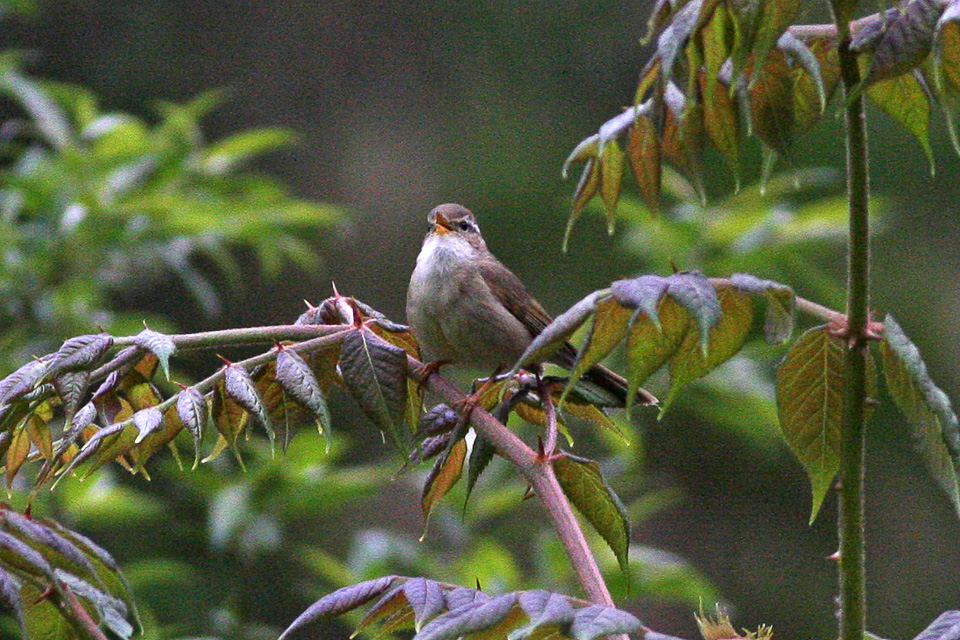
Yellow-browed Warbler
Phylloscopus inornatus
Order: Passeriformes / Family: Phylloscopidae

Wikimedia Commons
About the Yellow-browed Warbler
The Yellow-browed Warbler, scientifically known as Phylloscopus inornatus, is a small passerine bird within the Phylloscopidae family. This species is renowned for its high-pitched calls and vibrant plumage, which make it a favorite among bird watchers and ornithologists alike. Originally native to the forests of Asia, particularly Siberia, Mongolia, and parts of China, this bird has increasingly been sighted in Western Europe, marking it as a fascinating subject of study in the context of avian migration patterns. The Yellow-browed Warbler plays a significant ecological role in its habitat by aiding in insect population control. Its diet primarily consists of small insects, which it skillfully extracts from leaves and branches. During the breeding season, these warblers establish territories in dense, leafy forests, where they construct their nests and rear their young. Their presence in various regions highlights the adaptability and resilience of the species. In terms of seasonal behaviors, the Yellow-browed Warbler is a long-distance migrant. It breeds in the coniferous and mixed forests across Siberia and migrates to Southeast Asia and increasingly to Europe during the winter months. This migration pattern is not only a testament to the bird's adaptability but also a subject of interest for researchers studying the effects of climate change on migratory birds. The warbler's movements are influenced by seasonal changes, with birds departing their breeding grounds as temperatures drop and food availability decreases. Observations have shown that these birds often travel in mixed-species flocks, which may provide added protection against predators during their lengthy journeys.
The Yellow-browed Warbler belongs to the family Phylloscopidae, within the order Passeriformes. These birds typically live typically 2-3 years with a maximum recorded of 5 years..
How to Identify a Yellow-browed Warbler
Identifying the Yellow-browed Warbler involves noting several key field marks. Adult warblers display a bright, pale yellow supercilium or 'eyebrow' stripe, which contrasts sharply with their olive-green upperparts and pale underparts. The wings have two distinct, pale wing bars, aiding in identification. Juvenile birds resemble adults but may have duller plumage, with less distinct wing bars. Male and female warblers appear similar, though some subtle variations in size may occur, with males being slightly larger. Confusion can arise with similar species such as the Pallas's Leaf Warbler, which displays a central crown stripe, absent in the Yellow-browed Warbler. In flight, the bird appears small and agile, with rapid wing beats. When perched, it often adopts an upright posture, flicking its tail and wings, behavior that is helpful for identification during field observations.
Having trouble telling birds apart? Upload a photo to our bird identification tool for an instant species match.
Yellow-browed Warbler Habitat and Range
Preferred Habitat
The Yellow-browed Warbler primarily inhabits dense, mixed and coniferous forests. During breeding, it prefers the Siberian taiga and mixed woodlands, where trees like spruce and pine dominate. In winter, the warbler shifts to subtropical and tropical regions, favoring wooded areas and thickets in Southeast Asia, including countries like Thailand and Vietnam. It can also be found in scrublands and urban parks during migration. While it generally favors lower elevations, the warbler can inhabit higher altitudes if suitable forest cover is present. This adaptability allows the warbler to exploit a range of environments, although it largely avoids arid and desert regions.
Geographic Range
The Yellow-browed Warbler breeds across a vast range from eastern Siberia to Mongolia and northern China. In winter, it migrates to Southeast Asia, including countries such as India, Thailand, and Vietnam. Remarkably, the bird has been increasingly recorded as a vagrant in Western Europe, with sightings in the United Kingdom and Scandinavia becoming more common. Despite its extensive range, population densities may vary, with higher concentrations reported in preferred breeding and wintering habitats. Specific migration corridors remain a subject of research, as these corridors are crucial for understanding shifts in distribution due to environmental changes.
Want to know which birds visit your area? Browse our backyard birds by location guides for region-specific species lists.
What Does the Yellow-browed Warbler Eat?
The diet of the Yellow-browed Warbler consists predominantly of small insects, spiders, and other invertebrates. During breeding season, it forages in the upper canopy, picking insects off leaves and branches with remarkable agility. Its diet shifts only slightly in winter, when it may consume more larvae and caterpillars, depending on availability. The warbler employs a gleaning technique, hovering momentarily to capture prey. It typically feeds throughout the day, taking advantage of peak insect activity during warmer daylight hours. This insectivorous diet is vital for its energy needs, especially during the demanding migratory periods.
Yellow-browed Warbler Behavior and Social Structure
The Yellow-browed Warbler exhibits a range of interesting behaviors. Socially, it is often seen alone or in small groups but may join mixed-species flocks during migration for added protection. Territorial during the breeding season, males sing persistently to ward off intruders and attract mates. Their courtship displays include fluttering flights and vocalizations that establish dominance. The warbler is generally active during daylight hours, with peak activity in the early mornings and late afternoons. Its response to predators includes swift, erratic flight and seeking refuge in dense foliage. This behavior reduces predation risk from avian predators.
Yellow-browed Warbler Nesting and Reproduction
Yellow-browed Warblers build cup-shaped nests using grass, moss, and spider webs, typically located low in shrubs or on the ground, well-concealed by foliage. The female lays a clutch of 4-6 eggs, which she incubates for about 11-13 days. Both parents participate in feeding the chicks, which fledge approximately 12-15 days after hatching. The warbler usually raises one brood per season, although favorable conditions may allow for a second. Parental roles are well defined, with the female handling most incubation duties and both sexes sharing in feeding and protection of the young.
Yellow-browed Warbler Sounds and Vocalizations
The primary song of the Yellow-browed Warbler is a series of high-pitched, repetitive 'swee-wee-wee' notes, often delivered from a concealed perch. Its calls include sharp 'tseeu' and 'tsoo' notes, used to communicate with conspecifics or signal alarm. During the dawn chorus, its song stands out due to its distinct rhythm and pitch, cutting through the ambient noise of the forest. These vocalizations play an essential role in territory establishment and mate attraction, with variations in song structure noted across different populations.
Interesting Facts About the Yellow-browed Warbler
- 1The Yellow-browed Warbler can travel over 4,000 kilometers from its breeding grounds to wintering sites.
- 2Despite its small size, it is known for its loud and persistent song, which can be heard over long distances.
- 3The species was first described in 1842 by the German naturalist Johann Blasius.
- 4The Yellow-browed Warbler has one of the longest migration routes of any Phylloscopus warbler.
- 5This warbler was historically rare in Europe, but sightings have increased significantly since the late 20th century.
- 6It is one of the few warblers with a breeding range extending into the polar regions of Siberia.
- 7The species name 'inornatus' means 'unadorned,' which is ironic given its bright yellow eyebrow stripe.
Yellow-browed Warbler Conservation Status
The Yellow-browed Warbler holds a status of Least Concern on the IUCN Red List, with population trends considered stable. However, habitat loss and degradation, particularly in breeding and wintering grounds, pose significant threats. Conservation efforts focus on habitat protection and monitoring population dynamics, especially in regions witnessing rapid environmental changes. Historical data indicate a stable population, though increasing vagrancy in Europe suggests shifts potentially linked to climate change. Continued research and habitat conservation are crucial for sustaining population health.