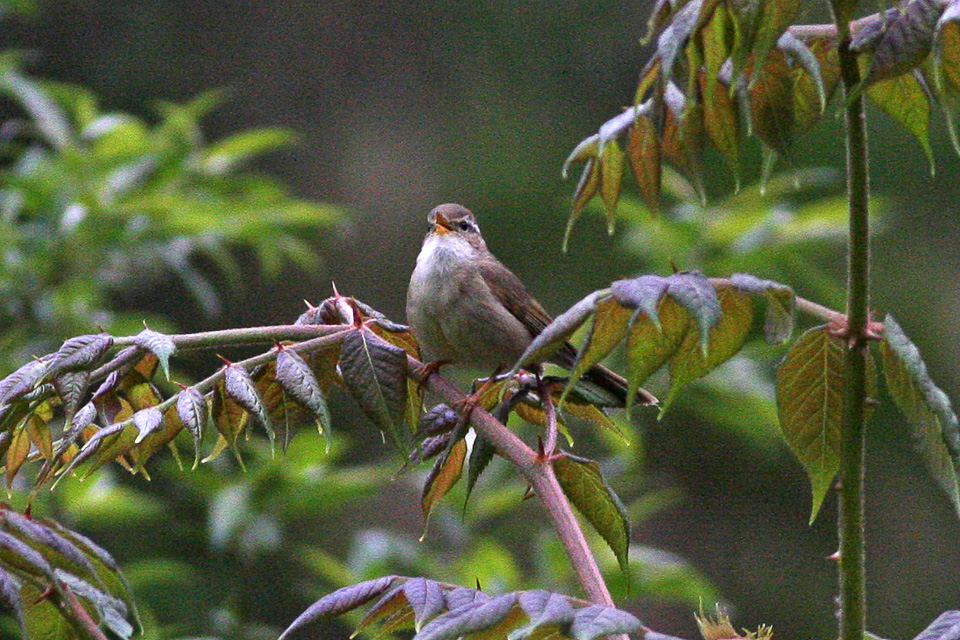
Yellow-throated Woodland-Warbler
Phylloscopus ruficapilla
Order: Passeriformes / Family: Phylloscopidae

Wikimedia Commons
About the Yellow-throated Woodland-Warbler
The Yellow-throated Woodland-Warbler (Phylloscopus ruficapilla) is a visually striking bird, primarily found in the montane forests of eastern and southern Africa. It plays a crucial ecological role as an insect predator, helping to control insect populations within its habitat. This warbler's range extends across countries such as Tanzania, Kenya, Zimbabwe, and South Africa, inhabiting moist evergreen and semi-evergreen forests typically found at elevations ranging from 1,000 to 3,000 meters. The bird is a permanent resident in these regions, often navigating the dense undergrowth and mid-canopy layers of its forest home.
These warblers are particularly significant due to their role in forest ecosystems. By preying on insects, they contribute to maintaining the health of their environment, providing a natural pest control service. Furthermore, their presence indicates a healthy forest ecosystem, as they require intact habitats with rich insect populations to thrive. During the breeding season, which coincides with the rainy season in much of their range, these birds become more vocal and territorial, asserting their presence through song.
The Yellow-throated Woodland-Warbler exhibits a remarkable adaptability to different forest types but remains dependent on forested areas. Changes in forest cover due to logging and agriculture pose threats to its habitat, yet the species remains relatively common within protected areas. The bird's dependence on forested environments emphasizes the importance of conservation efforts aimed at preserving these critical habitats. Its adaptability to various forest conditions also highlights the ecological resilience of the species, as it can occupy both primary and secondary forests, providing hope for its continued survival amidst environmental changes.
The Yellow-throated Woodland-Warbler belongs to the family Phylloscopidae, within the order Passeriformes. These birds typically live average 5-7 years, with a maximum recorded of 8 years..
How to Identify a Yellow-throated Woodland-Warbler
The adult Yellow-throated Woodland-Warbler is a small songbird, measuring about 11-13 cm in length. It is easily recognizable by its bright yellow throat and breast, which contrast with its olive-green upperparts. The plumage is complemented by a distinctive rufous cap, which gives the species its scientific name, 'ruficapilla.' Its wings and tail exhibit subtle greenish hues, while its underparts transition to a paler white as one moves towards the belly.
Juvenile warblers show less vibrant plumage, their yellow throat being slightly duller. The rufous cap is also less pronounced in younger birds. There is little sexual dimorphism in this species, with males and females exhibiting similar coloration, making field identification based on plumage alone challenging without careful observation.
The Yellow-throated Woodland-Warbler can be mistaken for other Phylloscopus warblers within its range, such as the Willow Warbler or the Chiffchaff. However, the distinctive yellow throat and rufous cap of the Yellow-throated Woodland-Warbler are reliable field marks that help distinguish it from similar species. Its flight is swift and direct, typical of many small warblers, and it often adopts a characteristic perching posture, flitting actively among branches while foraging.
Having trouble telling birds apart? Upload a photo to our bird identification tool for an instant species match.
Yellow-throated Woodland-Warbler Habitat and Range
Preferred Habitat
This warbler thrives in montane and submontane forests, favoring moist evergreen and semi-evergreen environments. It is typically found at elevations between 1,000 and 3,000 meters, where the forest canopy provides ample cover and feeding opportunities. Within this niche, the Yellow-throated Woodland-Warbler also occupies forest edges and clearings, demonstrating a degree of adaptability.
In regions like the Eastern Arc Mountains of Tanzania and Kenya, as well as the highlands of Zimbabwe and South Africa, these birds are often associated with areas that receive substantial rainfall, which supports dense forest growth. Seasonal habitat shifts are minimal, as the species remains in forested areas year-round, relying on the stability of montane ecosystems.
The Yellow-throated Woodland-Warbler is primarily a forest-dwelling species, with limited presence in urban areas. However, it occasionally visits gardens and parks adjacent to suitable forest habitats, where it can find food and shelter. Its preference for forested landscapes underscores the importance of conserving these vital habitats.
Geographic Range
The Yellow-throated Woodland-Warbler's range spans several countries in eastern and southern Africa, including Tanzania, Kenya, Zimbabwe, and South Africa. It is most commonly found in the Eastern Arc Mountains, a biodiversity hotspot that supports a wide variety of endemic species. In South Africa, the species is present in the Drakensberg Mountains, where it inhabits the montane forests that blanket these highlands.
Its breeding range overlaps significantly with its general range, as the species does not undertake long-distance migrations. Instead, it remains in its montane habitat throughout the year, although some local movements may occur in response to resource availability.
Population density tends to be highest in regions where forest cover remains intact and protected. Protected areas, such as national parks and reserves in the Eastern Arc Mountains and Drakensberg, serve as crucial refuges for the species. Despite pressures from habitat loss, these warblers maintain stable populations in regions where conservation efforts prioritize forest preservation.
Want to know which birds visit your area? Browse our backyard birds by location guides for region-specific species lists.
What Does the Yellow-throated Woodland-Warbler Eat?
The Yellow-throated Woodland-Warbler primarily feeds on insects, playing a vital role in controlling insect populations within its forest habitat. Its diet includes a wide range of arthropods, such as beetles, caterpillars, and spiders, which it gleans from foliage and branches.
Insect abundance and diversity are crucial during the breeding season when the demand for high-protein food sources increases. The warbler exhibits adept foraging techniques, actively flitting through the mid and upper canopy to locate prey. It frequently employs a gleaning strategy, picking insects from leaves and bark with precision.
While insects constitute the majority of its diet, the Yellow-throated Woodland-Warbler may also consume small quantities of plant material, such as berries or seeds, particularly outside the breeding season when insect availability may fluctuate. Its foraging schedule is diurnal, with peak activity occurring during the early morning and late afternoon when insects are most active.
Yellow-throated Woodland-Warbler Behavior and Social Structure
The Yellow-throated Woodland-Warbler exhibits a solitary or loosely paired social structure, particularly during the breeding season when pairs establish and defend territories. These territories are crucial for mating success and resource allocation, and males actively use song to advertise their presence and ward off intruders.
Courtship displays involve the male showcasing its plumage and performing aerial displays to attract a mate. Once paired, the birds become more secretive, focusing on nesting and raising young. Outside the breeding season, these warblers may form small flocks, often joining mixed-species feeding parties to exploit food resources efficiently.
The bird's response to predators involves a combination of vocal alarms and evasive maneuvers. When threatened, it emits sharp calls to alert conspecifics and other species of danger. Daily activity patterns include active foraging during daylight hours, with periods of rest and preening in the mid to late morning and afternoon.
Yellow-throated Woodland-Warbler Nesting and Reproduction
The Yellow-throated Woodland-Warbler constructs a cup-shaped nest, which is meticulously woven from grass, leaves, and moss. These nests are typically situated in the fork of a tree or shrub, providing concealment from predators and environmental elements.
Nests are often located at heights ranging from 1 to 5 meters above the ground, blending seamlessly into the surrounding foliage. The female lays a clutch of 2 to 4 eggs, which she incubates for approximately 11 to 13 days. During this period, the male may assist by bringing food to the nesting site, although incubation duties fall primarily on the female.
Once hatched, the chicks are altricial and require constant care and feeding. Both parents partake in feeding the young, which fledge after about 12 to 15 days. The species typically raises one brood per year, although favorable conditions may allow for a second brood.
Yellow-throated Woodland-Warbler Sounds and Vocalizations
The Yellow-throated Woodland-Warbler's primary song is a series of melodious, high-pitched notes delivered in rapid succession. These songs serve as territorial markers and mating calls, characterized by a lively rhythm and clear, resonant quality that can carry through the forest.
Call notes are typically short and sharp, used for communication between mates or signaling alarm. When faced with potential threats, the warbler emits a distinct, high-pitched alarm call to alert nearby birds. During the dawn chorus, the male's song becomes particularly vigorous, marking the start of a new day and reinforcing territorial boundaries.
Interesting Facts About the Yellow-throated Woodland-Warbler
- 1The Yellow-throated Woodland-Warbler's song can travel up to 100 meters through dense forest, a testament to its vocal prowess.
- 2Despite their small size, these warblers can consume up to 20% of their body weight in insects each day.
- 3The warbler's rufous cap led to its scientific name, 'ruficapilla,' which translates to 'red-capped.'
- 4Yellow-throated Woodland-Warblers have been known to join mixed-species flocks, benefiting from the vigilance of other birds.
- 5These warblers participate in dawn choruses, a phenomenon where birds sing vigorously at first light to establish territories.
- 6The species is an indicator of forest health, as it relies on intact forest ecosystems for nesting and feeding.
- 7Yellow-throated Woodland-Warblers can be found at elevations up to 3,000 meters, adapting to cooler, montane climates.
Yellow-throated Woodland-Warbler Conservation Status
The Yellow-throated Woodland-Warbler is currently listed as Least Concern on the IUCN Red List, with stable population trends across its range. However, habitat loss due to deforestation and land conversion for agriculture poses ongoing threats to its forest habitats. Conservation efforts focus on maintaining and protecting montane forest ecosystems, crucial for the warbler's survival. Protected areas and national parks in regions like the Eastern Arc Mountains provide vital refuges for the species, ensuring habitat continuity and population stability. Historically, the bird has shown resilience to environmental changes, provided that sufficient habitat remains. Continued conservation efforts aim to safeguard these environments, mitigating the impact of human activities and ensuring the species' long-term survival.