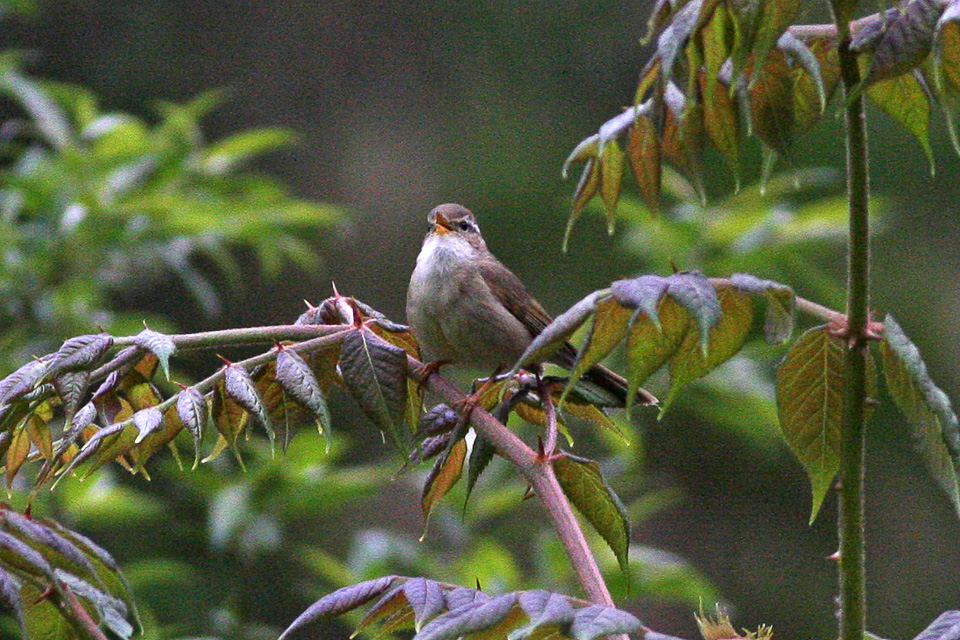
Yellow-vented Warbler
Phylloscopus cantator
Order: Passeriformes / Family: Phylloscopidae

Wikimedia Commons
About the Yellow-vented Warbler
The Yellow-vented Warbler, Phylloscopus cantator, is a small passerine bird belonging to the family Phylloscopidae. This warbler is primarily found in the dense, subtropical forests of South Asia, ranging across countries such as India, Nepal, Bhutan, and Bangladesh. Its preference for lush, verdant environments is a testament to its role in the delicate balance of these ecosystems. As an insectivorous bird, it contributes significantly to pest control, playing a crucial role in maintaining the health of its habitat. The Yellow-vented Warbler exhibits a territorial nature, especially during the breeding season when males assert dominance through song and display. During non-breeding periods, it may join mixed-species foraging flocks, indicating a level of adaptability and social interaction. The bird's ecological significance extends beyond its immediate environment, as it also serves as a crucial indicator species for forest health. Its presence or absence can provide insights into the state of its habitat, making it an important species for conservationists to monitor. Seasonal behaviors of the Yellow-vented Warbler include altitudinal migration, with populations moving to lower elevations during the colder months. This adaptation ensures access to food resources year-round and reinforces the bird's resilience in the face of environmental changes. Observations have noted that this warbler often returns to the same breeding sites annually, displaying strong site fidelity. Such behaviors underscore the importance of preserving its habitat to support its life cycle and maintain biodiversity within these forested regions.
The Yellow-vented Warbler belongs to the family Phylloscopidae, within the order Passeriformes. These birds typically live average 4-6 years, with a maximum recorded of 9 years..
How to Identify a Yellow-vented Warbler
The Yellow-vented Warbler is easily recognizable by its distinctive bright yellow underparts, which contrast with its olive-green upperparts. Adult plumage is consistent across both sexes, though females may exhibit slightly duller colors. Juveniles often present with less vivid coloration, featuring more muted tones and less defined markings. A key identification feature is the bird's prominent, bold supercilium, or eye-stripe, which is white and contrasts sharply with its darker eye line. This feature is crucial for differentiating it from similar species such as the Greenish Warbler, which lacks such stark facial markings. In flight, the Yellow-vented Warbler displays a compact silhouette with rapid wing beats, typical of the Phylloscopus genus. When perched, it often adopts an upright posture, frequently flicking its wings and tail, which is characteristic behavior for this group. Unlike some other warblers, its call is less likely to lead to confusion due to its unique rhythmic song pattern. Field observation should focus on the bird's active foraging behavior and its distinctive calls, which are often heard before the bird is seen, especially in dense foliage.
Having trouble telling birds apart? Upload a photo to our bird identification tool for an instant species match.
Yellow-vented Warbler Habitat and Range
Preferred Habitat
The Yellow-vented Warbler inhabits subtropical and tropical moist lowland forests, preferring dense, lush vegetation that provides ample cover and abundant insect prey. In India, it is commonly found in forested regions such as the Western Ghats and the Himalayan foothills. The bird's preferred elevation ranges from sea level up to 2,500 meters, with some populations exhibiting altitudinal migration to avoid harsh weather conditions. During winter, it often moves to lower elevations and sometimes into rural gardens where forest edges meet cultivated areas. While primarily a forest dweller, it shows adaptability by occasionally venturing into urban green spaces, though such occurrences are less frequent. Seasonal habitat shifts are driven by the availability of food and suitable breeding sites, with dense foliage providing both sustenance and protection.
Geographic Range
The Yellow-vented Warbler's range encompasses several regions in South Asia. It breeds across much of the Indian subcontinent, including India, Nepal, Bhutan, and parts of Bangladesh. During the breeding season, it occupies higher elevations and dense forest habitats. As temperatures drop, it descends to lower altitudes, often moving into the plains of northern India and the Terai regions of Nepal. In terms of migration corridors, the bird follows predictable patterns along the Himalayan foothills, utilizing these routes to access different habitats seasonally. Population density is typically higher in undisturbed forest areas where food resources are abundant. However, it can be locally common in suitable habitats across its range. While it does not undertake long-distance migrations like some other species, its altitudinal movements are crucial for its survival, allowing it to exploit various ecological niches throughout the year.
Want to know which birds visit your area? Browse our backyard birds by location guides for region-specific species lists.
What Does the Yellow-vented Warbler Eat?
The Yellow-vented Warbler is primarily insectivorous, feeding on a diet rich in small insects and their larvae. Common prey items include caterpillars, beetles, and spiders, which it gleans from leaves and branches. During the breeding season, its diet may diversify to include small arthropods and other invertebrates, ensuring a high-protein intake for raising young. The bird employs a variety of foraging techniques, such as hover-gleaning, where it hovers momentarily to pick insects off foliage. Seasonal diet changes are influenced by prey availability, with a tendency to incorporate more plant matter, such as seeds and berries, during the winter months when insects are less plentiful. The Yellow-vented Warbler typically forages alone or in pairs during the breeding season, but may join mixed-species flocks at other times, increasing its foraging efficiency and reducing predation risk.
Yellow-vented Warbler Behavior and Social Structure
The Yellow-vented Warbler exhibits a complex social structure, with territorial behavior most pronounced during the breeding season. Males establish and defend territories through song and physical displays, using their distinctive calls to communicate presence and ward off intruders. Courtship displays include wing-flicking and tail-spreading, which are combined with vocalizations to attract females. Outside of the breeding season, the bird shows a more gregarious nature, often forming loose flocks with other insectivorous species. This flocking behavior aids in predator detection and increases foraging success. In response to predators, the warbler employs various alarm calls and may engage in mobbing behavior, particularly when defending nests. Daily activity patterns are diurnal, with peak foraging occurring during the early morning and late afternoon. These periods coincide with optimal insect activity, ensuring efficient food acquisition.
Yellow-vented Warbler Nesting and Reproduction
Yellow-vented Warblers construct cup-shaped nests, often placing them in dense shrubs or low trees, typically 1 to 3 meters above ground. The nests are made from grass, leaves, and spider webs, providing a sturdy yet camouflaged structure. A typical clutch consists of 3 to 5 eggs, which are white with fine reddish-brown speckles. The female primarily undertakes incubation, lasting around 12 to 14 days. After hatching, both parents share feeding duties, delivering a steady diet of insects to the rapidly growing chicks. Fledging occurs approximately 11 to 13 days after hatching, with young birds remaining under parental supervision for several weeks. The Yellow-vented Warbler usually raises one to two broods per year, with nesting success heavily dependent on environmental conditions and predation pressure.
Yellow-vented Warbler Sounds and Vocalizations
The Yellow-vented Warbler's primary song is a rapid series of high-pitched notes, characterized by a rhythmic trill that can be likened to a 'tse-tse-tse' sound. This song serves as both a territorial marker and a courtship display. Its call notes are sharp and distinctive, often described as 'chip' or 'chit' sounds, used for communication between mates or signaling alarm. The warbler also emits specific alarm calls when threatened by predators, which are harsher and more staccato. During the dawn chorus, its song is particularly prominent, providing an auditory marker for identifying its presence. The clarity and speed of its song distinguish it from other warblers in its range, making it easier to identify by ear.
Interesting Facts About the Yellow-vented Warbler
- 1The Yellow-vented Warbler can live up to 9 years in the wild, a testament to its adaptability.
- 2Despite its small size, the warbler's song can be heard from over 100 meters away in dense forests.
- 3It participates in mixed-species flocks, enhancing its foraging efficiency and social interactions.
- 4During the breeding season, males may sing up to 2,000 times per day to establish territory.
- 5The Yellow-vented Warbler's nest is often built using up to 100 separate pieces of plant material.
- 6These birds are known to travel altitudinal distances of up to 1,500 meters in search of suitable habitats.
- 7During winter, they expand their diet to include up to 20% plant matter, showcasing dietary flexibility.
Yellow-vented Warbler Conservation Status
The Yellow-vented Warbler is currently listed as a species of Least Concern by the IUCN, with population trends considered stable. Despite this status, it faces threats from habitat loss due to deforestation and land conversion for agriculture. Conservation efforts focus on habitat preservation and restoration, particularly in key breeding and wintering areas. Historical population changes have been minimal, but ongoing monitoring is essential to detect any future declines. Protected areas such as national parks and wildlife reserves play a crucial role in safeguarding its habitat, ensuring that the Yellow-vented Warbler continues to thrive. Continued research and conservation initiatives are vital for maintaining its population and ecological role.