Arabian Babbler
Turdoides squamiceps
Order: Passeriformes / Family: Leiothrichidae

Wikimedia Commons
About the Arabian Babbler
The Arabian Babbler, Turdoides squamiceps, is a fascinating bird species native to the arid regions of the Arabian Peninsula. Known for its unique social structure, this bird thrives in harsh desert environments where few other species can sustain life. Found primarily in countries such as Saudi Arabia, Oman, and the United Arab Emirates, the Arabian Babbler has adapted remarkably well to its surroundings. This bird plays a significant ecological role, often seen foraging in small groups that enhance their survival in the unforgiving desert landscape. The Arabian Babbler is a cooperative breeder, meaning that not just the parents, but also previous offspring and other group members, care for the young. This cooperative behavior is crucial in their challenging environment, allowing them to maximize their reproductive success. The social hierarchy within these groups is a subject of extensive study, providing insights into avian social systems. Their presence contributes to the delicate balance of desert ecosystems, influencing insect populations and aiding in seed dispersal. As opportunistic feeders, Arabian Babblers adapt their diet according to seasonal availability, feeding primarily on insects and small invertebrates, while occasionally consuming seeds and fruits. During the breeding season, which typically aligns with the cooler months, their social dynamics become even more apparent, as they engage in elaborate displays to reinforce group bonds and establish territories. The Arabian Babbler's vocalizations also play a vital role in their social interactions, with a variety of calls used to communicate between group members. Overall, the Arabian Babbler is an integral component of the desert avifauna, showcasing remarkable adaptability and social complexity.
The Arabian Babbler belongs to the family Leiothrichidae, within the order Passeriformes. These birds typically live typically 8-10 years, with some individuals living longer..
How to Identify a Arabian Babbler
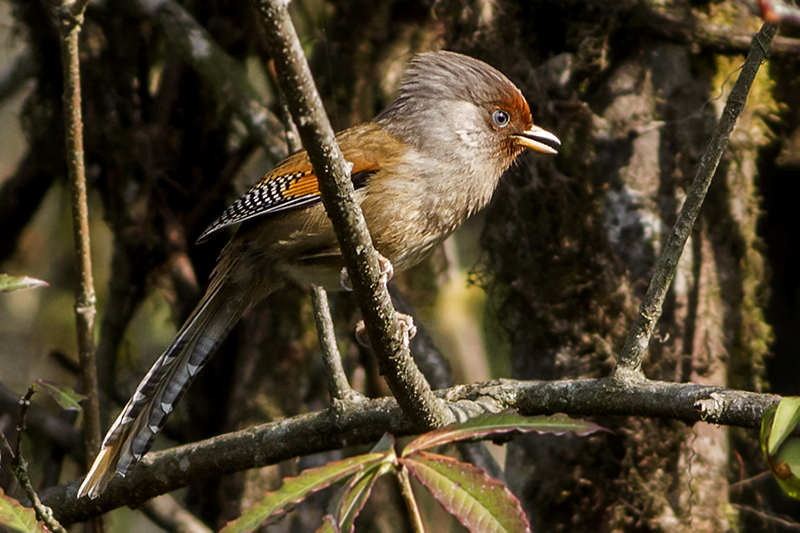
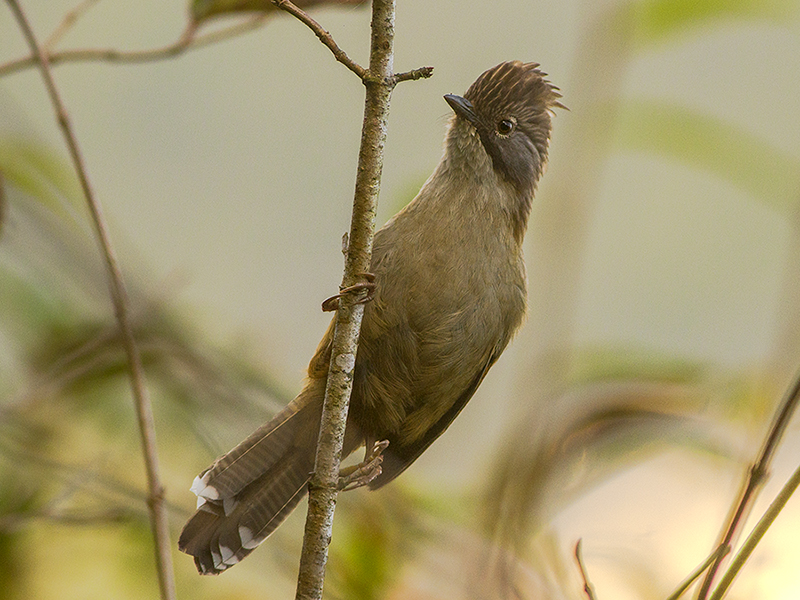
The Arabian Babbler is a medium-sized bird, characterized by its mostly brown plumage, which provides excellent camouflage against the desert backdrop. Adult Arabian Babblers display a uniform brown color with a slightly paler underbelly, facilitating their stealthy foraging behavior. The bird's tail is long and graduated, often held upright, a distinguishing feature easily noted when the bird perches or moves through its environment. Juvenile babblers resemble adults but tend to have slightly duller plumage, which gradually brightens as they mature. Unlike many bird species, male and female Arabian Babblers exhibit no significant plumage differences, making visual gender identification challenging. In terms of size, these birds measure approximately 26-29 cm in length and weigh around 70-85 grams, fitting squarely into the medium-size category. The Arabian Babbler's flight silhouette is not particularly distinctive, as it tends to stay close to the ground and prefers short, low flights between shrubs. When comparing to similar species, the Arabian Babbler's social behavior and vocalizations are more defining than its appearance, reducing confusion with other regional birds.
Having trouble telling birds apart? Upload a photo to our bird identification tool for an instant species match.
Arabian Babbler Habitat and Range
Preferred Habitat
The Arabian Babbler thrives in desert and semi-desert habitats, where it navigates sparse vegetation comprising mainly of acacia and tamarisk shrubs. These birds are typically found at low elevations, where the harsh environment demands resourcefulness. Despite the arid conditions, these areas provide sufficient cover and food resources for the species to thrive. Arabian Babblers are also found in wadis and oases, where occasional water sources allow for a slightly more diverse ecosystem. There is little seasonal habitat shift for this species, as they are adapted to year-round desert living. While predominantly found in rural settings, Arabian Babblers occasionally venture into the outskirts of urban areas, exploiting gardens and parks when available.
Geographic Range
The breeding range of the Arabian Babbler covers much of the Arabian Peninsula, including Saudi Arabia, Oman, the United Arab Emirates, and extending into parts of Jordan and Israel. Unlike many bird species, the Arabian Babbler does not undertake long migrations, instead remaining within its range throughout the year. This sedentary lifestyle is well-suited to their desert habitats, where resources, though sparse, are relatively consistent. Population density hotspots are often found in areas where vegetation is more abundant, such as near oases or along the edges of wadis. These birds have adapted to the challenging conditions of the region, making them one of the few avian species consistently present in such arid environments.
Want to know which birds visit your area? Browse our backyard birds by location guides for region-specific species lists.
What Does the Arabian Babbler Eat?
Arabian Babblers primarily consume insects and small invertebrates, which they skillfully extract from the ground and vegetation. Their diet includes ants, beetles, caterpillars, and spiders, with occasional consumption of seeds and fruits when available. Seasonal diet changes occur, with insects forming the bulk of their diet during wetter periods, while seeds and small fruits supplement their intake during drier times. These birds employ a foraging technique that involves probing the ground and flipping over stones and debris to uncover hidden prey. Arabian Babblers typically feed in groups, which not only increases foraging efficiency but also offers protection against predators. Their foraging activities are mostly diurnal, with peak feeding times occurring in the early morning and late afternoon when temperatures are lower.
Arabian Babbler Behavior and Social Structure
Arabian Babblers exhibit complex social structures, living in groups ranging from three to fifteen individuals. Within these groups, a strict hierarchy dictates interactions, with dominant individuals leading activities such as foraging and territory defense. This social behavior extends to their breeding strategy, where non-breeding group members assist in rearing young, a system known as cooperative breeding. Courtship displays are elaborate, involving vocalizations and physical gestures to reinforce pair bonds and group cohesion. Arabian Babblers are highly territorial, engaging in vocal and physical confrontations to ward off intruders. Despite their aggressive territorial behavior, they are also known to engage in playful interactions within their group, such as allopreening and food sharing. Daily activities for Arabian Babblers begin at dawn, with foraging and social interactions taking precedence. As temperatures rise, they seek shade and rest, resuming activities in the cooler parts of the day. Their alertness and coordinated group behavior provide effective defenses against predators.
Arabian Babbler Nesting and Reproduction
Arabian Babblers build their nests in low shrubs or trees, typically choosing locations that offer ample cover and protection from predators. Nests are constructed using twigs, leaves, and grass, forming a cup-like structure that accommodates the clutch. The typical clutch size ranges from three to five eggs, which are incubated for about 14-16 days. Both male and female Arabian Babblers participate in incubation, though other group members may assist in feeding the incubating bird. Once hatched, chicks remain in the nest for approximately 14-18 days before fledging. During this period, all group members contribute to feeding and protecting the young, ensuring higher survival rates. Arabian Babblers generally produce one to two broods per year, depending on environmental conditions and food availability.
Arabian Babbler Sounds and Vocalizations
The primary song of the Arabian Babbler is a series of melodious notes delivered at a moderate pitch and pace, often heard at dawn as part of their territorial displays. These songs serve to strengthen group cohesion and signal territorial boundaries to neighboring groups. In addition to their primary song, Arabian Babblers use a variety of call notes for communication, including sharp alarm calls to warn of predators and softer contact calls to maintain group coordination. Alarm calls are typically short and repetitive, increasing in intensity when a threat approaches. The dawn chorus of the Arabian Babbler is particularly notable, as it marks the beginning of their active day.
Interesting Facts About the Arabian Babbler
- 1Arabian Babblers often engage in a behavior called 'allo-feeding,' where group members feed each other to reinforce social bonds.
- 2These birds are known for their 'sentinel' behavior, where one member of the group keeps watch for predators while others forage.
- 3Arabian Babblers are one of the few bird species in the Arabian desert that display cooperative breeding, involving multiple group members in chick rearing.
- 4The Arabian Babbler's cooperative behaviors have made them a subject of interest in studies of social evolution and communication.
- 5Despite their social nature, Arabian Babblers maintain strict hierarchies, where dominant individuals have priority access to resources.
Arabian Babbler Conservation Status
The Arabian Babbler currently holds a status of 'Least Concern' on the IUCN Red List, with populations remaining stable across most of its range. Despite this seemingly secure status, habitat degradation and human encroachment pose potential threats to their desert habitats. Conservation efforts focus on protecting these environments from overgrazing and unsustainable land use. Historically, the Arabian Babbler has demonstrated resilience, maintaining stable population numbers despite the challenging conditions of its habitat. Continued monitoring and habitat preservation are essential to ensure the long-term survival of this species.