Arrow-marked Babbler
Turdoides jardineii
Order: Passeriformes / Family: Leiothrichidae

Wikimedia Commons
About the Arrow-marked Babbler
The Arrow-marked Babbler (Turdoides jardineii) is a highly social and vocal bird species native to sub-Saharan Africa. This bird exhibits a strong preference for habitats such as woodlands, savannas, and scrublands, adapting well to both natural and modified environments. Found primarily in countries like South Africa, Botswana, Zimbabwe, and Mozambique, the Arrow-marked Babbler is a quintessential member of the bird communities within these regions. Its presence in these ecosystems plays a significant role in the ecological balance, as it participates in both insect control and seed dispersal. The species is known for its gregarious behavior, often seen in small groups that contribute to its survival and reproductive success. Seasonal behaviors include a shift in group dynamics during the breeding season, as pairs break off temporarily from larger groups. During this period, they engage in cooperative breeding, a strategy that enhances the survival rate of offspring. The Arrow-marked Babbler is an integral part of its ecological niche, reflecting the rich biodiversity of the African continent.
The Arrow-marked Babbler belongs to the family Leiothrichidae, within the order Passeriformes. These birds typically live average 5-8 years, with a maximum recorded of 12 years..
How to Identify a Arrow-marked Babbler
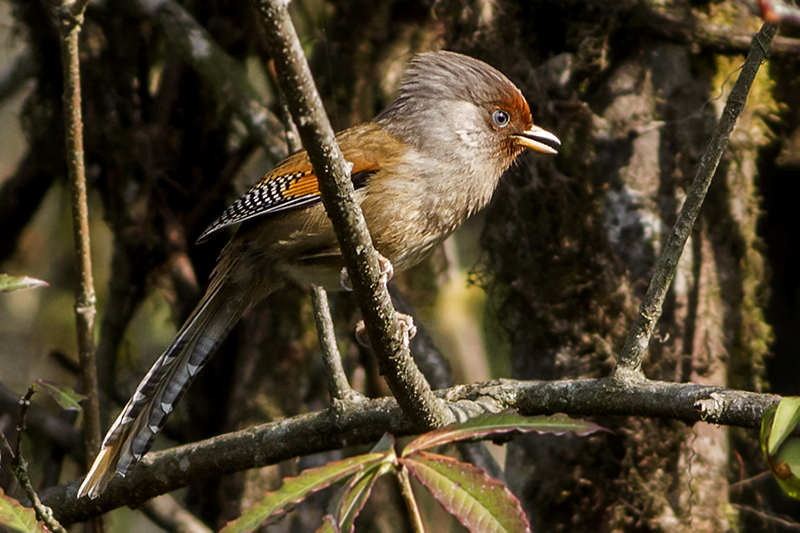
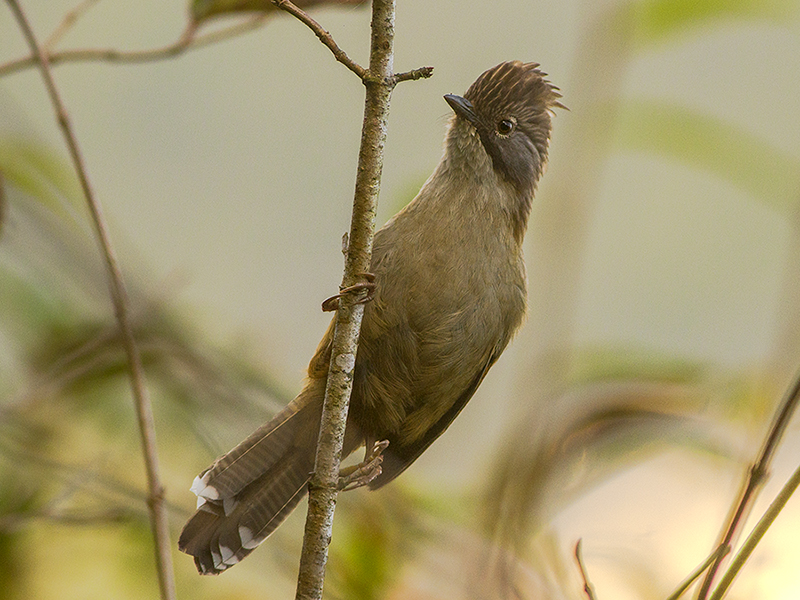
The Arrow-marked Babbler is a medium-sized bird with a length of approximately 22 to 25 centimeters. Adults exhibit a rich brown plumage with distinctive white streaks, giving them an arrow-marked appearance, particularly on the throat and breast. Their eyes are a striking orange-yellow, contrasting with the darker feathers. Juveniles resemble adults but have more subdued streaking and a slightly duller eye color. There are no significant differences between males and females in terms of plumage. However, males may exhibit slightly larger body size. This species can be confused with similar members of the Turdoides genus, but its unique streak pattern and vocalizations serve as distinguishing features. In flight, the Arrow-marked Babbler shows a rapid, fluttering pattern with short bursts of wing beats, while its perching posture is often upright with an alert demeanor.
Having trouble telling birds apart? Upload a photo to our bird identification tool for an instant species match.
Arrow-marked Babbler Habitat and Range
Preferred Habitat
Arrow-marked Babblers thrive in a variety of habitats, including woodland edges, savannas, and bushveld regions. They are commonly found in areas with dense undergrowth and thickets, which provide cover and foraging opportunities. The species is adaptable to elevations ranging from sea level to about 2,000 meters. While primarily found in rural and semi-rural settings, these birds occasionally venture into suburban gardens and parks, indicating a level of adaptability to human-altered landscapes. Seasonal habitat preferences remain consistent, as they do not exhibit significant migratory behavior, although slight altitudinal movements may occur in response to climatic conditions.
Geographic Range
The geographic range of the Arrow-marked Babbler spans the southern part of Africa, with populations distributed across South Africa, Namibia, Botswana, Zimbabwe, and Mozambique. These birds are non-migratory, maintaining a year-round presence within their range. They are most densely populated in regions like the Kruger National Park, where suitable habitats are abundant. The species does not extend into northern Africa or the Sahel, being restricted to the more temperate and subtropical zones. Despite their limited territorial shifts, localized movements may occur in search of food during periods of scarcity.
Want to know which birds visit your area? Browse our backyard birds by location guides for region-specific species lists.
What Does the Arrow-marked Babbler Eat?
The diet of the Arrow-marked Babbler is diverse and includes a variety of invertebrates and plant material. Primarily insectivorous, they consume beetles, ants, and caterpillars, utilizing a foraging technique that involves hopping on the ground and sifting through leaf litter. Their diet also includes fruits and seeds, particularly during seasons when insect prey is less abundant. This opportunistic feeding behavior ensures they have access to a stable food source throughout the year. They forage primarily during the early morning and late afternoon, taking advantage of cooler temperatures and increased insect activity.
Arrow-marked Babbler Behavior and Social Structure
Arrow-marked Babblers exhibit strong social structures, often forming groups of three to fifteen individuals. These groups display cooperative behaviors, such as communal roosting and mutual preening, which help maintain social bonds and provide protection against predators. Territorial behavior is marked by vocal displays and group choruses that establish and defend their home ranges. During courtship, pairs may engage in synchronized movements and feeding exchanges. Their daily activity pattern is diurnal, with peak activities in the early morning and late afternoon. This species responds to predators with loud alarm calls, often rallying group members to mob potential threats.
Arrow-marked Babbler Nesting and Reproduction
The nesting habits of the Arrow-marked Babbler are highly cooperative. Nests are typically built in dense shrubs or trees, constructed from twigs, leaves, and grass. These cup-shaped structures are well-hidden to protect against predators. The clutch size ranges from two to five eggs, with an incubation period of approximately 14 days. Both males and females participate in incubation, while non-breeding group members assist in feeding the chicks. Fledging occurs about 17 to 19 days post-hatching. The species is capable of raising two to three broods per year, depending on environmental conditions and food availability.
Arrow-marked Babbler Sounds and Vocalizations
The Arrow-marked Babbler is renowned for its vocalizations, which include a variety of calls and songs. Their primary song consists of a series of melodious whistles and harsh chatters, often performed in a synchronized chorus by group members. These vocal displays serve to reinforce social bonds and delineate territory boundaries. Alarm calls are sharp and loud, effectively alerting the group to danger. During the dawn chorus, their vocal performances are particularly vibrant, contributing to the soundscape of their habitats.
Interesting Facts About the Arrow-marked Babbler
- 1Arrow-marked Babblers can be seen engaging in dust bathing, a behavior thought to help control parasites.
- 2These birds are known for cooperative breeding, with non-breeding helpers assisting in raising the young.
- 3The species can recognize individual group members and will often greet them with specific calls.
- 4Despite their social nature, Arrow-marked Babblers can be highly territorial against other groups.
- 5They often participate in mixed-species flocks, benefiting from the increased vigilance against predators.
Arrow-marked Babbler Conservation Status
The Arrow-marked Babbler is currently listed as Least Concern by the IUCN, with stable population trends. They face few direct threats, although habitat destruction from agricultural expansion and urban development poses potential challenges. Conservation efforts focus on habitat preservation and maintaining biodiversity within their range. Historical population changes have been minimal, as the species has shown resilience to moderate environmental changes.